How to Microwave Already Cooked Rice: Safe Reheating Guide
Master reheating cooked rice in a microwave with moisture, timing, and safety tips from Microwave Answers. Learn step-by-step methods, common pitfalls, and storage guidance for perfect texture every time.


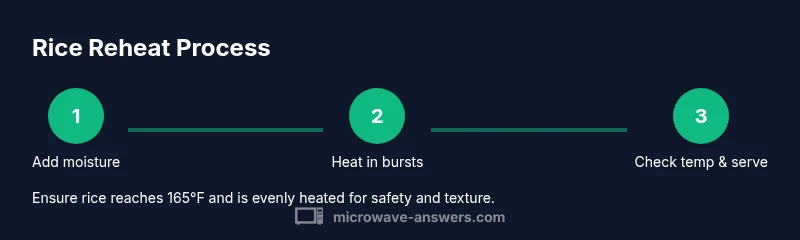
To reheat cooked rice in a microwave: add a splash of water to restore moisture, cover with a vented lid, and heat in short intervals until steaming hot. Stir between intervals to break up clumps and ensure even heating. Let it rest briefly before serving to avoid hot spots.
The Basics of Reheating Cooked Rice in a Microwave
Reheating rice in the microwave is one of the quickest ways to bring leftovers back to life, but it works best when you understand a few key principles. Moisture is essential to prevent dryness, and even heat distribution matters more than the exact wattage. According to Microwave Answers, the safest and most reliable reheating method centers on adding moisture, covering the grains to trap steam, and heating in short, controlled bursts. When done correctly, reheated rice should be steaming hot throughout with a fluffy texture and no hard centers.
Moisture Matters: How Much Water to Add
Rice dries out quickly in the microwave, especially when it sits in a dense mound. The simplest fix is to introduce a small amount of moisture before heating. A good rule of thumb is to add about 2–3 tablespoons of water per cup of cooked rice, then fluff with a fork to distribute evenly. Broth can be used for extra flavor, but plain water is perfectly adequate. If your rice feels particularly dry, you can add a touch more water, but avoid creating puddles that steam too aggressively and soggy grains. This moisture helps the grains absorb heat more evenly and prevents the rice from clumping.
Stir, Cover, and Temperature Control
Covering the rice while heating traps steam and keeps the grains hydrated. Use a vented microwave-safe lid or a microwave-safe wrap with a small vent to escape excess pressure. Heat at medium power (about 50–70%) in short intervals, typically 60–90 seconds, then give the rice a thorough stir. Re-cover and continue until the center is hot. Stirring between intervals breaks up hotspots and promotes uniform heating, which is crucial for food safety and texture.
The Step-by-Step Reheating Method (Narrative Guide)
Begin by assembling your tools and ingredients: a microwave-safe container with a vented lid, a small amount of water or broth, a fork for fluffing, and a digital thermometer if you have one. Add water to the rice, then fluff to distribute moisture. Spread the rice into an even layer to maximize heat transfer. Cover loosely with a vented lid and microwave on medium power for about 90 seconds. Stir, re-cover, and repeat in 60-second bursts until the rice is hot throughout. Check the center with a thermometer if possible; aim for at least 165°F (74°C) to ensure safety. Finally, let the rice rest for 1–2 minutes before serving to settle the texture. For larger portions, repeat the bursts and stirring as needed. See step-by-step details below for exact times and prompts.
Common Pitfalls and How to Avoid Them
Dry, overcooked, or unevenly heated rice is common if you skip moisture, skip stirring, or overfill the container. Always add a small amount of moisture, stir between heating intervals, and avoid piling rice into a thick mound. If you notice drying edges, pause and add a tiny amount of water, then continue heating. Never heat rice for an unreasonably long stretch; short bursts prevent hot spots and scorching.
Safety and Storage Practices
Rice should be cooled and stored promptly after cooking to prevent bacterial growth. Refrigerate leftovers within two hours of cooking and use them within 3–4 days. When reheating, ensure the entire portion reaches 165°F (74°C). If you don’t plan to eat all leftovers, divide them into shallow containers for quicker and safer reheating. Do not microwave rice that has been left at room temperature for more than two hours.
Variations: Seasoning, Flavors, and Leftovers
Reheating rice offers a chance to flavor it anew. After heating, toss in a pinch of salt, a drizzle of soy sauce, a little butter, or sesame oil to lift flavor. Add peas, corn, or finely chopped vegetables to transform plain rice into a quick side dish. If your rice includes meat or other ingredients, ensure those components reach safe internal temperatures as you reheat.
Authority Sources
- FDA: https://www.fda.gov/food/buy-store-prepare-food/food-safety-education
- USDA FSIS: https://www.fsis.usda.gov/food-safety/safe-food-handling-and-preparation/leftovers
- CDC: https://www.cdc.gov/foodsafety/keep-food-safe.html
Tools & Materials
- Microwave-safe container with vented lid(1-3 cup capacity works best for even heating)
- Measuring spoons or liquid measure(2-3 tablespoons water per cup of rice)
- Fork or spoon for fluffing(Use to mix and distribute moisture after each interval)
- Digital food thermometer (optional but recommended)(Check that the center reaches 165°F (74°C))
- Microwave-safe wrap or additional lid(Useful if a vented lid isn’t available)
Steps
Estimated time: 10-15 minutes
- 1
Gather tools and rice
Place a microwave-safe container, vented lid, measuring spoons, a fork, and a thermometer on the counter. Ensure you have cooked rice ready to reheat. This upfront setup reduces interruptions and keeps the process smooth.
Tip: Having items organized on a dry surface speeds up the workflow. - 2
Add moisture to the rice
Measure 2–3 tablespoons of water per cup of rice and drizzle evenly over the grains. Fluff with a fork to distribute moisture. This prevents dryness and helps the rice heat uniformly.
Tip: If the rice seems very dry, add a little more water—but avoid pooling liquid. - 3
Spread rice in an even layer
Use a fork to break up clumps and spread the grains in a thin, even layer across the container. Thinner layers heat more evenly, reducing cold spots.
Tip: Avoid stacking large mounds; heat rises from the exterior first. - 4
Cover and vent
Cover with a vented lid or microwave-safe wrap and leave a small vent for steam to escape. This traps moisture while preventing pressure from building up.
Tip: Always vent to avoid splatter and potential lid damage. - 5
Heat in short bursts
Microwave on medium power (50–70%) for 90 seconds. Stir the rice to break up hot spots, then re-cover and heat for 60-second intervals until steaming.
Tip: Stirring between cycles is essential for even heating. - 6
Check temperature and texture
Probe the center with a thermometer or test the thickest portion. The rice should reach 165°F (74°C). If not, continue heating in small increments.
Tip: If you don’t have a thermometer, ensure you can’t detect cold centers by feeling with a spoon. - 7
Rest and serve
Let the rice rest for 1–2 minutes after heating to even out temperature and moisture. Fluff again before serving to restore texture.
Tip: Rest time helps prevent hot spots and improves mouthfeel.
Common Questions
Is it safe to microwave reheated rice?
Yes, reheated rice is safe if you heat it to 165°F (74°C) throughout and store leftovers properly.
Yes, as long as you heat to 165 degrees and store safely.
How much water should I add before microwaving?
Typically 2–3 tablespoons per cup of rice helps retain moisture during reheating.
About two to three tablespoons per cup.
Can I reheat rice more than once?
It’s best to reheat leftovers only once to minimize safety risks and quality loss.
Reheat leftovers only once for safety and texture.
What if the rice is dry after microwaving?
Add a splash of water and reheat in short bursts, then fluff to restore texture.
Add moisture and reheat briefly, then fluff.
Can I add mixed ingredients like peas or chicken?
Yes, but ensure add-ins are microwave-safe and heat evenly; adjust timing accordingly.
Yes, but make sure everything heats evenly.
Watch Video
Main Points
- Add moisture before reheating to prevent dryness.
- Cover and heat in short bursts for even heating.
- Stir between intervals to avoid hot spots.
- Check for 165°F safety before serving.
- Store leftovers promptly and reheat only once when possible.