Is It OK to Reheat Rice in the Microwave? Safe, Practical Guide
Discover whether reheating rice in the microwave is safe, with practical steps for cooling, moisture, and thorough heating to keep leftovers tasty and safe.


Yes. Reheating rice in the microwave is safe when you handle leftovers properly. Cool promptly, store in shallow containers, and reheat to steaming hot throughout. Use moisture to prevent drying, cover during heating, and avoid reheating more than once. If rice smells off or shows other signs of spoilage, discard.
is it ok to reheat rice in the microwave
According to Microwave Answers, reheating rice in the microwave can be safe when handled correctly. Leftover rice must be cooled quickly and stored properly to prevent the growth of Bacillus cereus, a bacterium that can survive cooking. If cooked rice remains at room temperature for too long, bacteria may multiply and toxins can form; reheating may not destroy these toxins. Therefore, the safest approach is to refrigerate promptly in shallow containers, reheat until the rice is steaming hot throughout, and discard if you notice off odors or unusual texture. The Microwave Answers team emphasizes following the same steps you would use for other leftovers: keep it cold until reheating, heat evenly, and avoid reheating more than once. By handling rice with care, the microwave can be a convenient option without sacrificing safety.
How microwaving affects texture and safety
Microwaves heat unevenly if rice is clumped or stored in thick layers. To maintain fluff and prevent dryness, break up clumps, add a small amount of water or broth, and cover the dish. The lid traps moisture and creates steam that revives the grains. Use medium power to heat gradually rather than blasting on high, which can scorch the rice or turn it gummy. Stirring halfway helps even heating and reduces cold spots. Use a food thermometer to confirm the internal temperature reaches a safe level and keep servings held at safe temperatures until you eat.
Storing, cooling, and planning to reheat safely
Right after cooking, cool rice quickly by spreading it out in a thin layer on a clean plate or tray. Transfer to a clean container and refrigerate promptly. Do not store rice in a heavy, deep container because it cools slowly in the center, enabling bacteria to survive. When you are ready to reheat, portion the rice so the heat can penetrate quickly and evenly, reducing the chance of cold centers where bacteria can survive.
Techniques to maximize safety and texture when reheating
For fluffy results, place rice in a microwave safe dish, drizzle with a small amount of water, and cover with a microwave safe lid or plate. Microwave at moderate power for short intervals, then pause to stir and check progress. Let the rice rest for a minute after heating to allow steam to finish while cooling slightly prevents scorching. If available, a microwave steamer insert can help maintain moisture and texture more consistently.
Common mistakes and how to avoid them
Avoid leaving rice at room temperature for long periods after cooking. Do not skip stirring, which creates hot and cold spots. Don’t reheat rice more than once, as repeated heating cycles can increase safety risks and deteriorate texture. If rice smells sour, has a off color, or shows visible mold, discard it rather than attempting to reheat.
Quick-start reheating checklist
- Use a microwave-safe container with a loose-fitting lid or microwave-safe wrap.
- Add a splash of water or broth to reintroduce moisture.
- Heat on medium power and stir halfway through.
- Check that the center is steaming hot and use a thermometer if possible.
- Let stand briefly before serving and don’t reheat leftovers more than once.
Tools & Materials
- Microwave-safe container with lid or wrap(Prefer a shallow dish for even heating)
- Water or broth(Add 1–2 tablespoons per cup of rice)
- Microwave-safe spoon or fork(For easy stirring)
- Food thermometer(Optional, for confirming temperature)
- Optional microwave steamer insert(Helps retain moisture)
Steps
Estimated time: 10-12 minutes
- 1
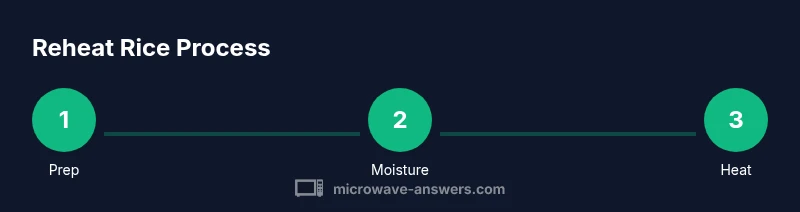
Gather and prep
Collect a microwave-safe container, lid, and a small amount of water or broth. Break apart any clumps of rice so heat penetrates evenly. This ensures uniform reheating and reduces hot spots.
Tip: Having everything ready prevents delays that could let rice linger at unsafe temperatures. - 2
Add moisture and spread evenly
Drizzle or sprinkle 1–2 tablespoons of water per cup of rice. Spread the rice into a thin, even layer to promote uniform heating and prevent dry patches.
Tip: Even layers heat more consistently than a thick mound. - 3
Cover and heat gradually
Cover the dish with a microwave-safe lid or wrap loosely to trap steam. Heat on medium power in short intervals, about 1–2 minutes at a time depending on quantity.
Tip: Pausing to stir between intervals stops cold pockets from forming. - 4
Stir, reheat, and verify
Stir the rice to distribute heat, then continue heating until the center is steaming hot. If possible, check with a thermometer to confirm the internal temperature is safe.
Tip: Even after reaching steam, give it another short round for even temperature. - 5
Rest and assess safety
Let the rice rest briefly after heating to finish steaming. If there are any signs of spoilage, discard rather than serving.
Tip: A short rest helps achieve a uniform texture and safer serving temperature. - 6
Store leftovers properly
If you’re not consuming the reheated rice right away, transfer to a clean container and refrigerate promptly. Do not reheat again if the rice has already been reheated once.
Tip: Label containers with date to track freshness.
Common Questions
Is it safe to reheat leftover rice in the microwave?
Yes, it is safe when you handle leftovers properly: refrigerate promptly, reheat to steaming hot, and avoid reheating more than once. Following these steps reduces the risk of bacterial growth and toxin formation.
Yes, it is safe when handled properly: refrigerate promptly, reheat to steaming hot, and don't reheat more than once.
Can reheating rice destroy Bacillus cereus toxins?
Reheating rice can kill live bacteria but may not destroy toxins that formed while the rice sat at room temperature. The best safeguard is proper cooling and prompt chilling before reheating.
Reheating may kill live bacteria but toxins could remain, so cooling promptly is essential.
How long should reheated rice be kept before eating?
Eat reheated rice promptly and avoid keeping it long after reheating. If you must store it, refrigerate promptly in a shallow container and consume within a short window.
Eat reheated rice promptly; refrigerate leftovers quickly and don't keep them for long.
What is the best way to reheat fried rice in the microwave?
Reheat fried rice the same way as plain rice: add moisture, cover to trap steam, and heat gradually. Stir regularly to distribute heat and avoid soggy edges.
Reheat fried rice with moisture, cover, and stir often to keep texture.
Why does reheated rice sometimes turn hard or dry?
Dry or hard texture happens when moisture escapes. Restoring moisture with a splash of water and covering during reheating helps, along with heating at moderate power.
Moisture loss causes dryness; add moisture and heat gently to restore texture.
Watch Video
Main Points
- Reheat rice safely by cooling promptly and heating evenly.
- Add moisture and cover to preserve texture.
- Heat to steaming hot throughout and avoid multiple reheats.
- Discard rice that shows signs of spoilage or off odors.
- Use a thermometer to confirm safe internal temperature when possible.