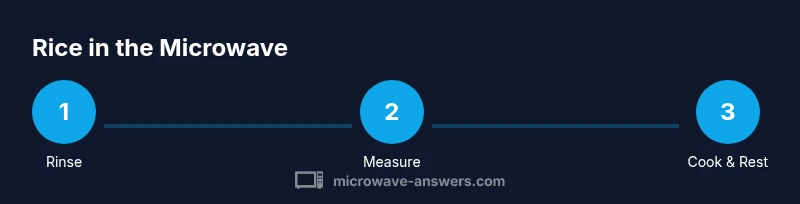
Can You Cook Rice in the Microwave? A Practical Guide
Learn how to cook rice safely and perfectly in a microwave with reliable ratios, timing, and safety tips. This Microwave Answers guide covers white and brown rice, equipment, troubleshooting, and cleanup.


Can you cook rice in the microwave? Yes. You can make fluffy white or brown rice using a simple water-to-rice ratio, a microwave-safe bowl with a vented lid, and brief resting time. This guide covers ratios, timing, tips, and common mistakes to help you get perfect microwaved rice every time.
Why microwaving rice is a practical option
Cooking rice in the microwave is a fast, hands-off method that fits busy weeknights and small kitchens. It minimizes cleanup because you can use a single, microwave-safe bowl with a vented lid and avoid boiling stovetop pots. The Microwave Answers team has tested rice in a variety of microwaves and found that consistent results hinge on three factors: using the right water ratio, keeping the lid vented to let steam escape, and letting the rice rest briefly after cooking. According to Microwave Answers, with attention to these details you can achieve fluffy, evenly cooked grains without an on-the-stove boil-over or burnt edges. The method also scales easily for different rice types, from white long-grain to brown varieties, making it a versatile option for quick meals while keeping safety in mind for home cooks and beginners alike.
Equipment and rice preparation are your first lines of defense. Rinsing removes surface starch and prevents gummy textures, while pre-measuring bits of water and rice keeps timing predictable. When you combine water, rice, and a covered container, you create a gentle steam environment that finishes the cook evenly. The result is rice that flakes apart rather than clumps, with grains that stay separate and tender.
Tools & Materials
- Microwave-safe bowl (glass or ceramic)(Must be large enough to prevent boil-over; consider a bowl with a loose lid or vented lid)
- Measuring cup(For accurate rice and water quantities)
- Rice (white or brown)(Rinse before cooking to remove excess surface starch)
- Water or broth(Use cold water for best texture; broth adds flavor)
- Fork or spoon(For fluffing after cooking)
- Vented lid or microwave-safe wrap(Allows steam to escape and prevents splatter)
- Timer(Keep track of cooking phases to avoid overcooking)
- Salt or seasonings (optional)(Add after cooking to taste)
Steps
Estimated time: 15-25 minutes
- 1
Rinse rice
Place the rice in a fine-mesh sieve and rinse under cold running water until the water runs clear. This removes excess surface starch that can make grains sticky and gummy. Rinsing helps produce a lighter, more separate texture after cooking.
Tip: Use a wide bowl to rinse more rice at once and check for any remaining chalky residues. - 2
Measure rice and water
Measure the rice and add water in the correct ratio for your variety: white rice typically 1:2 (rice:water); brown rice generally 1:2.5 to 1:3. Adjust for smaller or older rice if needed to improve tenderness.
Tip: For quinoa or other grains, consult specific ratios; rounding up water slightly prevents dry centers. - 3
Combine in bowl
Transfer rinsed rice to the microwave-safe bowl and add the measured water. Stir once to distribute the grains evenly and reduce clumping as it heats.
Tip: Add a pinch of salt if desired to enhance flavor, even in a plain rice dish. - 4
Cover the bowl
Seal the bowl with a vented lid or microwave-safe wrap to trap steam while allowing leftover steam to escape. This balances moisture and prevents boil-overs.
Tip: If you don’t have a vented lid, leave a small gap for steam and use a microwave-safe cover with a vent hole. - 5
Cook the rice
Cook on high for the initial phase (about 10 minutes for white rice; 12-14 for brown, depending on your microwave). The goal is to bring water to a boil and let steam finish cooking the grains.
Tip: If you notice rapid boil-overs, pause, stir gently, and reduce to 50-70% power for the remainder of the time. - 6
Let it rest
Let the bowl stand, covered, for 5-10 minutes after microwaving. Resting allows the steam to finish cooking the grains and helps prevent a crunchy center.
Tip: Keep the lid on during resting to trap residual steam and avoid heat loss. - 7
Fluff and serve
Fluff the rice gently with a fork to separate the grains, then serve. Resting plus gentle fluff creates a light, appetizing texture.
Tip: If the rice seems slightly undercooked, cover and microwave in 1-2 minute bursts, checking texture after each interval.
Common Questions
Can you cook white rice in the microwave?
Yes. For white rice, use a 1:2 rice-to-water ratio in a microwave-safe bowl, cover, and cook for about 10 minutes before resting. Adjust times slightly based on your microwave and rice variety.
Yes, you can cook white rice in the microwave using a 1-to-2 ratio and a covered bowl, then let it rest for best texture.
Can you cook brown rice in the microwave?
Yes, but brown rice needs more water and time. A common approach is 1:2.5 to 1:3 rice-to-water and longer cooking (about 20 minutes total) with a rest period.
Yes, brown rice works in the microwave with more water and time, followed by a short rest.
Is microwaving rice safe?
Yes, when you use microwave-safe containers and avoid metal, and handle hot bowls with care. Steam can burn, so use mitts and allow cooling briefly.
Yes, use microwave-safe containers and handle hot bowls with care after cooking.
Can I use flavored or pre-seasoned rice?
Yes, but water ratios may vary from the package. Start with the package guidance and adjust with additional water if needed to prevent drying.
Yes, but follow the package guidance and adjust water to prevent drying.
What container is best for microwaving rice?
A microwave-safe glass or ceramic bowl with a vented lid works well. Avoid metal and ensure the container is large enough to prevent boil-overs.
Use a microwave-safe glass or ceramic bowl with a vented lid and avoid metal.
How do I fix mushy or undercooked rice?
If mushy, reduce water next time and give it a longer rest. If undercooked, add a little hot water, reseal, and microwave briefly, then rest again.
Adjust water and rest longer to fix mushy or undercooked rice.
Main Points
- Rinse rice to reduce starch and improve texture.
- Use the correct water ratio for your rice variety.
- Vent steam and rest after cooking for fluffy grains.
- Microwave monitoring and gentle stirring prevent boil-overs.
- Fluff before serving for best texture.