How to Boil Eggs in the Microwave: Safe, Fast, and Easy
Discover a safe, fast method to boil eggs in the microwave with step-by-step instructions, timing tips, and essential safety guidance from Microwave Answers.


You can boil eggs in the microwave by partially submerging them in water, piercing the shell, and cooking in short intervals until the yolk reaches your preferred consistency. This method minimizes the risk of cracking if you use a microwave-safe bowl, a little water, and a covered container. Always start with fresh eggs and monitor for safety.
Why microwave boiling is convenient and practical
According to Microwave Answers, many home cooks turn to the microwave for a quick egg boil because it can save time and simplify kitchen routines. When done correctly, this method reduces the waiting time compared with traditional stovetop boiling and minimizes the use of extra pots and water. The key is to understand how microwaves heat water and how eggs respond to rapid, indirect heating. With the right water depth, a vented lid, and careful timing, you can achieve reliable results for soft, medium, or hard yolks. This block also helps you gauge when microwave boiling is a good fit and when it’s better to use a traditional pot, especially if you’re cooking for a crowd or aiming for precise yolk texture.
Throughout this guide, you’ll see practical checks you can perform without opening the microwave, plus notes on how different microwaves may affect timing. If you’re new to this method, start with one egg and a modest water amount to calibrate your timing before attempting larger batches. Microwave Answers emphasizes safety and consistent technique to prevent overcooking or uneven heating.
Safety considerations for microwaving eggs
Safety is the cornerstone of microwaving eggs. Cracked shells can release steam and splatter, so piercing the egg to vent built-up pressure is essential. Use a microwave-safe bowl and ensure the eggs are covered by water by about one inch to prevent dry heating. A vented lid or microwave-safe plate helps control splatter and keeps heat even. Do not skip the resting period between bursts, as heat continues to distribute after the microwave stops. If you notice any unusual cracking, stop immediately and reassess water depth and power level. By following these safety practices, you reduce the risk of hot spots and ensure a safe, egg-friendly microwave experience.
Microwave Answers analysis shows that controlled heating, a vented cover, and ample water are the most reliable factors for preventing cracks and uneven cooking, especially with smaller or ultra-fresh eggs.
Choosing the right eggs and prep steps
Fresh eggs can be used for microwave boiling, but slightly older eggs are often easier to peel after cooking. Inspect eggs for cracks and remove any that appear compromised. Arrange eggs in a single layer in a microwave-safe bowl to avoid stacking, which can lead to uneven heating. Fill the bowl with water so that the eggs are submerged by about one inch, and add a pinch of salt if you like, which some cooks claim helps flavor and integrity of the shell. Prepare a timer or use your microwave’s built-in timer, and have a cold water bath ready for quick cooling once the cooking cycle ends. Preparing properly minimizes surprises and improves peelability and texture.
Equipment and prep checklist
Before you start, gather a microwave-safe bowl, a plate or vented lid, a supply of water, fresh eggs, a pin or egg piercer, and a timer. Keep a kitchen towel handy for handling hot bowls and a separate bowl filled with cold water for the ice bath. If you plan to cook more eggs, consider cooking in small batches to maintain consistent timing. Having these items ready reduces the chance of scrambling mid-cook due to missing components.
Tip: Test your microwave with one egg first to calibrate power and timing before scaling up to multiple eggs.
Understanding doneness: soft, medium, hard
The doneness you want dictates your heating intervals. Soft eggs require less total heat and shorter rest periods; medium eggs need a balanced approach; hard-boiled eggs demand a longer heat cycle with careful rest to avoid rubbery yolks. Because microwave performance varies by model and wattage, use this as a starting point and then fine-tune in small steps for your appliance. A common approach is to heat in short bursts, assessing doneness after each burst, and then finishing with a brief rest so heat redistributes evenly.
Keep in mind that yolk texture can shift after cooling, so it’s wise to test doneness with one egg first and adjust accordingly.
The core microwave method: overview
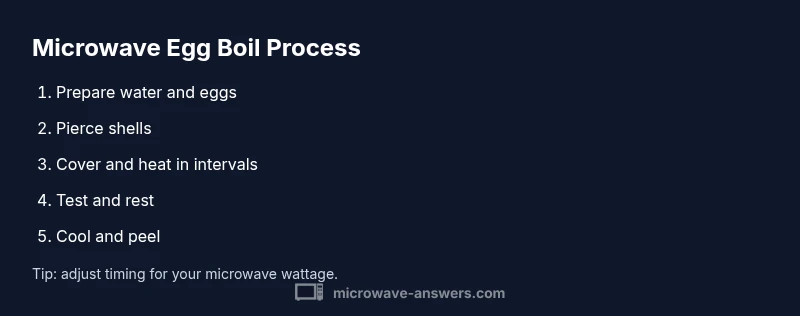
The essential idea is to heat water and eggs gently in a covered bowl so heat distributes rather than concentrates in hot spots. Start with water-leveling, pierce each egg, cover, and cook in short intervals on medium power, pausing to rest and test. The exact times will depend on your microwave, egg size, and desired doneness. This overview provides the backbone for the detailed STEP-BY-STEP instructions that follow, giving you a reliable framework for quick, consistent results.
Troubleshooting common issues
If eggs crack during heating, reassess water depth and ensure you’re using a vented lid to escape pressure. If the yolk is undercooked, extend the heating time in small increments and allow a longer rest period. Overcooked eggs become tough and rubbery; scale back the power or shorten bursts, then finish with a cool-water bath to halt cooking. Uneven cooking is more likely if eggs are not in a single layer or if the water doesn’t fully cover them. With practice, you’ll recognize your microwave’s sweet spot for this technique.
Microwave vs stovetop: pros, cons, and best uses
Microwaving is fast and energy-efficient for small batches, and it avoids bringing a pot of water to a boil. However, microwaves vary, making precise timing trickier than stovetop boiling. For a quick snack or meal prep, the microwave method is ideal when done with careful water depth, vents, and rest periods. If you’re cooking for a crowd or seeking perfect consistency for large batches, you might prefer traditional boiling. The best choice depends on quantity, available time, and your microwave’s characteristics.
Variations and tips for different eggs sizes
Medium eggs typically require slightly less time than large eggs. If you’re using very large eggs, reduce the initial water level by a few inches and extend the rest period to accommodate greater heat distribution. Conversely, smaller eggs may cook faster, so monitor more closely in the early attempts. For extra-large batches, consider testing in two rounds to maintain even doneness and peeling ease.
Final safety and cleanup tips
Always cool eggs promptly in cold water after microwaving to stop the cooking process. Peel gently, and store leftovers in a covered container in the refrigerator, where they’ll remain safe for up to a week. Wipe the microwave interior after use to remove any splatter, and dispose of any cracked eggs carefully. By following these steps, you’ll minimize waste and maximize safety for future microwave egg boils.
AUTHORITY SOURCES
- https://www.fsis.usda.gov/food-safety
- https://www.cdc.gov/foodsafety
- https://www.hsph.harvard.edu/nutritionsource/
Tools & Materials
- eggs(Fresh or slightly older eggs; avoid cracked eggs)
- microwave-safe bowl(Medium to large size, wide enough for even water coverage)
- water(Enough to cover eggs by about 1 inch)
- pin or egg piercer(Pierce the rounded end of each egg)
- vented lid or plate(Prevents splatter and helps heat distribution)
- timer(Track heating intervals)
- bowl of cold water(Stop cooking and cool eggs quickly)
- towel or glove(Handle hot bowls safely)
Steps
Estimated time: Total time: 8-12 minutes (including rest periods)
- 1
Gather eggs and water
Place eggs in a microwave-safe bowl and add water until they are covered by about one inch. This setup ensures even heating and reduces the risk of cracking. Ensure the eggs are in a single layer to promote uniform cooking.
Tip: Tip: Use a small amount of salt in the water if you like; it can help flavor and might aid shell integrity. - 2
Pierce the eggs
Using a pin or egg piercer, gently pierce the rounded end of each egg. Piercing releases steam and helps prevent explosive pressure buildup during heating.
Tip: Pro tip: Don’t pierce yolks; keep the piercing on the shell’s broad end only. - 3
Cover the bowl
Place a vented lid or microwave-safe plate over the bowl. A vented cover traps heat evenly while letting steam escape, reducing splatter.
Tip: Pro tip: Leave a small vent so steam can escape gradually. - 4
Heat in bursts
Microwave on medium power (about 50-70%) for 2-4 minutes, then stop and let the bowl rest for 1 minute to distribute heat. This gradual approach minimizes cracking and ensures even cooking.
Tip: Pro tip: Use short bursts to monitor progress and avoid overcooking. - 5
Check doneness
Carefully test one egg by cutting into the shell or peeling slightly to inspect the yolk. If it’s not yet set, continue in 1-minute bursts until your desired doneness is reached.
Tip: Pro tip: Remain mindful of hot steam when peeling. - 6
Cool immediately
Transfer heated eggs to a bowl of cold water for about 5 minutes to stop the cooking process and ease peeling. This step improves texture and peelability.
Tip: Pro tip: Placing eggs in cold water helps prevent overcooking and makes peeling easier. - 7
Peel and serve
Peel eggs gently and pat dry. Serve warm or chill for later use. If storing, keep refrigerated in a covered container to maintain quality.
Tip: Pro tip: If peeling is tough, crack the shell and roll the egg lightly to loosen the membrane before peeling. - 8
Scale up if needed
If cooking more eggs, repeat with fresh water and the same steps. For larger batches, reduce the batch size to maintain consistent heat distribution and doneness.
Tip: Pro tip: Calibrate times with a single egg first, then extend to the batch size.
Common Questions
Can I really boil eggs in the microwave?
Yes, you can, as long as you use water, pierce the shells, and monitor the timing to prevent overcooking or cracking.
Yes—it's possible to boil eggs in the microwave if you follow safety steps and monitor the cook time.
How long does it take to boil eggs in the microwave?
Total time varies by microwave wattage and egg size, but expect several minutes of heating plus a short rest. Start with a calibrating test.
Total time varies, but plan for a few minutes of heating plus rest, then test for doneness.
Can I use frozen eggs in a microwave boil?
Frozen eggs are not recommended for this method because ice crystals can damage texture and uneven heating can occur.
Frozen eggs aren’t ideal for this method because they can cook unevenly and affect texture.
Are microwaved eggs safe to eat?
Yes, they’re safe when fully cooked and handled with clean utensils. Follow standard food safety practices for eggs.
Yes, as long as they’re cooked through and handled safely.
How can I avoid rubbery yolks?
Cook in shorter bursts at medium power, test frequently, and stop when the yolk reaches your preferred doneness. Finish with a quick cold-water rinse.
To avoid rubbery yolks, use shorter heating bursts and test often, then cool quickly.
What should I do if the egg cracks during cooking?
Cracking usually means the egg didn’t have enough water coverage or the microwave was too intense. Reassess water depth and use a vented lid.
If it cracks, pause, add water if needed, and adjust the lid to control heat.
Watch Video
Main Points
- Plan a one-egg test run to calibrate timing.
- Pierce shells to vent steam and prevent explosions.
- Use water coverage and a vented cover for even heating.
- Cool promptly in cold water to stop cooking and ease peeling.
- Adjust times based on microwave wattage and egg size.