How to Soft Boil Eggs in the Microwave
Learn to soft boil eggs in the microwave with a reliable, safe method. This step-by-step guide covers timing, water amounts, safety tips, and troubleshooting to achieve tender whites and runny yolks every time.


How to soft boil eggs in the microwave: submerge one or two eggs in a microwave-safe bowl with enough water to cover. Heat in short, timed bursts at medium power, pausing between cycles to prevent overcooking. Finish with a brief ice-water bath to stop cooking. Practice yields consistent yolk doneness while avoiding shells cracking.
Why this method works for soft boiled eggs in the microwave
Learning how to soft boil eggs in the microwave can save time in busy kitchens and reduce the heat load on your stove. The trick is not to rush the heat, but to control it with short pulses and gentle carryover cooking. When you heat in small bursts and vent the shell, you give the steam a path to escape rather than letting pressure build inside the shell. The result is an egg with a tender white and a yolk that remains pleasantly runny at the center.
According to Microwave Answers, the key to consistent results is precision in water volume, egg temperature, and cycle length. Start with a single egg and a stable baseline: a standard large egg at room temperature, submerged in water by about one inch. As you gain confidence, you can experiment with two eggs, but ensure they both sit without crowding and that your microwave has enough headroom to distribute heat evenly. Temperature differences between microwave models can affect outcomes, so a gentle, repeatable routine is essential.
Additionally, the time you let the egg rest after microwaving matters. A short rest lets the yolk thicken slightly without becoming chalky, while a longer rest can push yolk toward a soft-cooked consistency. Keep a timer handy and record what works for your appliance.
Safety considerations and why venting matters
Microwave cooking concentrates energy into a small volume, which means safe handling is critical when cooking eggs. Venting the shell is essential to prevent pressure buildup that could crack the egg or eject hot water. Use a small puncture at the wide end of the shell with a pin or toothpick to create a tiny vent. Place the eggs in a microwave-safe bowl and fully submerge them in water to keep the shells from overheating and to distribute heat more evenly. Do not seal the bowl with a tight lid; steam needs an escape path. If you notice cracking during heating, pause the process and allow the egg to cool slightly before resuming.
Always use a microwave-safe container and avoid metal rims or lids. Water absorbs microwave energy and acts as a heat buffer, reducing the chance of a sudden temperature spike that could rupture the shell. When in doubt, test with a single egg first and observe its behavior before cooking more. If your microwave runs hot or has a magnetron that cycles irregularly, reduce power to maintain gentle heating.
Finally, never microwave eggs in the shell for this method. Shells can trap steam and lead to dangerous eruptions. If you prefer to cook eggs in shells, consider traditional stovetop boiling or a dedicated egg cooker that’s designed for shell-in cooking.
Essential tools and ingredients
Before you start, assemble a small toolkit that supports precise microwave cooking. The goal is to minimize variables, so gather only what you need.
- Eggs (large, fresh or near-fresh; room temperature is ideal)
- Microwave-safe bowl or ramekin that comfortably fits the egg and water
- Water enough to cover the egg by at least 1 inch
- Pin or toothpick to vent the shell
- Microwave-safe plate or vented lid to reduce splatter
- Timer or smartphone with repeating alarm
- Optional: a pinch of salt or a splash of vinegar to enhance flavor and slightly affect cooking dynamics
- Optional: ice water for the immediate stop-cooking bath
Tip: Start with one egg to dial in timing, then scale to two once you’re sure of your microwave’s behavior. If you have a convection feature, you can run a separate test with the fan off to reduce variability.
The science of microwave heat and yolk texture
Microwave energy heats water and protein structures inside the egg. Because heat is delivered quickly, carryover cooking can finish the egg even after the microwave stops. That’s why timing is critical: too long in short bursts can overcook the yolk and whiten, while too little heat leaves the yolk runny but the white undercooked. A stable water bath provides even heat transfer and helps protect the shell from hot spots. Fresh eggs sometimes peel differently than older ones, but the cooking dynamics remain the same: short, controlled heating and a brief rest yield the best yolk texture.
The Microwave Answers team emphasizes repeatable cycles to minimize variability between microwave models. Start with small, consistent intervals and log your outcomes. Over time you’ll develop a personal baseline that yields the desired yolk consistency without cracking or rubbery whites.
Step-by-step overview
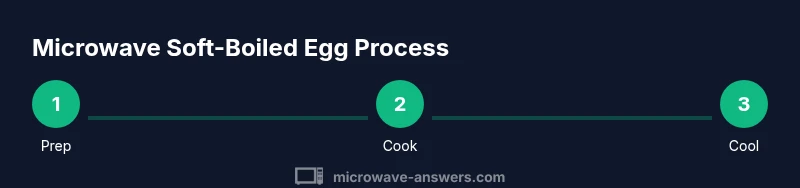
To give you a clear path, this overview mirrors the detailed steps in the dedicated STEP-BY-STEP section. The process starts with gathering tools, then venting the shell, submerging the egg, and executing short microwave bursts with planned rests. After heating, you’ll rest briefly, cool the egg, and peel under running water for clean removal. This approach prevents uneven cooking and helps you dial in timing for your specific microwave model.
Troubleshooting common issues
Even with careful technique, issues can arise. If the white is undercooked or gelatinous, your cycles were too short or rest too brief. If the yolk is too firm, you’ve cooked too long or allowed carryover heat to finish the yolk. Cracking usually results from excessive pressure or overheating; ensure venting and water coverage. In some cases, yolk rupture can occur during peeling; peeling under cool water reduces friction and helps membranes separate cleanly. Remember that different microwave brands behave differently, so use a baseline from your own device and adjust gradually.
Variations for yolk texture and flavor
If you prefer a runnier yolk, shorten the total heating duration by 15-20 seconds and increase the post-heat rest by 30-60 seconds. For a slightly firmer but still tender yolk, extend the rest time by 30 seconds and keep a gentle simmer in the water bath. You can also experiment with timing for multiple eggs—just ensure there’s enough water and space for heat to distribute evenly. A pinch of salt or a splash of vinegar in the water can subtly alter flavor and texture, but avoid overpowering the delicate egg content. As you tailor the technique to your microwave, you’ll notice consistent improvements in yolk uniformity and shell integrity.
Cleanup and safe storage
After peeling, refrigerate any unused eggs within two hours to maintain quality. Hard-cooling with cold water immediately after cooking helps stop carryover cooking and makes peeling easier. Store boiled eggs in a sealed container or covered bowl for up to 3-5 days. Reheating should be gentle and brief to avoid toughening the whites; consider a quick 10-15 second warm-up, checking for texture after each short interval. If you plan to reuse the cooking liquid for flavor, strain and cool it first to prevent bacterial growth, and discard if it appears cloudy or has visible particulates.
Quick tips to master this technique
- Practice with one egg first to dial in power and timing.
- Always vent the shell and keep water coverage to prevent eruptions.
- Use short, repeatable cycles and rest between cycles to avoid overcooking.
- Cool briefly after cooking to stop carryover heat and make peeling easier.
- Log your results with both cycle times and yolk texture to build a personal baseline.
- For multiple eggs, ensure enough space and water for even heating; do not crowd the eggs.
Final note on mastery
With a steady routine and careful observation, you can consistently produce a soft-boiled egg with a tender white and a yolk that remains deliciously runny at the center. The Microwave Answers team recommends starting from a simple baseline and gradually adjusting cycles to match your appliance’s behavior. Most home microwaves will produce reliable results once you adopt a repeatable protocol and respect the venting and water coverage rules.
Tools & Materials
- Eggs (large, at room temperature)(Begin with fresh eggs for predictable texture)
- Microwave-safe bowl or ramekin(Prefer glass or ceramic; avoid metal)
- Water to cover by about 1 inch(Sufficient depth for heat distribution)
- Pin or toothpick to vent the shell(Make a small vent at the wide end)
- Microwave-safe plate or vented lid(Prevents splatter)
- Timer or smartphone(Accurate timing is essential)
- Optional salt or vinegar(A touch for flavor and slight texture difference)
- Ice bath or cold water(Stops cooking quickly after heating)
Steps
Estimated time: 12-15 minutes
- 1
Gather supplies
Collect eggs, water, a microwave-safe bowl, a venting implement, a plate or lid, and a timer so you can start with a clean workspace and repeatable timing.
Tip: Having everything ready minimizes delays and inconsistent heat. - 2
Pierce the shell
Gently poke the wide end of the egg with a pin to create a small vent that prevents pressure buildup during heating.
Tip: Aim for a shallow hole to avoid yolk leakage. - 3
Submerge in water
Place the egg in the bowl and add water until it covers the egg by about one inch to ensure even heat transfer.
Tip: Water acts as a heat buffer and reduces shell cracking risk. - 4
Microwave in cycles
Cook on medium power in short cycles (e.g., 30 seconds), pausing 15-20 seconds between cycles, and repeat for three cycles total.
Tip: Adjust cycles if your microwave runs hotter or cooler. - 5
Rest and finish cooking
Let the egg rest in the hot water for 60-90 seconds after the final cycle to finish cooking through carryover heat.
Tip: Resting helps yolk set without overcooking whites. - 6
Cool and peel
Transfer to ice bath for 30 seconds, then peel under running cold water to ease membrane separation.
Tip: Peeling under water minimizes sticking and skin damage. - 7
Serve immediately
Dry gently and season as desired; serve while yolk remains softly set.
Tip: If not eating right away, refrigerate and rewarm briefly in 10-second intervals.
Common Questions
Is it safe to microwave eggs in the shell?
No. For this method, never microwave eggs in the shell. The shell can trap steam and cause dangerous eruptions. Instead, pierce the shell and cook the egg out of the shell in water.
No—do not microwave eggs in the shell; pierce and cook the egg in water.
How many eggs can I cook at once?
Two eggs can usually be cooked together if there’s enough space and water for even heat distribution. Cooking more may require longer cycles or a larger bowl.
Two eggs can often be cooked at once; if you add more, watch for uneven cooking.
What power setting is best?
Use medium power rather than high to allow gentle heat and reduce the risk of exploding yolks.
Medium power helps you control heat more reliably.
How do I prevent yolk from overcooking?
Keep to short bursts and stop heat early enough to rely on carryover cooking. A quick cold-water stop after heating helps lock in the soft yolk.
Short bursts plus a quick cold-water stop keep the yolk soft.
Can I reuse the cooking water?
Yes, you can reuse the water for a second batch if it’s still clean, but replace it if it becomes stained or contaminated with shell fragments.
You can reuse it if it’s clean, otherwise start fresh.
What if the yolk is still runny after rest?
Return to the microwave in smaller cycles or extend the rest by 15-30 seconds. Avoid long cycles to prevent whites from toughening.
Try shorter cycles and a longer rest for a runnier yolk.
Watch Video
Main Points
- Use water to buffer heat and prevent shell damage.
- Venting and timed bursts reduce splatter and cracking.
- Rest briefly after heating to finish yolk texture.
- Cool quickly to stop carryover cooking and ease peeling.