Soft-Boil Eggs in the Microwave: A Safe, Easy Method
Learn how to soft boil eggs in the microwave safely with a water bath, shell venting, and precise timing. This practical guide covers safety tips, step-by-step methods, troubleshooting, and serving ideas for a tender, runny yolk.


You can achieve a soft boil egg microwave style by cooking an egg in a water bath inside a microwave-safe container. This quick method aims for a tender, runny center while avoiding overcooking. You’ll need a microwave-safe bowl, water, and a timer, plus a safety pin to pierce the shell. Ready to try it? The steps below guide you to success.
What a microwave soft-boiled egg aims for
A microwave soft-boiled egg aims for a tender yolk with just-set whites, achieved by confining the egg in a shallow water bath inside a microwave-safe container. The microwave’s rapid energy makes timing critical; too long or too hot can turn the yolk firm and overcook the white. The trick is to use a gentle heat, a vented container, and a brief rest after cooking to finish the yolk without cracking the shell. This method is practical for busy mornings, dorm rooms, or quick breakfasts, and when done carefully, it delivers consistent results across eggs of similar size. The approach contrasts with traditional stovetop soft-boiling, which relies on a rolling boil; the microwave version relies on precise timing and safe venting. The Microwave Answers team emphasizes slow, controlled heat and venting for best results.
Safety foundations for microwaving eggs
Eggs can explode if steam builds inside without venting, and hot water can scald. Always pierce the shell with a pin or needle to create a safe vent, use a microwave-safe container, and keep water level shallow enough to cover the egg halfway. Do not seal the container with tight-fitting lids. Use medium power and short bursts; rest between bursts to prevent overheating. After cooking, let the egg rest in the hot water for 30-60 seconds to finish gentle cooking. If you notice any unusual smells, turn off the microwave and discard the egg. This technique minimizes risk when done carefully. According to Microwave Answers, venting and controlled timing are key to safe results.
Equipment and ingredients you’ll need
- Microwave-safe bowl or mug (glass or ceramic) with a capacity of at least 8 oz (240 ml) … or two eggs in a single shallow bath if your container allows.
- Water sufficient to cover about half to three-quarters of the egg.
- A sterile pin or toothpick to vent the shell.
- A microwave with adjustable power (preferably 50-70% for soft-set yolks).
- A timer or smartphone to track short cooking bursts.
- Fresh eggs at room temperature for even cooking. Optional: a plate to cover the bowl lightly to minimize splatter. The right combination helps you avoid surprises and produce a reliably tender yolk. Microwave Answers recommends starting with one egg and adjusting from there.
Timing and power: the science behind the yolk
Power and time are your levers for a soft center. Start with medium power (about 50-70%) and short cooking bursts (1-2 minutes), followed by 30-60 seconds of rest. Resting lets carryover heat finish the yolk without overcooking the whites. If the yolk remains too runny after the rest, you can run a second short burst of 15-20 seconds. If it’s overcooked, reduce time and power next attempt. The precise window will depend on your microwave’s wattage and egg size, so adjust by small increments and document your results for consistency.
Troubleshooting common issues
- Cracked shell after heating: Ensure you vent with a pin, don’t overfill water, and avoid sealing lids.
- Yolk overcooked: Shorten bursts by 15-20 seconds or lower power.
- Whites undercooked: Extend the rest period by 15-30 seconds and consider a slightly longer initial cook, then rest again.
- Uneven cooking: Stir or rotate the bowl mid-cycle if your microwave has hot spots, and ensure the egg is fully submerged in water for even heat distribution.
Variations and yolk control: matching your preferences
For a slightly firmer white with a very runny yolk, shorten the cook time and increase the rest period by 20-30 seconds. For a medium center, aim for a 2-3 minute cook at medium power with a 60-second rest. If you’re cooking multiple eggs, increase total time modestly and rotate the eggs between bursts to promote even heating. Fresh eggs behave slightly differently than room-temperature eggs; if you notice inconsistent results, bring eggs to room temperature a bit before cooking.
Testing doneness and serving ideas
Peel with care after a brief cold-water rinse to stop cooking. If the yolk is not as runny as you like, give it another 10-15 seconds in the microwave on low power, or let it rest longer in hot water. Serve on toast, with avocado, or as part of a light breakfast plate. You can also pre-prep a batch of soft-boiled eggs in the microwave for quick weekday meals—just keep track of your timings and adjust for your specific appliance.
Safety recap and cleanup
Always vent the shell, use a microwave-safe container, and avoid sealed lids. Handle hot bowls with oven mitts, and run cold water over the eggs briefly after cooking to halt carryover heat. Dispose of shells promptly to prevent slipping, and wash containers with warm soapy water. A quick wipe-down prevents splatter from decorating the kitchen and keeps your setup ready for the next attempt.
Tools & Materials
- Microwave-safe bowl (glass or ceramic)(Capacity ≥ 8 oz (240 ml); deep enough to cover the egg halfway)
- Water(Enough to submerge half to three-quarters of the egg)
- Eggs (room temperature if possible)(Large eggs recommended; uniform size helps consistency)
- Toothpick or pin(Vent the shell by creating a small hole at the wider end)
- Microwave with adjustable power(50-70% power is typical for a soft yolk)
- Timer or smartphone(Track short bursts and rests for precise timing)
- Plate or microwave-safe lid(Optional to reduce splatter and retain heat)
Steps
Estimated time: Total time: 8-12 minutes
- 1
Gather and prepare the water bath
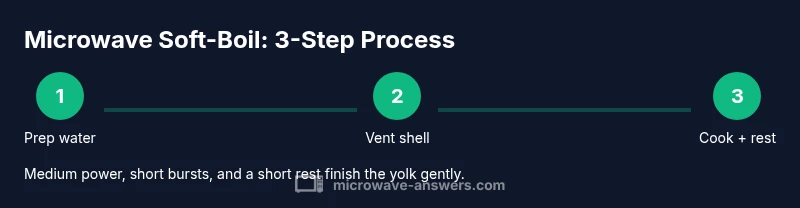
Fill the microwave-safe bowl with enough water to submerge about half of the egg. The water should be shallow enough to avoid extra heating mass but deep enough to surround the egg for even cooking.
Tip: Use room-temperature water to minimize thermal shock to the shell. - 2
Pierce the shell
Use a pin or toothpick to create a small vent near the wider end of the egg. This prevents steam buildup and reduces the risk of cracking.
Tip: Make a single, tiny hole rather than multiple pokes. - 3
Submerge and start cooking
Gently place the egg into the water-filled bowl. Set the microwave to about 50-60% power and cook in short bursts of 1-2 minutes.
Tip: If your microwave runs hot, reduce power or shorten each burst. - 4
Pause and rest
After each burst, stop the microwave and rest the egg in the hot water for 30-60 seconds to finish cooking with carryover heat.
Tip: Resting helps the yolk reach a tender center without overcooking the whites. - 5
Test doneness and cool
Carefully remove the egg, cool briefly under cold water, then peel and check yolk consistency. If needed, reheat in short 10-15 second bursts.
Tip: Cooling stops cooking and makes peeling easier. - 6
Serve or store
Serve immediately or store peeled egg in the fridge for up to one day. Reheat gently if you want to rewarm the yolk before serving.
Tip: Label stored eggs with the cooking date for freshness.
Common Questions
Can you soft boil eggs in the microwave safely?
Yes, when you vent the shell, use a shallow water bath, and cook in short bursts with rests. This reduces the risk of explosion and overcooking.
Yes, you can safely soft boil eggs in the microwave with venting, a water bath, and careful timing.
What power level is best for a soft yolk?
Medium power (about 50-70%) is ideal for a tender yolk; adjust slightly based on your microwave’s wattage.
Medium power works best; adjust to your microwave if needed.
How long does it take to cook an egg this way?
Active cooking is typically 1-2 minute bursts with 30-60 second rests, plus a final rest and cooling. Total time usually falls under 10-12 minutes depending on egg size.
Most batches take under 12 minutes from start to finish.
How should I adjust for larger eggs?
Large eggs may need one additional short burst or a slightly longer rest; monitor yolk texture and adjust timing by 15-20 seconds per cycle.
Larger eggs might need a bit more time; test and adjust in small steps.
I hear popping sounds. Is that normal?
A small pop is common when vented eggs release steam. If pops are loud or frequent, reduce time or power and ensure venting is adequate.
A few pops can happen; reduce time or power if it seems excessive.
Watch Video
Main Points
- Start with room-temperature eggs for even cooking
- Vent the shell and use a vented/container lid
- Cook in short bursts and rest to control yolk texture
- Cool briefly before peeling to stop cooking