How is Microwave Different from Air Fryer: A Thorough Comparison
An analytical comparison of microwave vs air fryer, covering heating methods, texture outcomes, energy use, use cases, and safety tips to help you choose the right tool for each task.


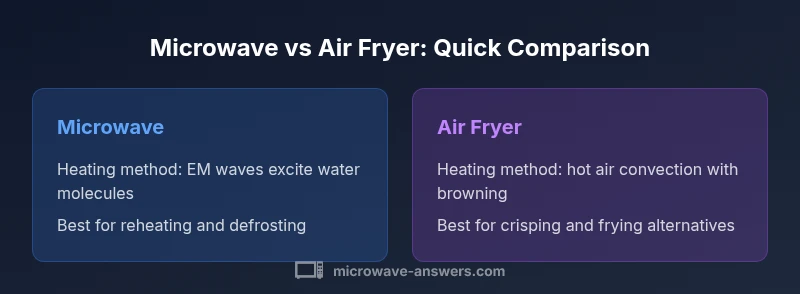
How is microwave different from air fryer? In short, a microwave heats by EM waves that excite water molecules, delivering fast, moisture-rich reheating. An air fryer uses convection and a heated chamber to brown and crisp foods. So, the microwave wins for speed and moisture, while the air fryer shines for texture and browning. Use both to cover most tasks. This quick snapshot prepares you for the deeper analysis below.
Why understanding how is microwave different from air fryer matters
For home cooks, understanding how is microwave different from air fryer helps you pick the right tool for the job, save time, and avoid missteps. This comparison focuses on the fundamental physics, typical use cases, and practical trade-offs. According to Microwave Answers, the two appliances do not merely cook foods in the same way; they use distinct heating philosophies that shape results, energy use, and convenience. The microwave relies on electromagnetic waves that heat water molecules, producing rapid heat throughout the dish. The air fryer relies on a heated chamber and high-velocity air to brown and crisp surfaces. This difference means the decision often comes down to whether you prioritize speed and moisture retention or texture and browning. In weeknight cooking, understanding these differences reduces trial-and-error and helps you design better meal routines. Microwave Answers analysis shows that most households benefit from having both devices accessible to handle contrasting tasks, such as reheating leftovers versus achieving a crispy finish on vegetables. The goal of this guide is to lay out clear criteria, typical outcomes, and practical tips so you can make the best choice or use them in tandem.
Core technology: how microwaves heat vs hot-air convection
The central difference in how is microwave different from air fryer rests in physics and design. A microwave oven emits electromagnetic waves that target dipolar water, fat, and sugar molecules. The energy absorption translates into rapid molecular motion and heat that travels through the food, often with minimal browning. In contrast, an air fryer uses a heating element and a fan to generate a hot air column that circulates around the food. This convection approach dries surface moisture quickly and pushes fat and juices toward the exterior to produce browning. The two devices thus optimize for different outputs: the microwave is superb for speed and moisture retention in reheating tasks; the air fryer excels at browning and texture development. Consumers who understand this basic physics can set expectations more accurately and reduce trial-and-error attempts. In practice, many households use both devices to cover a broad set of tasks: the microwave for quick, even heating; the air fryer for crispness and a browned exterior.
Food outcomes: reheating vs crisping
When you compare how is microwave different from air fryer in terms of results, the outcomes are clear. The microwave tends to heat foods uniformly and quickly, preserving moisture and preventing overly dry textures when used properly. It is ideal for reheating soups, stews, leftovers, and liquid-rich dishes where speed matters. The air fryer, by contrast, excels at creating a browned exterior and a satisfying crispness, making it a better choice for French fries, fried chicken substitutes, vegetables, and foods that benefit from surface browning. You may notice that the microwave can sometimes leave foods with a soggy or steamed texture if not finished properly, whereas the air fryer can deliver a crisp finish even from ingredients that would otherwise steam. The practical takeaway: match the appliance to the desired texture and moisture level for the best eating experience.
Time efficiency and energy use
A key part of understanding how is microwave different from air fryer concerns time and energy. A microwave delivers near-instant heat by exciting water molecules, often reducing overall cooking time for reheating and defrosting. Energy use for quick tasks tends to be lower with a microwave, especially for small portions. An air fryer requires a longer preheat (in some models), then uses a constant stream of hot air to cook and crisp, which can consume more energy per minute but may save time on certain tasks by producing finished texture without the need for deep frying. Over a typical week, you may find that microwaves handle most rapid reheats while air fryers handle batch crisping on weekends or busy dinners, representing complementary energy profiles rather than a binary winner.
Use cases: when to reach for a microwave vs an air fryer
Understanding how is microwave different from air fryer becomes practical when designing weekly menus. The microwave is unbeatable for quick reheating, defrosting frozen meals, melting butter, steaming vegetables with moisture, and softening sauces. It is also helpful for certain baking tasks when used with a microwave-safe dish and appropriate timing. The air fryer, meanwhile, is excellent for creating crisp textures on frozen snacks, reheated leftovers that benefit from browning, roasting small batches of vegetables, and cooking proteins that benefit from a seared outside. If you need a one-dish solution for a fast lunch, the microwave has the edge. If you want crispy fries or roasted vegetables with a browned exterior, the air fryer is the better tool. In practice, many cooks use both in tandem to optimize results across a full week of meals.
Cost and maintenance considerations
A practical look at how is microwave different from air fryer also involves cost and upkeep. Basic microwaves tend to be more affordable upfront and have simpler cleaning routines, with the interior wiped down after use and periodic turntable inspection. Air fryers can cost more initially, especially when you add accessories or larger capacities, and require more routine maintenance on the basket and tray due to oil or food residue. Over time, energy costs can balance out depending on usage patterns; a microwave typically wins on short, high-frequency tasks, while an air fryer may be more energy-efficient for frequent crisping of small portions. Both devices, when properly used, offer dependable performance with manageable maintenance.
Safety and care: handling and safety tips
Safety considerations are integral to how is microwave different from air fryer. Always follow appliance manuals, keep vents clear, and avoid overheating liquids. A microwave can cause splatters or thermal burns if containers are overheated; use microwave-safe plastics and vented lids. An air fryer requires careful handling of hot baskets, avoidance of overfilling, and regular cleaning of the non-stick surfaces to prevent residue buildup. Both devices should be kept away from water, plugged into grounded outlets, and used on stable, heat-resistant surfaces. Remember to supervise children when they are near either appliance and never run them unattended. Proper safety practices reduce accidents and extend appliance life.
Practical tips and optimization hacks
Maximize results by optimizing how is microwave different from air fryer in practice. For the microwave, use defrost settings for frozen foods, rotate or stir to improve even heating, and let foods rest briefly after cooking to let heat distribute. For the air fryer, preheating can help achieve a crisper exterior, avoid overcrowding the basket, and consider oil spray on delicate items to enhance browning. If you only have one appliance, prioritize the task. Reheating with a microwave, then finishing with a quick crisp in the air fryer, often yields the best all-around texture. For many households, a two-device strategy remains the most flexible and practical approach.
Buying guide: features to compare and when to pick which
When choosing between microwave and air fryer options, compare wattage, capacity, preset modes, convection or grill features, and ease of cleaning. A basic microwave with defrost and reheating presets covers most tasks quickly and affordably. An air fryer with multiple temperature settings, a wide range of basket sizes, and a non-stick coating offers more consistent browning and larger batch capability. Consider your kitchen space, typical meal types, and budget. If you routinely reheat liquids or soups, a microwave often suffices. If your weekly plan includes crispy snacks, roasted vegetables, or fried-inspired dishes, an air fryer becomes a worthy addition. Together, they form a comprehensive toolkit for modern home cooking.
Comparison
| Feature | Microwave | Air Fryer |
|---|---|---|
| Heating method | EM waves that heat water/molecules | Convection with heated air (and browning) |
| Best for | Reheating, defrosting, moisture retention | Crisping, frying alternatives, roasting |
| Texture results | Moist, even heating | Crisped, browned exterior |
| Cooking speed (relative) | Very fast for reheating | Slower for reheating but fast browning |
| Energy use | Lower energy for short tasks | Depends on batch; efficient for small portions |
| Maintenance | Simple wipe-down; occasional plate cleaning | Basket/tray cleaning; potential oil buildup |
| Upfront cost | Typically affordable basic models | Moderate to higher depending on features |
| Versatility | Good for reheating; basic cooking | Multi-function with accessories |
Advantages
- Fast reheating with moisture retention
- Low oil requirement for crisper results
- Compact options for small kitchens
- Easy to clean compared to deep fry setups
- Clear task-specific performance
Cons
- Crispiness may not equal traditional frying
- Limited capacity for large batches
- Some models require accessories for best results
- Preheating may be needed for optimal browning
A two-appliance toolkit wins for most households
Microwave Answers recommends using both devices for complementary tasks. Use the microwave for speed and moisture retention, and the air fryer for texture and browning. This combination delivers the broadest range of results with practical convenience.
Common Questions
Can I replace an air fryer with a microwave?
Not completely. A microwave excels at quick reheating and moisture retention, while an air fryer delivers crisp texture. If you mostly crave crispiness, the microwave cannot fully replace an air fryer.
A microwave isn’t a full replacement for an air fryer when you want crisp textures, but it handles reheating very quickly.
Is an air fryer healthier than a microwave?
Health outcomes depend on how you use each appliance. Air fryers can reduce oil use for frying-like foods; microwaves avoid adding fats but can overcook if not monitored.
If you want less oil, an air fryer helps; for reheating, the microwave is often the simpler choice.
Can a microwave crisp foods?
Some microwaves offer crisping elements or convection modes, but true crisping is usually better achieved with an air fryer or a specialized crisper tray.
Crisp can be limited in a microwave unless you have a dedicated crisping function.
Which is cheaper to operate?
Costs vary by usage. Microwaves typically use less energy for short tasks; air fryers may be efficient for small portions but can consume more energy with long cooking times.
For quick reheats, the microwave is often cheaper; for crisping in small batches, the air fryer is competitive.
Can I bake in a microwave?
Yes, some microwaves include baking or convection modes that enable certain baked goods. Results differ from conventional oven baking.
You can bake in a microwave-equipped oven, but expect different textures and browning.
What foods are best for each?
Microwave best for soups, sauces, reheating, and soft textures; air fryer best for fries, chicken tenders, and roasted vegetables with browning.
If you want moisture and speed, microwave; if you want crispiness, air fryer.
Main Points
- Identify your top tasks (reheating vs crisping)
- Use microwave for speed and moisture; use air fryer for texture
- Choose a compact microwave for small spaces and a separate air fryer for crisping needs
- If budget allows, own both for maximum versatility
- Keep maintenance simple with regular cleaning and safe practices