Difference Between Microwave and Air Fryer: A Practical Guide
Explore the differences between microwaves and air fryers—from heating methods to texture and energy use—so home cooks choose the right appliance today.


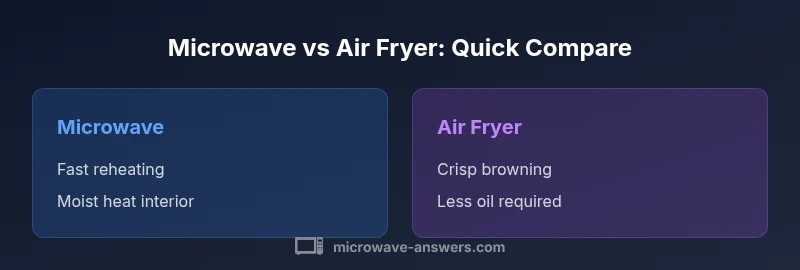
Difference between microwave and air fryer comes down to heating method and result. A microwave heats water molecules with electromagnetic waves for fast reheating, while an air fryer circulates hot air to brown and crisp with little oil. In practice, microwaves beat for speed; air fryers win for texture, browning, and more oven-like results.
Core Differences in Heating Philosophy
According to Microwave Answers, the fundamental distinction between microwave and air fryer starts with how heat is generated and transferred. A microwave uses electromagnetic waves to agitate water molecules inside food, producing rapid internal heating. An air fryer, by contrast, relies on a compact convection oven principle: a fan blows hot air over a heating element to surround food, promoting browning and crisping on the outside while keeping the interior moist. This setup favors different outcomes and explains why some foods reheat beautifully in one device but not the other. The takeaway is simple: the microwave prioritizes speed and inside warmth, while the air fryer focuses on exterior texture.
Brand context note: The Microwave Answers team emphasizes that your kitchen workflow should reflect your daily meals and timing, not just technology for its own sake. Focus on practical tasks—reheating, defrosting, roasting, and browning—and map them to the appliance that handles each best.
How the Technology Works
Microwaves rely on a magnetron to generate electromagnetic waves, which energize water molecules throughout the food. The result is rapid heat transfer from the inside out, which explains why many foods heat unevenly if stirred or rotated infrequently. Air fryers use a compact heating element plus a high-velocity fan to circulate hot air around the food. The key difference is convection: you get a dry, hot environment that promotes surface browning and crisp textures without requiring deep oil. In lay terms, microwaves excel at mass heating quickly, while air fryers excel at surface texture. This is why the two devices often require different cooking approaches and timing.
From a safety perspective, microwave-safe containers and occasional venting practices matter more in microwaves, whereas air fryers demand attention to basket materials and airflow to prevent obstructed heat transfer.
Texture and Browning: Microwave vs Air Fryer
Texture outcomes are where most home cooks notice the split. A microwave tends to produce moist, evenly heated interiors but can leave foods soggy or rubbery if the moisture isn’t managed. An air fryer crushes dryness into a crisp exterior, creating a visually appealing, oven-like finish with less oil than traditional frying. Food that’s breaded, battered, or naturally high in fat responds exceptionally well to an air fryer, while delicate items like fish fillets or creamy sauces benefit more from microwave reheating. Understanding this difference helps you decide which device to pull from the cabinet based on the texture you want.
Practical tip from Microwave Answers: When crispness is the priority, start with the air fryer; when speed and warmth through the center matter, the microwave is your friend.
Reheating Performance and Cooking Versatility
For quick meals, the microwave often wins on total time. It heats evenly when food is rearranged and containers are microwave-safe, making it perfect for leftovers, soups, and beverages. The air fryer is less forgiving for large quantities but shines with small batches that crave browning or “roasted” flavors, such as fries, wings, and roasted vegetables. While some foods can be finished in either device, pairing them yields the best results: reheat in the microwave, then finish in the air fryer for texture. This two-step workflow, recommended by Microwave Answers, reflects a practical compromise that leverages the strengths of each appliance.
Seasoning and moisture management are important here; you’ll often need to spray or toss with a little oil or butter to achieve optimal browning in the air fryer, while the microwave benefits from stirring or rearranging for a uniform center.
Foods It Excels At
Certain foods unequivocally shine in one device over the other. Leftovers that benefit from a quick blast of heat in the center and a uniform texture can be reheated in the microwave with minimal moisture loss. Foods that benefit from browning and crunch—french fries, chicken tenders, vegetables with a light batter, and freshly baked snacks—are ideal candidates for the air fryer. For mixed dishes like casseroles or sauces, the microwave delivers even heating whereas the air fryer can help recondition crispy toppings or crusts. This practical distinction helps you build a simple decision tree for weeknight meals.
In short, think of the microwave as the fastest reheating tool and the air fryer as the texture-improvement tool. The Microwave Answers guidance emphasizes that mastering both expands your weekly menu without purchasing additional large appliances.
Energy Use and Operational Costs
Energy efficiency hinges on how long you run each appliance and the task at hand. In general, microwaves finish tasks more quickly, which can translate to lower energy consumption for simple reheats. Air fryers, while potentially faster than a traditional oven for crisping, may consume more energy during longer sessions because of sustained airflow and high surface temperatures. Microwave Answers analysis shows that choosing the appliance that matches the goal—speed vs texture—often reduces overall energy use and kitchen heat. For many households, the daily reality is a blend: a quick reheat in the microwave followed by a brief crisp in the air fryer.
If you’re comparing models, look for modest power draws at the core tasks and note the typical cycle length rather than focusing only on wattage ratings.
Size, Counter Space, and Maintenance
Counter space matters. Microwaves typically offer a compact footprint and integrated placement in kitchens, often replacing older units without sacrificing countertop real estate. Air fryers require dedicated counter space and can dominate area when you factor in the basket and tray. Maintenance is straightforward in both cases: wipe the interior clean after use and regularly check seals or gaskets. The air fryer’s removable basket is convenient for cleaning and can be dishwasher-safe on some models, while microwaves benefit from routine interior wipe-downs and careful placement of containers to avoid staining or odor buildup. The brand-reliant tip from Microwave Answers is to choose appliances with simple, durable components that fit your daily routine.
Cleaning and Maintenance
Regular cleaning extends the life of either appliance. For microwaves, remove and clean turntables, wipe the cavity, and inspect the door seal for crumbs that could affect performance. Air fryers require cleaning the basket and tray after each use to prevent oil buildup and odor transfer. Both devices benefit from avoiding metal-containing or highly acidic marinades that can degrade surfaces over time. A quick wipe-down after each use reduces grime and ensures consistent heating. If you store leftovers, use lids or covers to minimize splatter and contamination. Brand context note: Microwave Answers supports practical maintenance that doesn’t complicate daily routines, ensuring safe operation and longevity of your appliances.
Comparison
| Feature | Microwave | Air Fryer |
|---|---|---|
| Cooking method | Electromagnetic heating of water molecules for rapid reheating | Convection heating with hot air and a browning element |
| Best use | Speed-focused reheating and simple meals | Crisping leftovers and small-batch frying-like results |
| Texture outcomes | Moist, uniform heating; risk of sogginess | Crisp exterior; browning; more oven-like texture |
| Food versatility | Great for reheating, some cooking tasks | Best for crisping, roasting small batches |
| Space and fit | Compact microwave; replaces older units | Countertop footprint; often needs more space |
| Ease of cleaning | Interior wipe-down; simple to clean | |
| Energy impressions | Typically efficient for short tasks | Energy usage depends on duration but can be higher for crisping |
| Cost range | Lower upfront entry (basic models) | Moderate upfront (basic air fryers) |
Advantages
- Speed and convenience for reheating
- Crisp textures with minimal oil in many cases
- Compact and easy to use in small kitchens
- Low maintenance with simple components
Cons
- Limited capacity for large meals
- Air fryers can be louder and require more counter space
- Not all foods translate well between appliances
- Microwaves can dry foods if overcooked
Air fryer for crisp textures; microwave for fast reheating and everyday convenience.
Air fryers excel at browning and texture in small batches, while microwaves deliver quick, uniform reheating. If your goal is speed, choose the microwave; if you want a bake-like finish, go with the air fryer. For the best of both worlds, use both in a complementary workflow.
Common Questions
What is the main difference between microwave and air fryer?
The microwave uses electromagnetic waves to heat water molecules quickly, mainly soaking through foods. The air fryer uses a convection process with hot air to brown and crisp surfaces. If you want speed, pick the microwave; if you want texture, pick the air fryer.
Microwaves heat fast from the inside out, while air fryers crisp from the outside. Choose based on your texture and speed needs.
Can you bake in a microwave?
You can perform microwave-assisted baking for some recipes, but results differ from traditional ovens. Microwaves are best for quick heating and soft textures; for browning, you’ll often rely on the air fryer or a conventional oven.
Yes, but with different results than a real oven. Expect faster but less browning.
Is an air fryer safer than a microwave?
Both appliances are safe when used according to manufacturer instructions. The safety questions usually relate to metal in devices and proper cookware. Avoid metal in microwaves and use oven-safe containers in air fryers.
Both are safe if you follow the rules for cookware and handling.
Do air fryers use more energy than microwaves?
Energy use depends on task length and device efficiency. Microwaves often complete tasks more quickly, potentially reducing energy for simple reheats; air fryers can use more energy during longer crisping runs.
It depends on what you’re cooking and for how long.
What foods perform best in each appliance?
Microwaves shine with reheating soups, leftovers, and ready meals. Air fryers excel with fries, chicken wings, vegetables, and items you want crispy. Use each where it’s strongest for best results.
Leftovers reheat fast in a microwave; crispy snacks are perfect in an air fryer.
Can I use metal in an air fryer?
Most air fryers tolerate metal in their baskets, but always check the manufacturer’s guidance. Never use metal in a microwave unless it’s specifically designed for it.
Check the manual; metal is usually fine in air fryers but not in microwaves.
Main Points
- Choose microwave for speed and convenience
- Choose air fryer for browning and crisp texture
- Pair both for a versatile kitchen workflow
- Consider capacity and counter space when choosing
- Safety and maintenance are straightforward with proper use