Solo Microwave vs Convection Microwave: A Practical Comparison
Compare solo microwaves and convection microwaves to understand heating methods, browning, speed, and kitchen fit. Learn which model suits small spaces and how to choose for baking, roasting, or simple reheating, with practical buying tips.


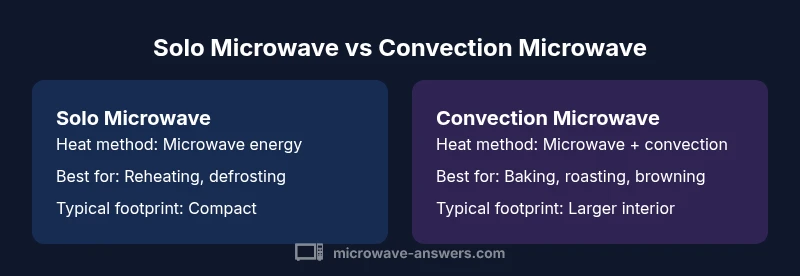
A solo microwave uses microwave energy alone to heat food, while a convection microwave adds a built-in fan and heating element to circulate hot air for baking and browning. Convection models are more versatile and capable of roasting and browning, but they cost more and take up more counter space. If you mostly reheat and defrost, a solo microwave is cost-effective; if you bake, roast, or want a mini-oven in one, opt for convection.
What is a solo microwave vs convection microwave? Definition and core differences
According to Microwave Answers, a solo microwave (also called a standard microwave) heats food primarily using magnetron-generated microwaves that excite water molecules. This rapid energy transfer is excellent for reheating, defrosting, and cooking simple items. A convection microwave, by comparison, houses a small oven-like cavity with a heating element and a fan. This setup creates circulating hot air in addition to microwave energy, enabling baking, browning, and more even crust formation. In many models, you’ll see a “microwave-convection” hybrid that blends both heating methods for maximum versatility. The practical takeaway is that the heat source and how heat travels through food are fundamentally different, which drives performance, texture, and use cases.
Brand-agnostic guidance aside, the Microwave Answers team notes that convection capability is not a universal replacement for a full-size oven, but it brings oven-like functions into a compact package. If you’re upgrading from an old standard microwave, the difference is substantial: you gain browning and crisping in addition to rapid reheating. If you’re shopping on a tight budget, a solo model remains a solid choice for quick meals, small apartments, and busy households.
Density of use matters. If you bake cookies, roast vegetables, or finish a casserole with a crisp edge, a convection unit often pays off in texture and finish. If you mainly reheat leftovers or melt cheese, a solo microwave will be more than enough and typically easier to operate.
Heating methods and heat flow: how each unit delivers energy
Microwaves heat food by exciting water and fat molecules directly, which means rapid heating from the inside out. This method is highly efficient for uniform reheating of liquid-rich foods and for thawing frozen items. Convection microwaves pair this process with a forced-hot-air chamber. The fan pushes hot air around the food, enabling surface browning and a crust in ways a solo microwave cannot. Depending on the model, you may also find a turntable or a flat, high-contrast rack system that optimizes air flow. The result is two different cooking philosophies: direct microwave heating versus combined microwave plus convection baking.
Both types can defrost efficiently, but convection modes shine when you want a browned top, a crispy crust, or even roasting of small poultry pieces. The practical implication is that you should map your typical meals to the heat mechanism that best suits them. For example, rewarming soup and steaming vegetables works well with either; baking a potato or roasting a chicken leg is more reliably achieved with convection.
Speed, texture, and cooking outcomes: practical implications
When you reheat a plate of pasta, both devices perform quickly, but the convection mode often yields a drier edge and crisper exterior for certain items like pizza crust or fried foods. In contrast, solo microwaves excel at preserving moisture in tender dishes when used with short intervals and gentle power settings. Texture is the primary differentiator: if you crave browning, caramelization, and a roasted finish, convection is preferred. If you want soft, evenly heated interiors with minimal fuss, a solo microwave keeps things simple and efficient. The Microwave Answers analysis shows that non-scorched reheating is more predictable with solo units for most everyday foods, while convection units provide a more restaurant-like finish for a subset of dishes.
Use-case scenarios: who should choose which model
Consider your cooking repertoire and space. If you live in a small apartment and primarily reheat, a solo microwave is cost-effective and space-saving. If you enjoy baked goods, roasted vegetables, or small-batch casseroles, a convection microwave expands capabilities without needing a separate oven. Families who bake weekly but are budget-conscious could opt for a hybrid convection microwave to cover both reheating and light baking. For those replacing a full kitchen oven, evaluate whether you’re ready to trade counter space for oven-like results. In this case, convection can be a strong compromise.
Size, footprint, and energy considerations: planning your purchase
Convection microwaves vary in internal cavity size and exterior footprint. A larger interior means more room for pans and baked goods, but it also means a bigger unit and potentially higher energy draw. If you’re concerned about energy bills, focus on models with efficient convection fans and insulation, and compare standby power usage. Shortlist models that fit your counter depth, door clearance, and ventilation needs. While convection adds capabilities, it also introduces a learning curve for optimizing cooking times and settings. Solo microwaves tend to be lighter, cheaper, and easier to install, especially where counter space is at a premium.
Buying tips: features to evaluate before you buy
When shopping, start with power output and wattage. Higher wattage can improve speed and browning in convection mode, but it also affects price. Look for even heat distribution, reliable turntables or non-contact racks, and preset programs that match your most-used foods. Inspect the control panel for intuitive operation—some people prefer tactile dials, others favor digital presets. Read user reviews on performance with both simple reheating and baking tasks. Finally, check warranty coverage on the convection fan and heating elements, since repair costs can be substantial if components fail.
Myths, safety, and maintenance: keeping your unit in top shape
A common myth is that convection means more risk; in reality, modern units are designed with safety interlocks and auto shutoffs. However, you should still avoid running empty convection cycles and never block air vents. Regular cleaning of the interior and the fan housing helps prevent odors and improves airflow. For safety, follow manufacturer recommendations for cookware—certain materials can degrade or warp under high-temperature convection. If you’re unsure about fit or installation, consult a professional to ensure electrical compatibility and proper ventilation.
Comparison
| Feature | solo microwave | convection microwave |
|---|---|---|
| Heating method | Microwave energy only | Microwave energy + convection heat + fan |
| Browning and crisping | Limited browning | Superior browning and crisping on many foods |
| Cooking speed for reheats | Very fast | Very fast, with added convection options |
| Best use case | Reheating, defrosting, simple meals | Baking, roasting, browning, multi-course tasks |
| Typical price range (conceptual) | Lower upfront cost | Higher upfront cost but with oven-like capabilities |
| Cavity size flexibility | Smaller, compact options | Larger interior for trays and roasts |
| Maintenance considerations | Fewer moving parts | More moving parts (fan, heater) may require maintenance |
Advantages
- Versatile two-in-one capability saves space and adds baking functions
- Quicker reheating for most foods than a traditional oven
- Convection enables browning and crisping for favorites like pizza
- Usually more compact and affordable than a separate convection oven
Cons
- Higher upfront cost than a solo microwave
- Takes up more counter space and can be bulkier
- Convection settings have a learning curve and longer setup times when starting from scratch
- Repair costs can be higher due to more complex components
Convection microwaves win for versatility in small kitchens; solo microwaves win on simplicity and cost
If you want a compact appliance that can reheat and bake occasionally, a convection microwave is a strong choice. If your primary need is fast, uncomplicated reheating, a solo microwave remains the best value. The Microwave Answers team endorses matching your cooking habits to the heat method that matters most: oven-like browning or quick, moisture-rich reheating.
Common Questions
What is the main difference between a solo microwave and a convection microwave?
A solo microwave heats food with microwave energy only, while a convection microwave adds a fan and heating element to circulate hot air for baking and browning. Convection units offer oven-like flexibility in a compact form, whereas solo units focus on quick reheating and defrosting.
A solo microwave uses microwaves to heat, while convection adds air circulation for baking. Convection gives you browning and roasting in a small appliance.
Can a convection microwave replace a traditional oven?
In many cases, a convection microwave can perform many of the same functions as a traditional oven, especially for small meals or single servings. However, it may not handle large roasts or multi-rack baking as efficiently as a full-size oven, and baking times may differ.
A convection microwave can replace many oven tasks, but for large gatherings you might still need a full oven.
Is a convection microwave worth it for a small kitchen?
If space is tight and you do bake or roast occasionally, a convection microwave offers oven-like capabilities without needing a separate wall oven. For strict reheating, a solo model saves money and footprint.
For small kitchens, convection microwaves are often worth it if you want baking options; otherwise, go solo for pure simplicity.
Can I use the convection feature for reheating leftovers?
Yes, you can reheat leftovers using convection mode, but you may not always need convection for reheating. Microwaving with a short burst and power adjustment often suffices, depending on the dish.
You can reheat with convection, but microwave-only reheating is usually faster for leftovers.
What features should I look for when buying a solo vs convection model?
Look for wattage, preset programs, even heat distribution, interior cavity size, and airflow design. For convection, verify reliable fan performance and pan compatibility. Check warranty on the heating elements and fan.
Check wattage, presets, cavity size, and warranty—convection needs reliable airflow and compatible cookware.
Are there safety considerations unique to convection microwaves?
Safety concerns are similar to solo microwaves, but you should avoid blocking vents and using inappropriate cookware. Some models have higher heat output, so follow manufacturer guidelines for cookware and ventilation.
Safety basics apply to both; avoid blocking vents and use approved cookware for convection mode.
Main Points
- Prioritize convection if you bake or roast often
- Choose a solo microwave for simple, fast reheating
- Check wattage and airflow for even cooking
- Consider counter space and budget when deciding
- Read user reviews to gauge real-world performance