Microwave and Convection Oven Combo: A Practical Comparison
Compare microwave-only, convection, and microwave-convection combos to choose the right kitchen tool. This 2026 guide from Microwave Answers covers performance, use cases, safety tips, and value for home cooks.


Across most kitchens, the microwave and convection oven combo delivers the best balance of speed, versatility, and space savings. It both reheats and defrosts like a microwave and browns and bakes with convection, eliminating the need for multiple appliances. If your priority is ultra-fast reheating, a standalone microwave may suffice; if you bake regularly, a traditional convection oven can outperform. The combo hits a practical middle ground.
What microwave and convection oven combo actually is
A microwave and convection oven combo is a single appliance that blends microwave energy with a built-in convection fan to circulate hot air around food. This dual-mode device speeds reheating while providing browning and even cooking that traditional microwaves can't match. In some models you may also access grill or steam options, expanding versatility without cluttering your countertop. According to Microwave Answers, this hybrid unit should be viewed as a flexible core for many kitchens. When you run both modes, you can thaw frozen items, reheat leftovers, bake cookies, roast vegetables, and even finish a small roast without moving to another oven. The key is to understand how the microwave energy and the convection cycle interact, and what capacity, wattage, and feature set you need for your typical meals. The concept of a microwave and convection oven combo is particularly relevant for compact spaces where a single appliance must deliver both speed and genuine bake performance.
This section lays the groundwork for why homeowners consider a combined unit, especially in smaller kitchens or open-plan living areas where counter space is at a premium. You’ll learn how these devices integrate into real-world cooking, from quick reheats to more ambitious bakes, and what the trade-offs look like in daily use.
Core differences among three options
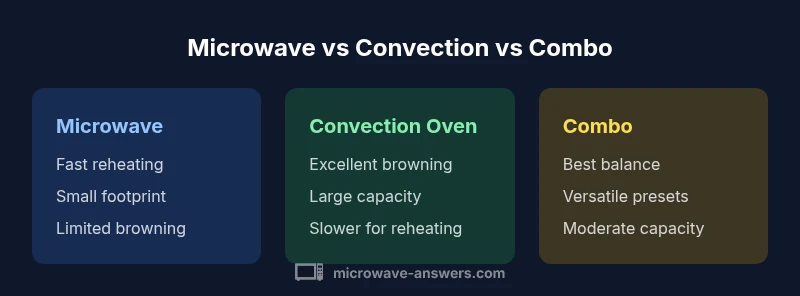
Understanding the three main options helps shift the buying decision from features alone to practical outcomes. A microwave-only unit excels at speed, defrost, and reheating leftovers with minimal footprint. A conventional convection oven shines for browning, roasting, and larger batch bakes, delivering texture and color that microwaves alone can’t replicate. The microwave-convection combo aims to offer both speed and browning in one footprint, delivering flexible temperature control and multi-mode cooking. In practice, the combo can imitate an oven for many tasks while still handling rapid reheats. Brand and model vary in how well they balance these modes, so the best choice depends on your kitchen size, cooking habits, and tolerance for occasional workarounds. The Microwave Answers team notes that this hybrid is particularly appealing for households juggling multiple needs in a single countertop unit.
Use-case profiles: who benefits most
Different households benefit from different configurations. A single person or apartment dweller benefits from a compact microwave for daily reheats and a few quick bakes, whereas a family that bakes weekly may appreciate the combo’s ability to replace two devices. Small kitchens with limited outlets gain extra floor space by consolidating appliances. Occasional entertainers can leverage the combo’s quick meals and finish-baking capabilities without firing up a full-size oven. For those who regularly bake bread or large roasts, a dedicated convection oven might still be preferable, but a capable combo can handle many weeknight tasks with less heat in the kitchen and simpler cleanup.
Reheating, defrosting, and quick meals
When your goal is speed, the microwave mode handles reheating and defrosting in minutes, not hours. The convection component improves texture on leftovers, giving you a more even heat distribution and a crisper finish on items like pizza slices, quesadillas, and pre-cooked snacks. The combo’s integrity depends on the interior size and turntable or mode-specific racks that promote even heat circulation. In practice, you’ll notice far less moisture loss with the convection cycle compared to a microwave alone, delivering a more appetizing result for many types of food.
Baking, roasting, and browning capabilities
Baking with a microwave-convection combo is where the unit earns real value. The convection function creates a hot, moving air environment that yields brown tops and uniform interiors on small to medium items, such as muffins, cookies, small roasts, vegetables, and casseroles. Some models offer true convection with a dedicated fan and exhaust path for more predictable results, closely mirroring a conventional oven. However, performance varies by model; you’ll typically trade off interior capacity for space savings, so monitor pans and rack use to optimize airflow and heat distribution.
Size, footprint, and installation considerations
Countertop real estate matters: a combo unit is larger than a plain microwave but smaller than a full oven. If you’re upgrading from a microwave, you’ll likely gain width and internal space for a reasonable batch size; if you’re replacing a conventional oven, you may miss the capacity. Ventilation and clearance around the unit influence performance and longevity, so check the manufacturer’s guidelines about installation height, hood compatibility, and placement near heat-sensitive cabinets. If you’re integration-minded, seek models that fit standard 24-inch widths with adaptable racks to maximize interior use.
Energy use and efficiency implications
Combos can be surprisingly efficient for everyday tasks because you’re using only one appliance for moderate tasks rather than powering two separate devices. When you run the microwave and convection modes concurrently, energy use increases, but this is still often lower than running a separate full-size oven for smaller meals. The most energy-efficient approach is to match the cooking cycle to the task: use microwave for reheats and defrost, switch to convection for browning and baking, and avoid running large cycles for tiny portions. Microwave Answers analysis (2026) indicates that households often appreciate the flexible energy profile of a high-quality combo unit, particularly for weeknight cooking.
Price ranges and ownership costs
A microwave-convection combo sits between a basic microwave and a dedicated convection oven in terms of upfront cost, with price influenced by build quality, capacity, and feature set. Overall ownership cost includes energy use, maintenance, and potential repair needs. In most homes the value comes from countertop space savings, fewer devices requiring storage, and the convenience of a single control panel for multiple cooking modes. Compare annual energy estimates when available and weigh them against the cost savings from not purchasing a separate oven.
Care, cleaning, and safety tips
Maintenance is simpler when you keep the interior clean and free of food residue, especially around the convection fan and vents. Wipe spills promptly and use a compatible cleaner for the exterior surfaces. Inspect door seals and hinges periodically for signs of wear that could affect performance. Follow safety tips such as not placing metal objects in the microwave mode and ensuring adequate ventilation to prevent overheating. Always unplug before deep cleaning and detach removable racks for thorough washing.
How to read model specs and compare features
When reviewing models, focus on interior capacity, overall dimensions, and the presence of true convection versus a basic fan-assisted bake. Look for sensor-based cooking presets that adapt times and temperatures, multiple power levels, and a sturdy turntable or non-stick rack system. Check the warranty length and service network in your region. Finally, compare available presets and any smart features that integrate with your smartphone for remote monitoring and control.
Real-world scenarios and decision guidelines
For a busy family with limited space, a microwave-convection combo can replace two devices and streamline weeknight meals. A single professional cook who bakes often may prefer a dedicated convection oven for high-volume bread and pastry work but can still benefit from the combo for quick weeknight meals. A student or renter may opt for a compact model that prioritizes speed and simple operation. In every case, assess the most frequent tasks, available space, and how often you need browning or crisping.
Checklist before buying a microwave and convection oven combo
- Verify interior capacity matches your typical pan sizes and batch volumes
- Confirm presence of true convection and reliable air circulation
- Ensure the footprint fits your available space with proper ventilation
- Look for easy-to-clean surfaces and a robust door seal
- Review energy efficiency notes and warranty coverage
- Check compatibility with countertop or built-in configurations
- Compare models based on user reviews and service availability
Feature Comparison
| Feature | Microwave only | Convection oven | Microwave-convection combo |
|---|---|---|---|
| Best Use Case | Speed-focused reheating | Baking/roasting with browning | Balanced performance for speed + browning |
| Crisp/Browning Capability | Limited browning | Excellent browning with convection | Good browning with multi-mode options |
| Capacity / Size | Compact interior, small pans | Larger cavity for roasts | Medium cavity suitable for most tasks |
| Price Range | Low to mid | Medium to high | Medium |
| Best For | Speed and quick reheats | Daily baking and roasting | Homes needing versatility in a single unit |
Advantages
- Versatile cooking in a single unit
- Faster than a traditional oven for many tasks
- Space-efficient alternative to separate appliances
- Convection features improve browning and texture
- Defrost and reheat in one device
Cons
- Combo models can be more expensive than single-function units
- Smaller interior capacity than a full-size oven
- More complex to repair and maintain
- Real convection performance may vary by model
The microwave-convection combo generally offers the best overall flexibility for compact kitchens.
Choose the combo if you want speed plus browning in one device. If you bake large volumes regularly, a standalone convection oven may still outperform a compact hybrid.
Common Questions
Is a microwave and convection oven combo enough for baking?
For many home cooks, yes, but it depends on capacity and power. A high-wattage unit with true convection can handle most daily baking tasks; for large loaves or heavy-duty roasting, a full-size oven may be preferable.
Yes for typical weeknight baking, but for large batches or professional-grade pastry, a separate convection oven might be better.
How does a combo unit compare in energy use to separate appliances?
A combo can be more energy-efficient for small tasks because you run smaller cycles. Running both modes at high power can use more energy than a single-purpose oven.
Generally more efficient for small tasks; efficiency depends on usage pattern.
What features should I look for in a microwave-convection combo?
Look for true convection, reliable door seals, adequate interior capacity, multiple presets, easy-to-clean surfaces, and a robust gasket. Prioritize models with good ventilation and a responsive control panel.
Check convection type, capacity, and ease of cleaning.
Is installation easy in a small kitchen?
Most models fit standard 24-inch widths; ensure you have adequate outlets and ventilation. Check clearance recommendations and whether the unit can be vented or recirculates air.
Yes, if you have standard space and outlets; otherwise plan layout.
Are combo models reliable?
Reliability varies by brand and model. Read reviews, compare warranties, and verify the availability of service in your region before purchasing.
Reliability varies; check warranties and service options.
How does price compare to separate appliances?
Combo units typically cost more than a basic microwave but less than a full-size oven. Weigh upfront cost against space savings, convenience, and potential energy savings.
They can be a good value if space and versatility matter.
Main Points
- Prioritize true convection and interior capacity when evaluating combos
- Use microwave mode for quick tasks, convection for browning
- Check warranty and service availability in your area
- Consider space, power outlets, and ventilation before buying
- Balance upfront cost with long-term energy and convenience savings