Microwave and Oven Combo Countertop: Choosing and Using
An analytical comparison of countertop microwave and oven combo units, covering features, safety, size, and buying guidance for home cooks in busy kitchens.


Countertop microwave and oven combos merge fast reheating with convection baking in a single small footprint, making them ideal for compact kitchens. This comparison highlights wattage, size, features, and safety so you can pick the model that best fits your cooking style and space constraints.
What is a microwave and oven combo countertop?
The term microwave and oven combo countertop describes a single freestanding appliance that blends microwave heating with convection baking inside a compact cabinet designed for countertop use. These units save kitchen space while expanding cooking techniques for busy home cooks. In practice, you can microwave for fast reheating and switch to convection or broil modes for crisp browning, roasting, or baking. Most models fit under standard upper cabinets or sit neatly on a typical kitchen counter, making them a practical choice in small apartments or busy family kitchens. When evaluating a countertop combo, consider how often you bake from scratch, steam vegetables, or want a crisp finish on roasted dishes, and how much vertical clearance your cabinet doors need when opened. Because it combines two functions, you should expect a learning curve as you explore the control panel and presets. The value proposition is straightforward: fewer appliances, less clutter, and a single interface for multiple tasks. However, not every model excels at both microwaving and baking; some prioritize speed, while others emphasize even heat distribution or capacity. The buyer’s task is to map personal cooking habits to the device’s strengths. If you frequently reheat leftovers and also bake cookies, press tofu, or roast vegetables, this class of countertop devices can deliver a practical balance of performance in a compact footprint. In summary, the microwave and oven combo countertop is best understood as a versatile mid-range option that compresses two common appliances into one compact unit, designed for practicality and efficiency in modern kitchens.
Key features to evaluate on countertop combos
When evaluating a microwave and oven combo countertop, several features determine long-term satisfaction. Start with power and heat delivery: most units offer microwave power in the range of 900-1500 watts, with convection capabilities that range from gentle browning to full bake temperatures. Convection mode requires a reliable heating element and a well-sized interior cavity; some models also include a grill or broil element to enhance crust formation.
Next, consider the interior layout. Turntables are common, but flatbed designs can maximize usable space and accommodate taller dishes. Rack configurations and crisper trays extend versatility for roasting vegetables, baking cookies, or broiling fish. User interfaces vary from simple push-button panels to touchscreens with step-by-step guides; advanced presets can simplify common tasks but may lock you into specific cooking profiles.
A crucial but often overlooked factor is size and footprint. Measure your counter width, depth, and height clearance to ensure doors don’t obstruct nearby cabinets. The exterior dimensions do not always reflect internal capacity, so compare cavity volume in cubic feet and consider how the racks, turntable, and door clearance affect real-world use. Energy efficiency matters too: look for real-world performance notes in reviews about how quickly the unit heats and how evenly it cooks or bakes in convection mode. Finally, safety features like child lock, auto shutoff, overheating protection, and easy-to-clean interiors contribute to peace of mind in households with kids or frequent daily use. In short, prioritize a model whose feature set aligns with your typical cooking tasks, budget, and kitchen layout to maximize value and satisfaction.
Size, capacity, and interior layout
Countertop microwave and oven combo countertop units come in a range of exterior sizes to fit small apartments and larger kitchens alike. Start by measuring available counter space and the door clearance when opened. External dimensions matter for placement near walls or shelving, but interior capacity often tells the real story. Interior cavities typically range from roughly 0.9 to 1.6 cubic feet in most mid-range models, with some premium options offering 1.7 cubic feet or more. A larger interior can accommodate standard Pyrex and casserole dishes, while smaller interiors may struggle with tall baking pans or multiple dishes at once. Rack configurations are a practical consideration; some models offer one or two adjustable racks, others provide dedicated baking trays that slide in and out with ease. The choice between a turntable and a flatbed interior also affects space and evenness of heating. Turntables provide consistent heating for most microwaving tasks and are familiar to most users, but flatbed interiors maximize usable space for larger dishes. Visualizing a few common tasks helps: reheating a plate of leftovers, placing a casserole dish for baking, and roasting vegetables on a rack. The right size balances your typical meals with the constraints of your kitchen, so you don’t overbuy a compact unit that can’t handle your go-to pans or underbuy a larger model that dominates counter space.
Power, performance, and energy considerations
Performance in microwave and oven combos hinges on upfront wattage, convection capability, and interior design. A higher microwave wattage generally translates to faster reheating and more reliable defrosting, while robust convection power improves even browning and uniform baking. When you read product specs, pay attention to the labeled microwave wattage and the convection heating range. Some models advertise high-convection power that enables bake temps closer to a traditional oven, which is beneficial for cookies, pastries, and roasting meats. The interior design also matters: a cavity with better insulation heats more efficiently, and a larger interior can distribute heat more evenly, reducing hot spots. Energy usage in these appliances is a practical concern; while microwaving is relatively efficient, running convection or broil modes consumes more energy. If you plan to use convection frequently, opt for models with thoughtful venting and temperature control to avoid overheating or uneven results. Practical testing matters more than marketing claims: run a simple bake test with a uniform pan and a cookie sheet to observe browning, edge crisping, and center doneness. Finally, consider standby power and overall efficiency. Some newer units include energy-saving modes that reduce idle consumption, which matters if you leave the unit plugged in ready for quick meals. In sum, the right mix of microwave wattage, convection strength, and interior design determines performance more than any single spec headline.
Real-world use cases: cooking patterns and recipes
Clarity about your cooking patterns helps you choose wisely. If your routine centers on quick reheating and simple defrosting, a unit with a solid microwave performance and intuitive presets will deliver the best everyday results. For households that bake occasionally, look for convection performance that produces crisp edges on roasted vegetables, evenly baked cookies, and lightly browned casseroles. If you’re a frequent entertainer or meal-prep aficionado, a larger interior cavity with flexible rack options will make weeknight cooking easier and more predictable. Consider how you’ll use the oven mode for pastries, gratins, casseroles, or sheet-pan dinners—these tasks benefit from a uniform heat source that convection can provide. Steam cooking and sensor-based features are an added benefit in some models, offering gentler reheating and moisture retention for delicate foods. If space is tight, a compact model that delivers reliable reheating with a modest baking capacity can still handle everyday needs. For long-term satisfaction, align the unit with your most frequent recipes and cooking rhythms, test a handful of common tasks, and note whether the presets truly meet your expectations. In practice, a thoughtful match between your recipes, your pan sizes, and the device’s interior can unlock a surprisingly broad range of kitchen possibilities from a single appliance.
Safety, maintenance, and daily care
Safety and maintenance are essential for countertop appliances that combine microwave and convection heating. Start with placement: keep the unit on a stable, heat-resistant surface with adequate clearance for ventilation and air flow behind the unit. Use microwave-safe dishes and avoid metal, as with any microwave, to prevent arcing. When using convection, avoid overfilling pans and ensure there is enough space around the unit for air to circulate. Clean the interior regularly with a damp cloth to remove grease and food splatter; avoid harsh abrasives that can damage enamel or coatings. The door seal and hinges should be inspected periodically for wear, and if you notice steam leakage or damaged seals, consult the manufacturer’s guidance. Safety features such as child lock, auto shutoff, and automatic defrost protection contribute to peace of mind in households with children or irregular use. For maintenance, follow the user manual’s guidance on vent cleaning and rack removal, and never attempt to service electrical components yourself. Proper care extends the life of the appliance and reduces the likelihood of malfunctions that interrupt daily cooking. A small, disciplined cleaning routine after meals can keep the unit performing reliably for years and preserve the unit’s interior finish.
How to choose: a practical buyer’s checklist
Choosing the right countertop microwave and oven combo requires a structured approach. Start by identifying your primary use: is it quick reheating, baking, roasting, or a mix? Then measure your counter space, door swing, and clearance for ventilation to avoid crowding nearby cabinets. Next, compare wattage and convection power: higher microwave wattage speeds up defrost and reheat, while robust convection improves browning and even cooking. Inspect interior capacity to ensure your most used pans fit, especially if you frequently bake or roast larger dishes. Check the rack system, compatibility with standard bakeware, and available accessories like crisper trays or steam pans. Examine presets and control layouts: some users prefer simple dial-and-button interfaces, while others want guided cooking with precise temperature control. Consider safety features such as child lock, auto shutoff, and a quality door seal that remains reliable after many uses. Finally, review warranty coverage and service options. Read user reviews focusing on long-term reliability and performance in real kitchens. With a clear checklist, you can compare models side-by-side, assess fit for your cooking style, and choose a microwave and oven combo countertop that balances price, performance, and practicality for your home.
Conclusion and next steps
(Notes: This section intentionally avoids a final verdict in the body to keep the article cohesive with dedicated verdict and key takeaways. The goal is to empower readers with a thorough understanding of how these appliances work, what features matter, and how to evaluate options based on real-world cooking needs.)
Comparison
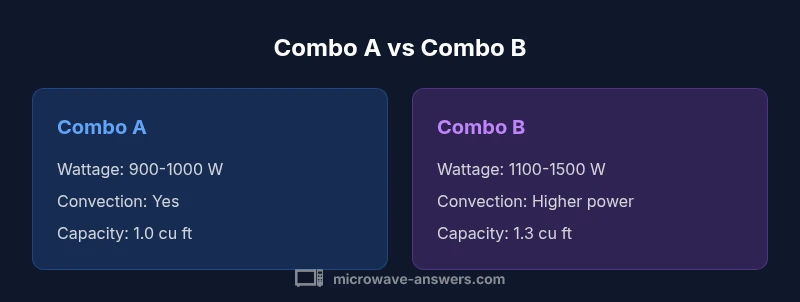
| Feature | Combo Model A | Combo Model B |
|---|---|---|
| Wattage (microwave) | 900-1000 W | 1100-1500 W |
| Convection capability | Yes, basic convection | Yes, higher-convection power |
| Turntable vs flatbed | Turntable | Flatbed |
| Interior capacity | 1.0 cu ft | 1.3 cu ft |
| External footprint | Compact: ~18-20 in wide | Slightly larger: ~20-22 in wide |
| Typical price range | $250-$500 | $350-$700 |
| Best for | Small kitchens, essential tasks | Versatile cooking, baking, and reheating |
Advantages
- Space-saving design reduces countertop clutter
- Two appliances in one saves time and energy for common tasks
- Convection enables baking and roasting in a compact unit
- Multiple presets simplify weeknight meals
- Integrated controls minimize setup and cleanup
Cons
- Higher upfront cost than a basic microwave
- Larger footprint than stand-alone microwave
- Interior capacity may feel small for large bakeware
- Learning curve for new features and presets
Balanced choice for space-constrained kitchens with baking needs
If you need a compact unit that can reheat efficiently and bake occasionally, a convection-enabled countertop combo is worth it. For pure budget savings or the smallest footprint, a separate microwave plus a traditional toaster oven may suit better.
Common Questions
What is a microwave and oven combo countertop?
A single appliance that combines microwave heating with convection baking on a compact countertop footprint. It lets you reheat quickly and bake or roast without moving food to a separate oven.
A single appliance that microwaves and bakes in one counter-ready unit, saving space and simplifying meals.
How does convection cooking in a countertop combo compare to a traditional oven?
Convection in these units uses a fan-driven hot air stream to promote even heat circulation. While not identical to a full-size oven, a well-designed convection mode can crisp edges and bake more evenly than microwaving alone.
Convection gives you crisper edges and more even cooking than microwaving alone, though results vary by model.
Can I bake pastries in a microwave oven combo countertop?
Yes, many models support baking tasks like cookies, muffins, and small casseroles. Look for correct rack configurations and recommended bakeware sizes in the manual to optimize results.
Yes, bakeware works in the convection mode with some models; follow the manufacturer’s rack configurations.
What counter space do I need for these units?
Measure width, depth, and consider door swing. Leave space for ventilation and avoid crowding nearby cabinets or drawers. Larger units demand more bench space, so check both exterior dimensions and interior capacity.
Measure width and depth, leave room for the door to open, and ensure there’s ventilation space.
Are countertop combos safe for households with kids?
Yes, when used with basic safety features like a child lock and proper supervision. Keep cords tidy and ensure the unit is on a stable surface away from water and heat sources.
With proper safety features and supervision, these are kid-friendly; keep cords out of reach and use a stable spot.
How do I maintain and clean a microwave-oven combo?
Wipe the interior after use, clean the door seal, and remove crumbs from racks. Avoid abrasive cleaners on enamel interiors and follow the manufacturer’s maintenance guide for vent cleaning and inspection.
Wipe spills, check seals, and follow the manual for cleaning vents and racks.
Main Points
- Prioritize convection if baking is frequent
- Check interior capacity before buying
- Match wattage to your reheating needs
- Assess counter space and ventilation
- Use the buyer checklist to compare models