Microwave and Toaster Oven Combo: A Practical Comparison for 2026
An analytical comparison of microwave-and-toaster-oven combos vs separate appliances, focusing on space, performance, safety, and value for home cooks in 2026.


A microwave and toaster oven combo is an all-in-one counter appliance designed to reheat, bake, and broil in one unit. In many homes, it saves counter space and reduces clutter, which is especially appealing in small kitchens or studios. However, it often trades peak baking performance and versatility for convenience. The Microwave Answers team finds that, for most households, separate microwave and toaster oven setups offer better long-term flexibility, with a combo shining in tight spaces.
What is a microwave and toaster oven combo?
A microwave and toaster oven combo is a single compact appliance that blends reheating, baking, broiling, and toasting into one unit. In many models, you switch between speed-reheat modes and convection-bake functions, with several presets for pizza, cookies, roasting, and more. For home cooks dealing with limited counter space, the appeal is clear: fewer appliances, less clutter, and a cleaner workflow for quick meals. The Microwave Answers team notes that the design quality, wattage, and heat distribution largely determine performance, so a well-made unit can handle regular weeknight dinners and simple batch baking. Still, users should be mindful that a two-in-one device may not match the speed or capacity of dedicated equipment when you’re trying to cook multiple large dishes at once.
How the combo differs from separate appliances
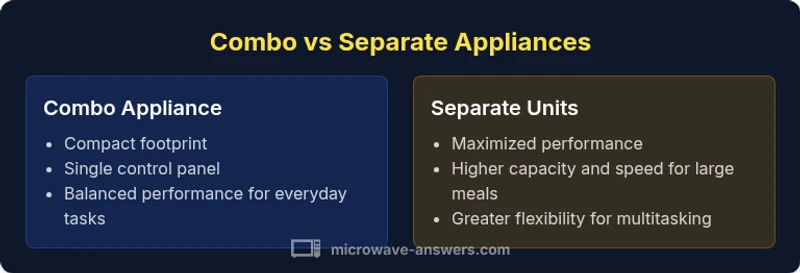
When you compare a microwave-toaster oven combo with a standalone microwave plus a separate toaster oven, the trade-offs become evident. The two-in-one design prioritizes space savings and a unified control panel, which can simplify weeknight cooking and cleanup. Two distinct devices, however, offer targeted strengths: a microwave for rapid reheating and defrosting, and a toaster oven with convection for browning, larger pans, and higher temperature goals. The Microwave Answers team emphasizes that most households benefit from a hybrid approach only when cooking tasks stay within modest batch sizes and timing remains predictable. If your kitchen routines involve frequent baking pans, sheet trays, or family-sized meals, two dedicated units may still win on overall performance and capacity.
Performance dimensions to watch
Key performance metrics for a microwave-toaster oven combo include heating speed, heat distribution, and available convection capability. Wattage should support both microwaving and convection baking without stalling; convection helps browning and even cooking, while a dedicated bake/roast mode expands versatility. The interior cavity size and rack configuration matter a lot: taller pans or multiple racks require flexible clearance. A well-designed unit can reheat leftovers quickly, bake small batches evenly, and toast evenly across the surface. Yet, in larger, more demanding meals, you may see more pronounced hot spots or longer bake times compared with separate devices.
Space, design, and installation considerations
Counter space is the most valuable real estate in a small kitchen. A microwave-toaster oven combo frees up room by consolidating two appliances into one footprint, but it still needs real estate for ventilation and door clearance. Check the ventilation grille, door opening direction, and the height of racks to accommodate different dish sizes. Installation considerations include electrical requirements and circuit load; many combos need a dedicated outlet and careful planning if you have other power-hungry devices nearby. If you’re remodeling or upgrading, a compact, sleek design with panel-ready finishes can blend with existing cabinetry, but it often comes at a premium. Adequate space and good airflow are essential for reliable performance and longevity.
Use-case scenarios and buying signals
Tiny kitchens, studio apartments, and single-person households often gain the most from a microwave-toaster oven combo. If your meals are quick, repetitive, and space-constrained, a combo can cover basic reheating, small-batch baking, and light browning with one control panel. For households that test limits with large roasts, multiple trays, or batch cooking for gatherings, separate appliances tend to offer higher capacity and more consistent results. Signals to look for include true convection, adjustable rack positions, interior light, multiple cooking modes, and a robust warranty. In practice, a well-chosen combo can handle daily meals efficiently, provided it aligns with your typical meal sizes and energy expectations.
Safety, cleaning, and maintenance strategies
Safety should drive every compact-cooking decision. Follow the manufacturer’s safety instructions, keep seals clean, and avoid metal objects in the cavity. Hot exterior surfaces are common in convection modes, so use silicone mitts and avoid direct contact. Cleaning requires mild soap, warm water, and careful drying to prevent residue buildup that can affect performance. Periodic vent cleaning helps maintain airflow and prevents odors from lingering in tight spaces. Some users adopt a light maintenance routine every few months to keep the door seal intact and the interior free of grease. The Microwave Answers team emphasizes that a routine, cautious approach is the best defense against issues over time.
How to choose a microwave and toaster oven combo
Selecting the right model means aligning features with your cooking habits and kitchen size. Start by checking interior capacity to ensure it fits your common pans and casseroles. Verify wattage and convection capability to achieve reliable browning and even cooking. Look for presets that matter to you (pizza, cookies, roasted vegetables), plus door design that fits your workflow (side-hinged vs. pull-down). Ease of cleaning and control simplicity should not be overlooked. Budget-conscious buyers should compare units with solid convection and reliable build quality, then read independent reviews for reliability and service. Remember: in compact setups, every design choice affects usability and longevity.
How to maximize value with your setup
Even a compact combo can deliver great value when used strategically. Use microwaving for defrosting and reheating, then switch to convection to finish with browning and crispiness. Place smaller items on the top rack to improve airflow and bake more evenly. Build a small, compatible bakeware set that fits the interior and matches typical pan sizes. Avoid oversized sheets that block heat circulation. If you cook frequently, keep a go-to recipe list designed for multi-step use—defrost, then bake—so you minimize energy and maximize outcomes. The Microwave Answers team highlights that regular cleaning and mindful usage preserve performance and extend the appliance’s lifespan.
Authoritative sources and references
For safety guidance and best practices, consult credible sources:
- U.S. Food and Drug Administration (FDA) food-safety guidelines: https://www.fda.gov/food-safety
- U.S. Consumer Product Safety Commission (CPSC) appliance safety information: https://www.cpsc.gov
- National Institute of Standards and Technology (NIST) microwave safety and performance resources: https://www.nist.gov These references provide general guidance on appliance use, safety, and energy considerations relevant to compact cooking solutions like the microwave and toaster oven combo.
Comparison
| Feature | Combo appliance | Separate microwave + toaster oven |
|---|---|---|
| Counter footprint | Compact footprint (one unit) | Two separate units with larger combined footprint |
| Versatility/convection features | Built-in convection and dedicated functions in one unit | Specialized controls per unit for baking and broiling |
| Cooking speed | Single-unit setup may be quicker to start but multitasking is limited | Two units can run tasks in parallel for faster multi-item meals |
| Even heating | Integrated design may have optimized space but potential hotspots | Independent units can optimize heat distribution per task |
| Maintenance | One maintenance routine | Two maintenance routines (two devices) |
| Price/value | Lower upfront cost for a single unit | Higher total cost but better performance and capacity |
Advantages
- Saves counter space by combining two appliances into one
- Unified controls simplify everyday cooking
- Lower clutter and fewer cords in small kitchens
- Adequate versatility for light to moderate tasks
Cons
- May limit baking performance compared to dedicated ovens
- Power and heat distribution can be less specialized
- Smaller interior capacity for large pans or multiple items
Combo appliances are best for space-saving and everyday tasks; dedicated units win on performance and capacity
Choose a combo if counter space is at a premium and you mainly reheat or bake small batches. Opt for separate appliances if you need top-tier browning, larger capacity, or heavy, multi-dish cooking.
Common Questions
What is a microwave and toaster oven combo?
A microwave and toaster oven combo is a single compact appliance that combines reheating, baking, broiling, and toasting into one unit. It’s designed for small spaces and simple weeknight meals, but performance varies by model. If you mostly reheat small portions, a high-quality combo can be very convenient.
A compact two-in-one appliance that handles reheating and light baking, great for small kitchens.
Is a combo more energy-efficient than separate appliances?
Energy use depends on usage patterns; a combo can be efficient for small tasks because you only run one device. For heavy daytime cooking, separate appliances may save time and energy due to specialized design and faster performance.
It depends on what you cook; for quick tasks, a combo can be efficient, but for big meals, separate devices may be better.
Can you bake cookies in a microwave and toaster oven combo?
Yes, if the model offers a convection bake or dedicated cookie setting. Results depend on interior size and heat distribution; using appropriate bakeware and shorter bake times helps.
You can bake cookies if convection is available; adjust timing and pan size.
Do combos have convection mode?
Many do, but not all. Check true convection versus simple bake settings, and verify wattage and airflow to ensure even browning.
Most have convection, but verify it before buying.
What should I consider when buying a combo?
Look for interior capacity that fits typical pans, reliable convection, intuitive controls, a solid warranty, and ease of cleaning. Consider space, ventilation, and electrical requirements to ensure it fits your kitchen.
Focus on capacity, convection, controls, and warranty.
Are there safety concerns with combo appliances?
Yes—follow all safety guidelines, keep the door seals clean, and ensure the unit is on a stable surface with good ventilation. Avoid metal in the cavity and monitor for overheating during high-wattage use.
Follow safety instructions, keep vents clear, and avoid metal inside the cavity.
Main Points
- Prioritize space constraints when considering a combo
- Verify convection capability and interior size before buying
- Expect some trade-offs in large-batch baking
- Plan for maintenance and cord management in small kitchens