Convection Microwave vs Microwave: A Practical Guide
Learn how convection microwaves differ from standard microwaves, including cooking performance, browning, speed, and best-use scenarios for home kitchens.


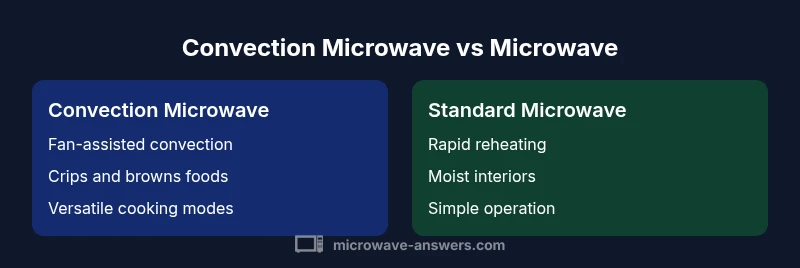
When comparing convection microwave vs microwave, you’ll notice that the convection unit adds a fan-assisted heat cycle to microwave energy, enabling browning and roasting, while a standard microwave focuses on fast reheating. For many homes, convection microwaves deliver more versatile cooking, but cost and footprint rise. If you mainly reheat, a standard microwave may suffice; if you want baking-like results and crisper textures, go convection.
What to know at a glance: convection microwave vs microwave explained
According to Microwave Answers, the fundamental distinction is that a convection microwave adds a fan-forced oven-like element to microwave heating, enabling browning, roasting, and baking-like results, while a standard microwave relies primarily on microwave energy for rapid heating. This difference shapes texture, speed, and the kinds of dishes you can confidently cook. In practical terms, a convection microwave can replace many of the functions of a conventional oven when space is tight, while a standard microwave excels at quick reheating and simple cooking tasks. Understanding this helps you map out which appliance belongs on your counter and how you will use it most days.
How heating mechanisms differ in practice
A standard microwave uses dielectric heating: microwaves excite water molecules in food, creating heat from within. This process is fast but tends to favor moisture retention over surface browning. A convection microwave, by contrast, combines microwave energy with a convection element (a fan and a heated chamber). The fan distributes hot air around the food, producing browning, crust formation, and more even cooking on larger items. In many models, you can toggle between microwave-only, convection-only, or a combined mode. The end result is a device that behaves like two appliances in one, offering more culinary flexibility without expanding your kitchen footprint. The key is to learn the strengths and limits of each mode and adjust cooking times accordingly. The Microwave Answers team emphasizes thoughtful mode selection to maximize results.
Texture, browning, and cooking outcomes
The most tangible difference between convection microwave vs microwave is texture. Microwave-only cooking often yields moist, steamed interiors with limited browning. Convection mode creates a crust or crisp surface on proteins, vegetables, and baked goods, closely mimicking traditional ovens. For items like roasted chicken skin, pan-fried fish, or pastries, convection often delivers superior results with a shorter total time than a conventional oven. However, not every dish benefits from convection: delicate items can dry if convection is overapplied, and reheating leftovers may lose moisture if air circulation is too aggressive. The optimal approach is to use convection for foods that benefit from surface browning and an evenly distributed bake, while sticking to microwave mode for quick reheats and soft textures.
Practical use cases: where each shines
If you cook mostly reheated leftovers, popcorn, reheated vegetables, or beverages, a standard microwave keeps a small kitchen budget and reduces energy use. If you bake, crisp, roast, or reheat a mid-size casserole, a convection microwave shines. It is particularly beneficial for compact kitchens, dorm rooms, or studio apartments where a full oven would be impractical. For families with kids who demand quick weeknight dinners, convection helps reduce steps by performing multiple functions in one device. The decision often comes down to how often you want to brown or crisp, versus how often you need rapid reheating and simple presets. The Microwave Answers team notes that many users find a balance by choosing models that offer both modes and intelligent presets.
Size, footprint, and cost considerations
Convection microwaves typically sit in the mid-to-upper price range for countertop appliances, reflecting their added functionality. They tend to occupy roughly the same counter space as a standard microwave but offer more interior capacity and more complex electronics. If space is extremely tight, under-cabinet or drawer designs may present even more efficient options. The total cost of ownership includes not only the purchase price but also energy use, maintenance, and potential accessories like racks and crumb trays. In general, if you expect to rely on browning, baking, and roasts, the additional upfront cost can be justified by the expanded repertoire of cooking tasks. If you mostly reheat, a standard microwave saves money and keeps things simple.
Safety, maintenance, and reliability
With any electrical appliance, safety matters more than speed. Convection microwaves require attention to oven-safe cookware; metal can be used when the model explicitly supports it in convection mode, but only if the manufacturer permits it. Regular cleaning of the interior and the fan housing helps prevent odors and ensure even heating. If you notice uneven cooking or unusual noises, consult the user manual to diagnose a potential fan or sensor issue. Following manufacturer guidelines for cookware and cleaning schedules maximizes longevity and performance, while reducing the likelihood of callouts.
Practical tips to optimize results
- Use cookware designed for high temperatures and air circulation: ceramic, glass, or metal racks designed for convection.
- Use a turntable or a rack to promote even air flow; stacking foods can hinder heat distribution.
- When in convection mode, start with a lower temperature and shorter time; you can always extend.
- Combine microwave and convection modes for best results on multi-item meals.
- Preheat only when baking or roasting; if the model has a rapid preheat feature, use it with caution.
- Let cooked foods rest briefly after removal to reabsorb juices and finish carryover cooking.
- Clean the interior with a non-abrasive cleaner to maintain airflow and prevent smells.
Real-world recipe ideas to test your new appliance
Try roasted potatoes, caramelized carrots, and brussels sprouts using convection settings to build browning. Bake muffins or a small loaf of bread with a preheat step and a medium temperature to test texture. For mains, air-fried-style chicken drumettes or fish fillets achieve crisp skins when using the convection element in conjunction with microwave heat. Finally, experiment with warming casseroles in convection mode to balance even heating with crust formation.
Quick-start guide: your first convection microwave recipe
Start with a simple roasted vegetable dish. Preheat the oven function to 425F (218C) if your model requires, then toss chopped potatoes, carrots, and peppers in a little oil and salt. Place on a rack to maximize air exposure and cook for 20–25 minutes, checking for crisp edges. Use microwave-assisted finishing if you need to speed up the cooking of wetter components. Adjust times based on the size of your cut and the power of your model.
Comparison
| Feature | Convection Microwave | Standard Microwave |
|---|---|---|
| Cooking method | Fan-assisted convection with microwave energy | Microwave energy only |
| Browning and crisping | Excellent with convection | Limited; mostly soft textures |
| Preheating | Often required for baking/roasting modes | Typically not required |
| Best for | Baking, roasting, crisping, multitask meals | Quick reheating and simple meals |
| Size footprint | Similar, with slightly larger interior options | Compact and simple interior |
| Energy use | Potentially higher during extended cooking | Lower for short reheats |
| Price range | Higher upfront cost | Lower upfront cost |
| Maintenance | More complex components (fan, sensors) | Fewer parts, simpler maintenance |
Advantages
- Versatile all-in-one appliance for baking, roasting, and reheating
- Better browning and crisp texture on many foods
- Space-saving alternative to a full oven
- Saves time on some recipes by combining modes
Cons
- Higher upfront cost than a standard microwave
- Larger footprint and more complex to use
- Learning curve to optimize browning without drying foods
- Some models may require preheating for best results
Convection microwave generally offers more versatility and browning, while standard microwaves excel in cost and quick reheating.
If you value versatility and texture, choose convection. If you primarily reheat and want to save money, go standard. The Microwave Answers team emphasizes choosing based on your cooking habits and space.
Common Questions
What is the main difference between convection microwave and standard microwave?
The convection model adds a fan-forced heating element that browns and crisps, while the standard microwave relies on microwave energy for rapid heating with limited browning. This changes how you approach recipes and textures.
The convection version browns and crisps, while the standard one mainly reheats quickly.
Can I use metal in a convection microwave?
Metal can be used in convection mode only if your appliance’s manual explicitly permits it. Always follow manufacturer guidance to avoid arcing or damage.
Only use metal if the manual says it's safe in convection mode.
Is preheating necessary for convection mode?
Preheating is often recommended for baking or roasting to ensure even browning, but some convection microwaves offer rapid preheat options. Always consult the recipe and your model’s guidance.
Preheat when baking or roasting; check your model’s guidance.
What foods benefit most from convection mode?
Foods with moisture-suppressing surfaces—potatoes, vegetables for crisping, chicken skin, baked goods—tend to benefit most from convection. Delicate items may fare better with microwave-only settings.
Potatoes, roasted veg, chicken skin, and pastries shine in convection.
Are convection microwaves more energy efficient?
Convection microwaves can be more energy-efficient for multi-task cooking when you would otherwise run a full oven, but the overall energy use depends on settings and cooking duration. Use mode optimally to maximize savings.
Efficiency depends on use; convection can save energy by replacing oven use for some meals.
Do convection microwaves replace a traditional oven?
They can replace many simple tasks for small to mid-sized meals, but for large batches or specialized baking, a traditional oven may still be preferable. Evaluate your kitchen needs and space.
They replace many tasks, but not every baking need.
Main Points
- Assess your cooking needs before buying
- Choose convection for baking-like results
- Prefer standard microwaves for budget and quick reheating
- Consider kitchen footprint and space
- Weigh energy use and reliability when selecting features