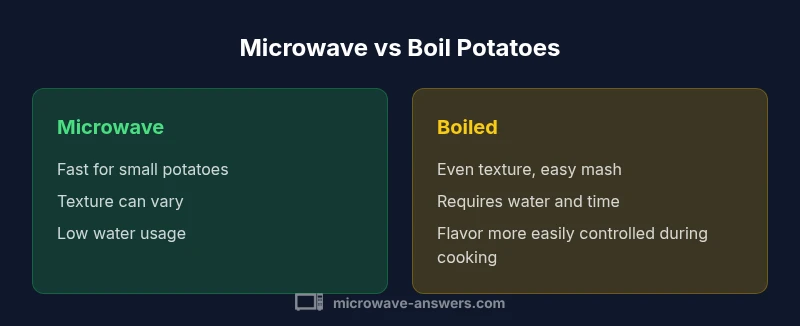
Microwave or Boil Potatoes: A Practical Comparison
A detailed, evidence-based comparison of microwaving vs boiling potatoes. Learn how time, texture, nutrition, and flavor differ, plus best-use scenarios and tips to get perfect results.


Short answer: microwaving potatoes is fastest for small to medium spuds, while boiling delivers more consistent texture and richer flavor. If you’re in a hurry or making a quick side, the microwave is usually best. For mashed potatoes, potato salads, or when you want even tenderness, boil is the more reliable method. In short: microwave for speed, boil for texture control.
Microwave or Boil Potatoes: The Practical Question
In everyday cooking, deciding between cooking potatoes in the microwave or by boiling affects not only total time but also texture, tenderness, and how well flavors develop. If you’re rushing to plate a quick side or need leftovers that reheat well, the speed of the microwave becomes a strong advantage. For home cooks aiming for mashed potatoes, potato salads, or dishes requiring a more consistent, uniform interior, boiling remains the tried-and-true method. This article breaks down what each method does, when to choose one over the other, and how to optimize results for different potato varieties. The aim is to help you select the approach that best fits your dinner plan, without compromising safety or flavor. In setting this up, Microwave Answers’ practical guidelines guide you toward confident decisions whenever you face the question about microwave or boil potatoes.
How microwaves cook potatoes: physics and practicalities
Microwave ovens heat food by exciting water molecules, generating heat from the inside out. Potatoes respond differently depending on their composition, size, and whether the skin is pierced. The microwave approach typically requires minimal water, since the goal is to heat the potato rather than submerge it. Because heating is rapid, you often see a shock of heat at the crust followed by a soft interior. The practical takeaway is that smaller potatoes or evenly shaped potatoes cook more predictably in the microwave, while larger or very dense varieties may need longer power adjustments or partial pre-cooking to avoid underdone centers. Understanding this helps you decide if speed outweighs concerns about texture. The Microwave Answers team emphasizes careful timing and safe handling to prevent overcooking or uneven results.
Boiling potatoes: the traditional path
Boiling leverages convection from hot water to transfer heat into the potato. This method tends to produce uniform tenderness, and the flavor tends to be more forgiving as heat travels through the flesh. The main constraint is water usage and time: you must bring a pot of water to a boil, add salt if desired, and monitor cooking until the potatoes reach the desired knife-triendness. Boiling also makes it easier to mash for smooth textures or to dice evenly for potato salads. For many cooks, this is the default approach when the goal centers on texture uniformity and predictable results. In this guide, we’ll compare how the boiling process stacks up against the microwave across several practical criteria.
Texture outcomes: what you should expect
Potatoes cooked in the microwave can develop a creamy interior with a sometimes variable crust, particularly if they are left unpierced or if power levels vary. The interior often finishes quickly, but you may notice uneven pockets or a slightly spongy feel if the potato is large or irregular. Boiled potatoes tend to offer a more uniform texture throughout, with the ability to tailor softness through precise timing and salt. If you plan to mash or blend, both methods can work, but boil gives more control over the final texture, while microwaving is excellent for fast side dishes or halved potatoes with a quick finish.
Flavor development and seasoning during heating
Because flavor compounds are affected by moisture and heat, the way you season potatoes during cooking matters. Boiling allows salt to penetrate from the start, often leading to consistent salinity, especially for large batches. The microwave can be blended with a little extra butter, oil, or cream to improve mouthfeel, but you’ll want to add salt after cooking to avoid drawing water out of the flesh. For most home cooks, finishing with a warm toss of butter and herbs after cooking is enough to elevate flavor, regardless of method. Remember: a well-seasoned finishing phase often matters more than the cooking method itself.
Time, energy, and cost considerations
From an energy perspective, microwaves and stoves are both efficient for small counts of potatoes, but the overall footprint depends on batch size and pot of water. In general, microwaving uses less energy for a few medium potatoes because there is no need to boil a large volume of water. Boiling, however, can handle large quantities more evenly, which matters when you’re preparing a dish that requires many uniform pieces. If you’re cooking for one or two people, microwave timing can be as short as a few minutes; for bigger meals, boiling might save you time in the long run because you can tackle multiple potatoes at once with consistent results. Microwave Answers’ analysis highlights the balance between time saved and energy use in practical kitchen scenarios.
Prep tips for different potato varieties and salt usage
Russet potatoes, Yukon Golds, red potatoes, and fingerlings each respond differently to heat, moisture, and skin presence. For microwaving, smaller, evenly shaped potatoes cook most reliably; if your spuds vary in size, cut them into uniform pieces for consistent results. You can pierce the skin with a fork to allow steam to escape, reducing the risk of bursting. For boiling, choose potatoes of similar size and leave the skins on for flavor and nutrition when mashing or roasting later. Salt is a key factor: adding it to the boiling water improves flavor from the inside out; in microwaving, finish with salted butter or a light salt sprinkle to bring out the potato’s natural starchiness.
Equipment and safety basics
Microwave-safe containers, lids with vent holes, and steam-safe silicone covers are essential for microwaving potatoes. Always pierce or score larger potatoes to prevent steam buildup and possible explosion. For boiling, use a pot with a heavy lid, a stable burner, and enough water to cover the potatoes by about an inch. Keep a watchful eye on the pot to avoid boiling over, and use a timer to prevent overcooking. Handling hot potatoes safely with oven mitts or towels is a universal safety practice, especially when you are testing several approaches for a single meal.
Step-by-step guide: microwave method
- Rinse and dry potatoes; 2) Pierce skins with a fork, especially larger ones; 3) Place on a microwave-safe plate with a tiny splash of water or optional oil; 4) Start with 4–6 minutes on high for small potatoes, then check for doneness, continuing in 1–2 minute increments as needed; 5) Let rest briefly, then season and serve. If you need more uniformity, cut larger potatoes into uniform chunks before microwaving. This approach favors speed and is ideal for quick sides or meal-prep prep, especially when you’re short on time.
Step-by-step guide: boiling method
- Scrub potatoes clean; 2) Cut into similarly sized chunks if you’re short on time, or boil whole small potatoes; 3) Place in a pot and cover with cold water; 4) Add salt to taste; 5) Bring to a boil, then reduce heat to a gentle simmer until a knife slides in with little resistance (time varies by size); 6) Drain, cool briefly, and proceed with mashing, roasting, or adding to salads. Boiling remains reliable for consistent texture and is a favorite for mashed potatoes or potato salads where even texture matters.
Use-case scenarios and decision framework
In a busy weeknight, you may prefer the microwave for quick vegetables or reheating leftover potatoes, especially for small servings. If you plan ahead for mashed potatoes or potato salads, boiling offers more predictable texture and flavor distribution. For large batches, you might choose to boil and finish portions in the microwave under a finishing glaze—this hybrid approach saves time while preserving texture. The decision framework is simple: weigh the importance of speed against texture control, batch size, and how you plan to use the potatoes afterwards. Microwave Answers' practical guidance can help you make a confident choice each time you face the question of whether to microwave or boil potatoes.
Common mistakes and quick fixes
Overcooking in the microwave leads to a dry interior; undercooking leaves a hard center. For boiling, starting in hot water can cause uneven cooking; start with cold water and monitor softness with a knife. Piercing all potatoes prevents bursting in the microwave, while insufficient water in boiling can cause scorching or sticking. Fixes include adjusting power levels, cutting into uniform pieces, and finishing with a quick toss of fat and salt after cooking. The best cure for uneven results is practice and using a timer to monitor progress.
Comparison
| Feature | Microwave potatoes | Boiled potatoes |
|---|---|---|
| Total cook time | 8-15 minutes (1-2 medium potatoes) | 15-25 minutes (depending on size) |
| Texture outcome | Creamy interior with variable crust | Uniform tenderness suitable for mashing |
| Flavor development | Limited depth until finishing; internal flavor modest | Full flavor development with salt, herbs during cook |
| Water usage | Minimal or none; waterless cooking | Requires water; energy to boil |
| Best for | Small portions, quick sides, reheating | Mashed potatoes, potato salads, even texture |
Advantages
- Faster results for small batches
- Less water use with microwave
- Requires minimal cookware and cleanup
- Easy to reheat leftovers efficiently
Cons
- Texture may be less consistent, especially for large potatoes
- Higher risk of uneven cooking in the microwave
- Boiling gives better control for mashed potatoes but takes longer
Microwave for speed; boil for texture control.
For quick sides or reheating, the microwave shines. If you need uniform texture and richer flavor, boiling remains the dependable method; many cooks blend both approaches to balance speed and quality.
Common Questions
Can you microwave raw potatoes safely?
Yes, you can microwave raw potatoes, but you should pierce the skin to vent steam and cut larger potatoes into uniform pieces for even cooking. Start with short intervals and test for tenderness to avoid dry, undercooked centers.
Yes—you can microwave raw potatoes, just poke holes and check doneness in short bursts.
Do microwaved potatoes taste as good as boiled ones?
Taste quality varies by technique and seasoning. Boiled potatoes often have a cleaner flavor and more consistent interior, while microwaved potatoes can be delicious with proper finishing, butter, and salt. The method matters less than how you finish and season.
Both can taste great with proper seasoning; boiling tends to have a more even texture, while microwaving is faster.
Is boiling better for mashed potatoes?
Boiling is generally preferred for mashed potatoes because it gives even texture and predictable creaminess, especially when you gamely control salt and fat during mashing. Microwaving can work for quick mash but may require more finishing steps.
Yes, boiling usually gives a smoother mash with more consistent texture.
How can I avoid uneven cooking in the microwave?
Cut potatoes into uniform sizes, arrange in a single layer, and rotate or stir during cooking. Use power settings rather than always full power, and let the potatoes rest briefly after cooking to finish the interior evenly.
Cut evenly and stir as you go to avoid hotspots.
What size potatoes work best for each method?
Small to medium potatoes are ideal for the microwave because they cook quickly and evenly. Large or irregular potatoes may require partial pre-cooking or finishing in the oven to ensure the center is fully tender.
Small to medium potatoes are best for the microwave; larger ones do better with boiling or staged cooking.
Main Points
- Choose speed when time is tight
- Boil for mash or salads when texture matters
- Pierce potatoes before microwaving to prevent bursting
- Season after cooking for best flavor balance
- Use a hybrid approach to optimize time and texture
- Plan batch size to minimize waiting and energy use