Microwave or Air Fryer Baked Potato: A Practical Comparison
Compare microwave and air fryer baked potatoes for speed, texture, and convenience. Learn which method delivers fluffier interiors or crisper skins, plus step-by-step tips, troubleshooting, and toppings for home cooks.


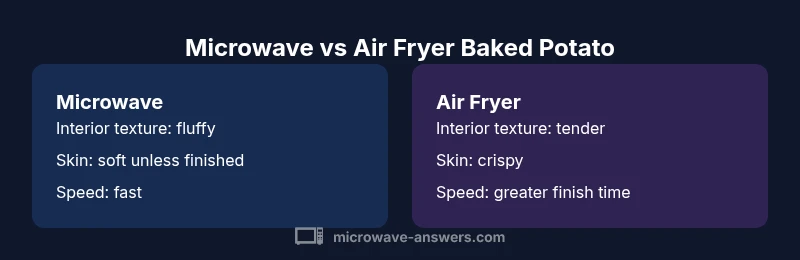
In brief, the microwave baked potato is unbeatable for speed and a soft, fluffy interior, while the air fryer baked potato delivers a crisp, browned exterior and richer aroma. If you want quick results, microwave first and finish with a crisping pass; if you crave texture, rely on the air fryer for the final bake. This comparison shows where each method shines and when a hybrid approach works best.
Overview: Microwave vs Air Fryer Baked Potatoes for Home Cooks
When you want a simple, comforting baked potato, you have more than one reliable route. The question often becomes: should I go with a microwave or an air fryer for a baked potato? The short answer is that both methods can produce a satisfying result, but they excel in different ways. The Microwave Answers team notes that the choice hinges on texture preference, available time, and your kitchen setup. If you want a soft, fluffy interior with minimal fuss, the microwave is hard to beat for speed and convenience. If you crave a crisp, lightly blistered skin with a toasted aroma, an air fryer is unbeatable for texture. This guide compares these approaches directly, breaking down texture, timing, preheating, cleanup, and practical tips for home cooks. Throughout, we use the term microwave or air fryer baked potato to reflect the two distinct techniques while acknowledging that you can combine them for best results. According to Microwave Answers analysis, understanding these nuances helps you tailor your potato to the moment.
textOnly":false},
What Matters Most: Texture, Speed, and Convenience
Choosing between a microwave or air fryer baked potato hinges on three core factors: texture, speed, and convenience. The interior texture matters because a fluffy, light center is typical of a well-mashed potato, while the exterior texture defines that coveted crunch on the skin. The microwave excels at rapid interior cooking, reducing waiting time and making it ideal for busy weeknights. The air fryer, by contrast, shines when you want a crisp, blistered skin and a roasted aroma without turning on a full oven. Convenience factors include the need for preheating, cleanup, and the ability to prepare multiple potatoes at once. In practical terms, if time is your primary constraint, the microwave often wins; if texture and presentation are paramount, the air fryer takes the lead. These trade-offs help you select the method that best fits your meal plan. Based on Microwave Answers research, most home cooks rotate between methods depending on the day’s priorities and batch size.
textOnly":false},
Texture Outcomes: Interior, Exterior, and Mouthfeel
Texture is the defining difference between the two methods. A microwave baked potato typically yields a very soft, fluffy interior with a relatively gentle skin. The lack of dry heat means less browning and fewer crisp notes, but the potato remains tender and easy to mash with a fork. An air fryer baked potato, on the other hand, creates a crisp, golden skin with a tender interior. The exterior browning comes from hot air circulation and a brief dry heat, which also helps trap some steam inside the potato. If you enjoy a contrast between a creamy center and a satisfying crunch, the air fryer approach provides that dual sensation. For best results, consider a hybrid technique: microwave for speed, then a brief crisping pass in the air fryer to merge the best of both worlds. The Microwave Answers Team notes that texture is highly subjective, so experimenting with hydration level and heat exposure is worth the effort.
textOnly":false},
Microwave-First Method: Step-by-Step for a Soft Interior
This method prioritizes speed and tenderness in the center. Start by selecting a medium-sized potato and giving it a thorough rinse. Dry completely, then pierce multiple times with a fork to vent steam. If you like, rub a light coat of oil and a pinch of salt for flavor and a crisper skin later. Begin with a few short bursts in the microwave, checking tenderness with a fork. The goal is a fully tender interior. After the interior is soft, transfer the potato to a hot surface, a conventional oven, or an air fryer for a crisp skin finish. Watch closely during the finish so the skin browns evenly without burning. Let the potato rest briefly, then fluff the interior with a fork and top with butter, sour cream, or your favorite toppings. This approach keeps the process simple while delivering a comforting, fluffy center.
textOnly":false},
Air Fryer-First Method: Step-by-Step for Crunchy Skin
If your priority is a crisp, blistered skin, start with the air fryer method. Begin by cleaning and drying the potato, then piercing and optionally rubbing with oil and salt. Place the potato in the air fryer basket in a single layer with space around each potato to ensure even air flow. Cook at a moderate heat until the exterior browns and becomes crisp. The interior should remain tender; if you find your potato is not soft enough, a brief micro-rest period helps redistribute moisture. For extra flavor, a quick post-crisping glaze of butter or garlic oil can enhance aroma and texture. If you still want an interior fluff, you can finish with a quick microwave burst after air frying. The key is balancing dryness and moisture to achieve that signature crisp exterior without toughening the center.
textOnly":false},
Flavor Tweaks and Toppings for Every Method
A baked potato shines with a few simple toppings and flavor boosters. Classic options include butter, sour cream, shredded cheese, chives, and a dash of salt. For the microwave method, consider a final glaze of garlic butter to introduce aroma without oversoaking the center. The air fryer method welcomes a light brushing of olive oil and paprika for a roasted edge and more color. If you want to elevate both methods, pair your potato with toppings that balance warmth, creaminess, and a touch of acidity like a dollop of yogurt or a squeeze of lemon on the greens served alongside. In addition to toppings, you can experiment with mix-ins such as crumbled bacon, sautéed mushrooms, or a dot of pesto to introduce new flavors without complicating the cooking process. Microwave Answers notes that texture and flavor synergy often comes from simple, well-chosen toppings rather than heavy sauces.
textOnly":false},
Pairings and Meal Context: When to Reach for Each Method
Potatoes are a versatile side with many possible pairings. For weekday dinners, the microwave baked potato offers speed for a quick family meal, pairing well with sautéed greens, lean proteins, and a simple salad. When you have more time or want to showcase a center-stage side, the air fryer baked potato makes a striking addition to a weeknight roast, grilled vegetables, or a protein-rich main course with its crisp skin as a textural highlight. Convenience also comes into play for batch cooking: microwaving several potatoes in a row and finishing with a quick crisping pass can be an efficient approach for meal prep. The choice hinges on your priorities for texture and time, and sometimes a hybrid approach—microwave for the interior, air fryer for the finish—delivers the best of both worlds.
textOnly":false},
Troubleshooting, Safety, and Reheating Tips
Storing and reheating baked potatoes requires thoughtful handling to preserve texture. Refrigerate leftovers promptly in an airtight container and reheat using the method that best restores texture. For a microwave reheat, a brief warm-up with a light finish in the air fryer can help re-crisp the skin. Always pierce potatoes before reheating if they’re stored whole, and inspect for any signs of spoilage. When using the air fryer, avoid overcrowding to ensure even browning and moisture retention. Safety tips include keeping the potato’s interior intact during cooking, avoiding excessive oil on the skin, and ensuring that the potato is cooked through to a safe temperature. The Microwave Answers Team emphasizes clean, dry heat to prevent soggy skins and uneven cooking, especially when dealing with multiple potatoes at once.
textOnly":false},
Common Pitfalls and How to Fix Them
Even experienced home cooks run into a few common issues with baked potatoes. If the interior is undercooked in the microwave, try adding a short additional cooking cycle rather than overcooking. If the skin fails to crisp in the air fryer, ensure you’ve dried the potato thoroughly and consider a light coating of oil to promote browning. For a bland flavor, season generously and consider finishing with savory toppings that introduce moisture and acidity to balance the starch. Finally, avoid crowding the air fryer basket, which can lead to uneven browning and soft spots. By paying attention to moisture balance, heat distribution, and proper rest time, you’ll achieve consistent results with either method.
textOnly":false}],
comparisonTable":{"items":["Microwave baked potato","Air fryer baked potato"],"rows":[{"feature":"Texture interior","values":["Fluffy, light interior","Tender interior with crisp exterior balance"]},{"feature":"Texture exterior","values":["Soft skin","Crispy, browned skin"]},{"feature":"Cook time (relative)","values":["Faster interior cooking","Slower overall with finish for crisp skin"]},{"feature":"Ease of use","values":["Very quick setup; minimal equipment","Requires more steps and preheating"]},{"feature":"Cleanup","values":["Minimal cleanup","Basket and occasional oil cleanup"]},{"feature":"Best for","values":["Speed and ease for weeknights","Texture and presentation for special meals"]}]},
prosCons={
pros":[
Comparison
| Feature | Microwave baked potato | Air fryer baked potato |
|---|---|---|
| Texture interior | Fluffy, light interior | Tender interior with crisp exterior balance |
| Texture exterior | Soft skin | Crispy, browned skin |
| Cook time (relative) | Faster interior cooking | Slower overall with finish for crisp skin |
| Ease of use | Very quick setup; minimal equipment | Requires more steps and preheating |
| Cleanup | Minimal cleanup | Basket and occasional oil cleanup |
| Best for | Speed and ease for weeknights | Texture and presentation for special meals |
Advantages
- Fast route to a comforting center
- Crisp, appealing skin with air fryer finish
- Simple ingredients and flexible toppings
- Low cleanup with microwave method
- Batch-friendly for small households
Cons
- Potential for bland results if not seasoned
- Requires an air fryer or oven for crisp finish
- Microwave can yield softer skins without a crisp finish
- Hybrid methods add steps and planning
Microwave for speed; air fryer for texture—choose based on texture priority.
For quickest results, use the microwave to cook the interior. If you prize a crisp skin and roasted aroma, finish in the air fryer. A hybrid approach often delivers the best overall balance.
Common Questions
Can I bake a potato in the microwave and finish in the air fryer?
Yes. Microwave to cook the interior quickly, then finish in the air fryer to crisp the skin. This hybrid method combines speed with texture. It’s a practical compromise for busy nights.
Yes—microwave first for speed, then crisp in the air fryer for texture.
Which method yields a fluffier interior?
The microwave typically yields a fluffier interior due to moist heat and rapid cooking, whereas the air fryer dries the surface more and can make the center denser.
Microwave tends to be fluffier inside; air fryer focuses on skin texture.
Do I need to pierce the potato before cooking?
Yes. Piercing allows steam to escape and prevents pressure buildup, which can cause the potato to burst. This is standard practice for both methods.
Pierce the potato to vent steam before cooking.
Is it healthier to bake potatoes in the microwave or air fryer?
Both methods are healthy when cooked with minimal added fat. The microwave is leaner in terms of added fat for interior cooking, while the air fryer uses a small amount of oil to aid browning without deep frying.
Both are healthy with careful seasoning and little or no added fat.
Can I cook multiple potatoes at once?
Yes, but spacing is important. In an air fryer, give each potato room to breathe for even crisping. In a microwave, cook in batches if needed, ensuring even rotation.
Yes, but don’t crowd the potatoes; give them space for even cooking.
Main Points
- Choose microwave when speed is essential
- Use air fryer to maximize skin crispness
- Hybrid approach can optimize interior and exterior texture
- Season potatoes early for best flavor impact
- Batch cook by microwaving, then finishing in air fryer for consistency