Is Microwave Worse Than Oven? A Thorough Comparison
Is microwave worse than oven? This analytical comparison weighs speed, texture, energy use, safety, and practical tips to help you decide for cooking tasks.


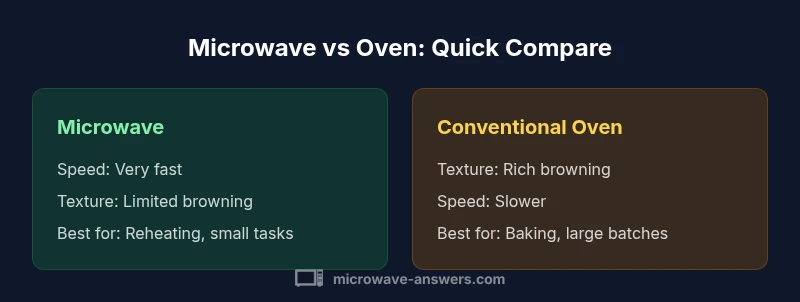
Is microwave worse than oven? Not universally. Microwaves excel at speed and convenience, while ovens deliver browning, texture, and even baking. The best choice depends on the task: for quick reheats and defrosting, the microwave shines; for crusts and rich flavors, the oven wins. Both have roles in a practical kitchen.
Scope and perspective
Is microwave worse than oven? Not necessarily—it's a question of task, space, and goals. According to Microwave Answers, the most meaningful comparisons occur when we separate device capabilities from user needs and evaluate outcomes rather than perceptions. This section sets the stage for a task-based evaluation: reheating, defrosting, cooking from raw ingredients, and producing texture. We’ll measure speed, texture, evenness, energy use, and safety across real kitchen scenarios. The ultimate takeaway is practical guidance, not blanket judgments. The Microwave Answers team emphasizes that both appliances have a legitimate place in a modern kitchen, and the best approach is to use each tool where it shines.
How microwaves work (basics)
Microwave heating relies on dielectric heating, where microwave radiation agitates water molecules inside food. This energy transfer heats from the inside out, often producing fast warm-up with minimal prep. Turntables, stirrers, and vessel geometry influence heat distribution, so results can vary with dish shape and contents. In short, the microwave is designed for speed and moisture retention, but uniform browning is not its default strength. Understanding these fundamentals helps set realistic expectations when comparing to an oven. This section also highlights common cookware compatibility and why certain materials heat unevenly in microwaves.
How conventional ovens work (basics)
Conventional ovens rely on radiant and convection heating to transfer energy from heated air to food. An oven can bake, roast, and brown evenly when correctly configured, using racks and proper cookware. Temperature stability and airflow influence crust formation, moisture retention, and overall texture. Unlike microwaves, ovens excel at color development and Maillard-driven flavors, which are crucial for savory roasts and baked goods. Understanding oven behavior clarifies why many dishes benefit from a long, steady heat profile. This section contrasts airflow, temperature precision, and the role of convection fans in delivering even results across multiple zones in the cavity.
Key performance metrics (speed, texture, uniformity, nutrients)
When evaluating performance, four metrics matter most: speed, texture, evenness, and nutrient retention. The microwave delivers rapid heating and consistent moisture preservation for many foods, but browning and crusting remain limited. Ovens provide superior texture and browning, with more predictable caramelization and crisp edges, yet can be slower and more energy-intensive for small portions. Uniformity depends on dish design and technique: microwaves may heat unevenly with irregular shapes, while ovens depend on rack placement and preheating discipline. Across these metrics, the practical choice depends on the dish, portion size, and your priorities for flavor and texture. This section highlights how to align task goals with appliance strengths.
Reheating and defrosting: speed vs quality
Reheating and defrosting are areas where microwaves often outperform ovens in speed and efficiency. For soups, sauces, and soft items, microwaves can restore moisture while keeping textures mostly intact. However, uneven heating can occur without stirring or turning, especially with thick or layered foods. Ovens, while slower, provide more uniform temperature distribution and can prevent the soggy textures sometimes seen with microwaves. A practical approach is to start with the microwave for speed and switch to the oven for the final warmth or to re-create a crisp edge on foods like pizza or pastry. In all cases, cover dishes to retain moisture and monitor heat to avoid overheating.
Baking, browning, and texture development
Texture and flavor development are often the decisive factors in choosing between these appliances. Ovens are superior for crust formation, caramelization, and even browning across surfaces, thanks to dry heat and convection dynamics. Microwaves preserve moisture and can yield tender interiors but struggle with crusts and browning unless combined with a browning element or convection mode. For delicate baked goods, a traditional oven provides reliable color and structure, while microwave-assisted or combination modes can serve quick, small-batch tasks. The key is recognizing which attributes you prioritize—crisp texture versus moisture retention—and planning cooking steps accordingly.
Energy use, cost, and environmental considerations
Energy use and cost are practical concerns for home cooks. Microwaves typically run on shorter cycles and can be more energy-efficient for small portions, reheating, and defrosting. Ovens consume more energy, especially for single-serving meals or quick reheats that could have been done with a microwave. However, if you routinely cook large meals or bake multi-dish menus, the oven’s efficiency per serving may become favorable. The broader takeaway is to match energy use to the task: small tasks often justify the microwave, while larger, texture-focused tasks benefit from oven time. Based on Microwave Answers analysis, you can optimize energy by planning activities that minimize idle preheating and using the weakest effective setting.
Safety considerations and cookware compatibility
Safety is about proper use and appropriate cookware. Never heat metal objects in a microwave, and avoid delicate plastics that may warp or leach chemicals. Microwave-safe glass, ceramic, and certain plastics are suitable for most tasks, while eggs in shells or sealed containers can explode. For ovens, ensure safe racks, proper pan materials, and preheating practices to avoid thermal shock. Both appliances benefit from mindful handling: let hot foods rest, follow manufacturer guidelines, and sanitize containers between uses. This section consolidates best practices to reduce risk while enabling you to exploit each appliance’s strengths.
Practical guidelines for choosing (when to grab the microwave vs the oven)
A practical decision framework helps you avoid defaulting to one appliance for every task. Start by listing frequent tasks: reheating, defrosting, baking, roasting, and large-batch cooking. If speed is paramount and browning isn’t essential, the microwave is your go-to. If texture, crust, and even browning matter, use the oven. For larger dishes or when specific recipes require precise control, the oven wins. If space or budget is limited, consider a compact microwave with optional convection features. Finally, combine approaches: reheat in the microwave and finish in the oven for improved texture. The aim is to tailor choices to meal goals and kitchen constraints rather than adhere to a single routine.
Maintenance, cleaning, and longevity
Routine cleaning extends the life of both appliances. Wipe the interior after use to prevent residue buildup that can cause odor or uneven heating. For microwaves, ensure the turntable is free of debris and check the door seal for integrity. For ovens, wipe spills promptly to avoid baked-on stains and inspect door gaskets periodically. Regular vent cleaning and periodic professional servicing may be warranted for older models. Proper maintenance reduces hotspots, keeps energy efficiency high, and preserves performance over time. A clean appliance contributes to consistent results and safer operation.
Common myths debunked
Myths about microwaves persist, but facts matter. The microwave does not emit ionizing radiation; it uses non-ionizing energy to agitate water molecules. It does not make food radioactive, and when used with appropriate cookware, it is safe. Claims that microwaves destroy nutrients across all foods are oversimplifications; nutrient loss depends on exposure time and cooking method. Meanwhile, ovens are not inherently superior for every dish—texture, browning, and even cooking play to the oven’s strengths. Recognizing these nuances can improve decision-making and kitchen workflow.
Real-world kitchen scenarios and quick tips
In real kitchens, cooks juggle multiple constraints: time, texture, and taste. For a weeknight pasta with sauce, the microwave can reheat leftovers quickly, while the oven can finish with a crisp cheese topping. For roasted vegetables with caramelization, the oven provides the best outcomes, but a microwave can help pre-soften if time is tight. For delicate fish or reheated stews, consider reheating gently in the microwave and checking texture frequently. The core tip is to align your method with the dish’s texture goals, not just convenience. Always plan ahead and stay flexible to achieve the best results.
Comparison
| Feature | Microwave | Conventional Oven |
|---|---|---|
| Speed and reheating | Very fast | Slower |
| Texture and browning | Limited browning | Excellent browning and crusting |
| Even heating | Can be uneven with irregular dishes | More even with proper rack placement |
| Capacity and size | Compact, best for small dishes | Larger capacity for baking and roasting |
| Energy use for small tasks | Lower energy for small tasks | Higher energy, but efficient per serving on large tasks |
| Best use case | Reheating and quick meals | Baking, roasting, and large batches |
Advantages
- Faster meal prep and reheating
- Energy efficiency for small tasks
- Less heat in warm rooms or summers
- Wide range of models and prices
- Convenient defrosting and simple cooking options
Cons
- Limited browning and texture development
- Potential uneven heating without stirring or rotation
- Not ideal for large dishes in the microwave
- Reliance on microwave-safe cookware can constrain choices
Microwave and oven each serve essential roles in a practical kitchen
The Microwave Answers team recommends using each appliance for what it does best: speed for reheating in the microwave, texture and capacity in the oven. A hybrid approach often delivers the best balance of time, flavor, and efficiency.
Common Questions
Is microwaving food safer than baking in an oven?
Both appliances are safe when used properly. Microwaves use non-ionizing radiation and do not make food radioactive; safety depends on proper containers and handling. Follow manufacturer guidelines to minimize risk.
Both are safe when used correctly; just follow the container guidelines and avoid metal.
What is a convection microwave and how does it compare to a traditional oven?
A convection microwave adds a fan to circulate hot air, improving browning and speed somewhat. It can approximate some oven results but may not fully match a traditional oven for large batches or deep browning.
A convection microwave can mimic parts of an oven, but not every bake is identical.
Can I bake in a microwave or use a convection microwave instead of an oven for most recipes?
Convection microwaves can handle many tasks, including some baking, but traditional ovens remain superior for crust development and even color on many dishes. Some recipes translate well, others do not.
Convection microwaves work for some bakes, but not every recipe translates perfectly.
What should I consider if I have limited kitchen space and need both appliances?
If space is tight, a compact microwave with convection features can cover many bases, but you may still want a full-size oven for tasks that require browning and large trays. Assess your typical meals to decide.
A combo unit can save space, but think about your typical meals and size needs.
Are there safety tips specifically for microwave use?
Yes. Avoid metal, use microwave-safe containers, vent containers when needed, and avoid heating eggs in shells or sealed jars. Let hot foods rest before handling to prevent burns.
Stick to microwave-safe containers and vent when needed, and be careful with hot foods.
How should I clean and maintain the oven vs the microwave?
Regular cleaning extends appliance life. Wipe the interior of both, check door seals, and follow manufacturer care instructions. Avoid harsh chemicals and ensure proper ventilation where applicable.
Keep both clean and checked for seals to maintain performance.
Main Points
- Choose speed for reheating: microwave is your friend
- Opt for oven when texture and browning matter
- Plan meals to use both appliances strategically
- Use microwave-safe cookware to protect results
- Balance energy use by task and dish size