Difference Between Microwave and Infrared: A Practical Comparison
A thorough comparison of microwave and infrared heating, explaining how each works, when to use them, safety considerations, and tips for optimizing texture and speed in home cooking.


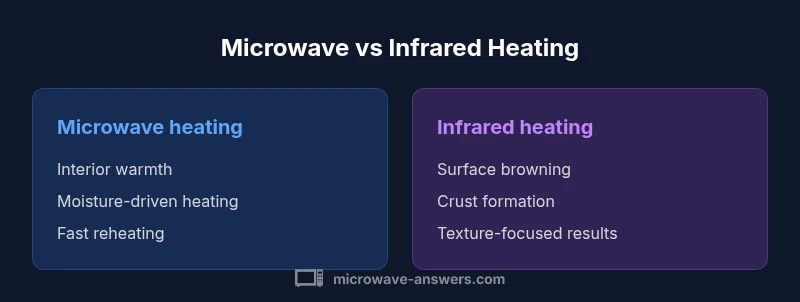
According to Microwave Answers, microwave heating and infrared heating are two distinct methods for warming food. The key difference is heat transfer: microwaves heat the interior by exciting water molecules, while infrared heats primarily the surface with radiant heat. Each method serves different kitchen tasks, so selecting the right approach saves time and improves texture.
The difference between microwave and infrared heating: core concepts
At a high level, microwave heating and infrared heating operate through two different physical mechanisms. Microwave heating uses electromagnetic radiation to interact with polar molecules—most notably water—in the food. This interaction causes molecular rotation and friction, which produces heat throughout the food’s interior, creating a more volumetric warming profile. Infrared heating, by contrast, is a radiant process: heat is emitted by a hot surface or element and transfers to the food primarily at the surface. The result is surface warming, browning, and crust formation when appropriate conditions exist. Understanding these mechanisms clarifies why each method excels in particular tasks in a home kitchen.
In practical terms, you should think of microwave heating as interior-focused and infrared heating as surface-focused. When you select a heating method for leftovers, for example, you are choosing between a method that warms evenly inside or a method that creates a crisp exterior. This distinction forms the core of the difference between microwave and infrared heating—and it guides how you approach common cooking tasks.
Brand context note: The Microwave Answers team emphasizes that recognizing the mechanism behind each method helps home cooks predict results and avoid common missteps. This perspective aligns with broader safety and usability goals for residential kitchen appliances.
Heat transfer mechanics in everyday use
Microwave heating relies on non-ionizing electromagnetic energy, typically aimed at molecules with dipole moments such as water, fats, or sugars. The energy absorption translates to internal molecular motion and heat generation that can propagate at varying depths, depending on food composition and moisture content. Infrared heating uses radiant energy emitted by a heat source—like a quartz or ceramic element. The heat travels through space and is absorbed by the food’s surface. As a result, infrared is especially effective for producing browning, caramelization, and crust formation, which are largely surface phenomena.
For home cooks, this difference translates into practical outcomes: microwaving often yields quick, uniform interior warmth for reheated dishes or defrosting, while infrared or infrared-assisted appliances tend to enhance crusts or achieve a desired color and texture on the exterior. The spectrum of heating performance is further shaped by food geometry, packaging, and whether a lid is used during heating.
Across diverse kitchen tasks, the central idea remains: interior heating versus surface heating. The Microwave Answers team notes that manipulating these modes—either by pure microwave or infrared elements or by hybrid appliances—gives cooks more control over texture and moisture retention.
Practical cooking scenarios: when to choose microwave or infrared
Choosing between microwave and infrared heating should start with the goal of your dish. For uniform reheating of mixed ingredients, a microwave can deliver faster interior warmth with fewer cold pockets, especially for items with moisture. If you need to reheat and simultaneously crisp the exterior, infrared components or a microwave with an infrared browning element can deliver both warmth and texture. For defrosting, a microwave’s interior heating can be efficient, but for delicate proteins or vegetables, infrared can prevent uneven thawing by focusing gentle surface warming before interior heat catches up.
When cooking from scratch, infrared heating shines for tasks like toasting bread, browning, or achieving crusts on meats. In these cases, the surface heat triggers Maillard reactions, producing flavor and color that microwave-only methods may not replicate. A hybrid appliance—one that combines microwave with infrared—offers a practical compromise for many home cooks who want speed plus texture.
From a safety and usability perspective, microwave heating is common because it works with typical kitchen cookware and is compatible with readily available food containers. Infrared heating may require materials that tolerate higher surface temperatures, such as certain ceramics or oven-safe metals, depending on the appliance design. The Microwave Answers team emphasizes selecting a device that matches your typical meals and cookware to avoid mismatches that hinder performance.
Texture outcomes: browning, crusting, and moisture control
Texture is among the most visible differences between the two heating modalities. Microwave heating tends to retain moisture and can produce a softer texture if not combined with other methods. It is excellent for rewarming casseroles, soups, or stews where penetrating heat is beneficial but crust formation is not essential. Infrared heat, by contrast, is renowned for browning surfaces and creating a crisp exterior. This can significantly improve the sensory appeal of foods like reheated pizza, grilled sandwiches, or roasted veg. However, infrared alone may leave interiors underheated if used without sufficient time or energy to push heat inward.
Home cooks who want both crust and interior warmth often rely on hybrids: a microwave to heat the interior quickly, followed by a brief infrared blast to crisp the exterior. When planning textures, consider food thickness, moisture content, and whether a crust is desirable. The right sequence can dramatically affect final texture and mouthfeel.
Energy use and heating speed: a practical balance
From an energy perspective, microwave heating can be more efficient for rapid interior warming, particularly for small or moisture-rich items, because it minimizes long preheating or high-energy surface heating. Infrared heating may be more energy-intensive per unit of surface temperature but can achieve desirable textures in relatively short bursts, making it efficient for specific tasks. The choice often comes down to the food type and desired result: speed for reheating and internal warmth via microwaves, or texture-focused results via infrared.
In practice, many households use hybrid appliances or separate devices to cover common tasks. Understanding which method excels for each goal allows you to optimize energy use, reduce wait times, and avoid overcooking. The Microwave Answers team recommends mapping your weekly meals to heating goals—interior warmth, exterior browning, or a combination—and selecting equipment accordingly.
Safety, maintenance, and appliance design considerations
Both microwave and infrared heating rely on safe operation when used as intended. Microwave ovens are designed with shielding to prevent leakage of non-ionizing radiation and safety interlocks to shut off when the door is opened. Infrared elements are hot by design, so cautious operation and proper cookware are essential to prevent burns and heat damage to containers. Maintenance considerations include regular cleaning to prevent fatty buildup on infrared elements, inspection of seals on microwaves, and following manufacturer guidelines for use and cleaning.
From a design perspective, modern appliances sometimes blend microwaving with infrared or other heat sources, offering a broader set of capabilities in one unit. These hybrids can reduce kitchen clutter and expand cooking options, but they require an understanding of how to sequence heating steps for best results. Microwave Answers’ guidance emphasizes selecting a model that aligns with your cooking habits and safety preferences.
Common myths vs. realities about these heating methods
A frequent misconception is that infrared heating is unsafe or that microwaves always heat unevenly. In reality, infrared heating is safe when the appliance is used correctly and heat is contained within the device’s intended pathway. Similarly, microwaves do not “cook” food from the outside in; instead, heating can occur throughout the interior, depending on food moisture and geometry. The reality is that both methods can be highly effective when applied to the right task, and many kitchens benefit from appliances that combine both technologies for speed and texture.
Another myth is that microwaves always destroy nutrients. While overcooking can reduce certain nutrients, properly timed heating with microwaves minimizes nutrient loss for many dishes, particularly when moisture content is preserved. The key is to use the appropriate method for the task and to avoid prolonged exposure that degrades quality.
How to choose the right appliance and settings for your needs
Start by listing your most common tasks: quick reheats, defrosting, toasting, or browning. If speed is your primary goal, a microwave-focused approach or a compact microwave may suit you best. If you frequently crave crisp textures, consider an appliance with infrared capability or a dedicated infrared broiling function. For those who want a balance, look for models that pair microwave and infrared functions with smart presets or adjustable power settings. Pay attention to cookware compatibility and whether the device supports continuous or staged heating that optimizes both interior warmth and exterior texture.
Finally, consider the cost of ownership: upfront price, energy usage, and potential maintenance. The Microwave Answers team notes that choosing a device whose capabilities match your typical meals reduces waste, improves results, and makes cooking more enjoyable over time.
Summary of key differences: what matters most in practice
The difference between microwave and infrared heating ultimately comes down to where heat is generated and how it affects texture. Microwave heating is interior-focused, fast, and well-suited for reheating and defrosting. Infrared heating is surface-focused, excellent for browning and crusting, and often used for finishing touches. In practice, many cooks will benefit from a hybrid approach that selects the method based on the dish’s goals. The best choice depends on your typical meals, cookware, space, and tolerance for experimenting with timing.
mainTopicQuery:
Comparison
| Feature | Microwave heating | Infrared heating |
|---|---|---|
| Heat transfer mechanism | Dielectric heating within the food via microwave radiation | Radiant heat from a surface element to the food’s exterior |
| Primary heating zone | Interior bulk heating; can reach moist centers | Surface heating with browning and crusting |
| Ideal tasks | Reheating, defrosting, gentle interior warming | Browning, toasting, crust formation |
| Uniformity vs texture | Potentially uniform interior heat, texture varies by moisture | Excellent surface texture, interior heating may be slower |
| Energy and speed | Fast interior heating for small portions | Efficient for surface finishing; may require longer interior warming |
| Best cookware/conditions | Standard microwave-safe containers | Heat-tolerant materials for surfaces |
| Safety considerations | Shielded appliance, no radiation exposure with door closed | Hot surfaces; use oven-safe cookware |
Advantages
- Speeds up interior warming for moisture-rich foods
- Enables defrosting without preheating
- Infrared alternatives excel at browning and crusting
- Hybrid appliances provide combined capabilities
- Compact microwaves are widely available
Cons
- Microwave heating can leave textures soggy or uneven without finishing steps
- Infrared heating focuses on surfaces and may underheat interiors if used alone
- Pure microwaving may not achieve desirable browning or crispness
- Inferior browning if moisture is trapped inside
- Some combos require learning new timing sequences
Hybrid approaches offer the most versatility; use microwave for interior warmth and infrared for finishing touches
For routine reheating and defrosting, microwaves are often fastest. If browning or crisp textures are important, infrared or a hybrid that includes infrared is preferable. The Microwave Answers team suggests choosing a device that aligns with your weekly cooking tasks and cookware compatibility.
Common Questions
What is the fundamental difference between microwave and infrared heating?
Microwave heating uses electromagnetic energy to agitate water molecules inside the food, creating interior warmth. Infrared heating relies on radiant energy from a hot surface, heating primarily the exterior and producing browning. The two methods achieve different textural outcomes and suit different cooking tasks.
Microwave heat goes inside the food; infrared heats the surface. Choose based on whether you want interior warmth or browning.
Can I reheat leftovers with infrared heating alone?
Infrared heating can reheat, but it may heat unevenly since it primarily warms the surface. For efficient interior warming, combine infrared with a microwave or finish inside with a brief microwave phase.
Infrared can reheat, but often works best when you finish with a microwave or another interior-warming method.
Is microwave heating dangerous or unsafe?
When used according to manufacturer directions, microwaves are considered safe. The key is proper shielding, correct cookware, and not operating the unit with a damaged door seal.
When used properly, microwave ovens are safe and contain the energy inside the device.
Do infrared heating devices require special cookware?
Infrared heating generally needs heat-tolerant cookware, especially for high-temperature browning. Most common bakeware works, but metal cookware can interact with some infrared elements, so follow the manufacturer’s guidance.
Check the appliance manual to confirm which cookware is safe for infrared heating.
Can I get both interior warmth and browning with one appliance?
Yes. Many modern appliances combine microwave and infrared elements, or offer sequential cooking modes to warm the interior and then finish with browning. These hybrids provide versatility but require learning specific timing sequences.
Yes, hybrids exist that do both heating styles; use the right preset or sequence for best results.
What factors influence heating speed and texture with these methods?
Food moisture, thickness, and geometry strongly affect how heat moves. Frozen or thick items heat differently from thawed or thin items. Surface texture is shaped by the presence of infrared heat and whether the interior warms evenly.
Moisture and thickness drive how fast heat moves and how textures form.
Main Points
- Choose interior warmth with microwave for speed
- Use infrared when browning and crusts matter
- Hybrid appliances offer best of both worlds
- Plan timing to finish with surface texture
- Match device to common meals to improve efficiency