Microwave vs Inverter Microwave: A Practical Guide
Explore the difference between microwave and inverter microwave, how they work, and practical buying tips to pick the right model for your kitchen and cooking style.


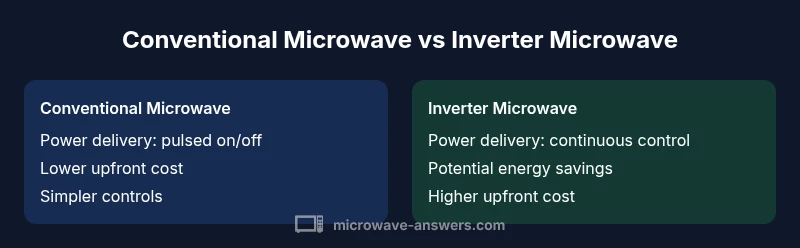
The difference between microwave and inverter microwave is primarily in how the power is delivered and controlled. Inverter microwaves provide continuous, adjustable power for steadier heating, while conventional models cycle magnetron power on and off. For most home cooks, inverter tech offers better defrosting and consistent results, though upfront costs can be higher.
Defining the two technologies: microwave vs inverter microwave
The difference between microwave and inverter microwave is the core starting point for any kitchen upgrade. Traditional microwaves rely on a magnetron that switches full power on and off to simulate lower settings, which can create temperature fluctuations and uneven heating. Inverter models use power electronics to deliver a steady, adjustable voltage to the magnetron, enabling smoother changes in power that keep food heating more evenly. This section lays the groundwork by clarifying how the two types behave in daily cooking. According to Microwave Answers, understanding this distinction helps homeowners predict how their favorite meals will reheat or defrost. In practice, most users notice faster, more predictable results with inverter units when reheating delicate foods, defrosting meats, or preparing sauces. The goal of this comparison is to help you translate tech differences into practical kitchen outcomes, so you can make a choice aligned with your cooking style and budget.
Core technology: how inverter technology differs from classic magnetron operation
Inverter microwaves rely on a high-frequency inverter circuit that modulates energy delivery, creating a continuous power stream rather than a binary on/off pattern. This allows the oven to set precise power levels, even at low settings, which improves temperature control and reduces overheating of edges while the center remains cooler. In contrast, traditional microwaves typically use discrete power levels achieved by cycling the magnetron on and off, which can lead to hotspots and uneven defrosting. The inverter approach also supports features like gentle defrost, melt cycles, and simmer modes that mimic stovetop-like control. When evaluating models, look for terms such as “inverter
continuous power,” or “smart power modulation,” and compare how each unit handles transitions between power levels during complex tasks like sauces or delicate vegetables.
Energy efficiency and energy use: myths vs reality
A common question is whether inverter microwaves save energy. In theory, continuous power control reduces wasted energy during low-power tasks because the magnetron operates more efficiently at intermediate levels. In practice, energy usage for most everyday tasks—reheating leftovers, cooking popcorn, or steaming vegetables—tends to be similar enough that the difference may hinge on how you use the appliance. True energy savings emerge when you regularly cook with low power for extended times, rather than short bursts of high power. The takeaway is that inverter technology can lower energy waste in specific scenarios, but the overall impact depends on your cooking patterns and the models you compare. For shoppers, consider models with efficient standby modes and smart energy management features to maximize savings without sacrificing performance.
Heating performance and accuracy: defrosting, reheating, cooking
Heating performance is where the inverter design often shows its strengths. The ability to deliver stable, low-level power reduces the risk of overcooking the outer edges of many foods while the center remains underheated. Defrosting tends to be more even because power is not repeatedly cycled at higher levels. Reheating leftovers, sauces, and delicate items like fish or custards benefits from smoother power control, resulting in fewer hot spots and a more uniform texture. Some users report noticeable improvements in browning or caramelization when the inverter unit provides consistent heat, though this effect varies by model and wattage. When assessing performance, compare heat maps or guestimate how evenly different containers heat in both units under similar settings.
Reliability, maintenance, and lifecycle considerations
The inverter architecture adds complexity through additional power electronics compared with conventional microwaves. This can mean a slightly higher likelihood of component wear over a very long lifecycle, and some service networks may charge more for inverter-related repairs. However, many modern inverter microwaves use robust components and rely on microcontrollers that can be updated via firmware. Routine maintenance remains simple: keep the venting clear, follow manufacturer cleaning guidelines, and replace door gaskets if needed. If you place heavy demand on your microwave, seek models with solid build quality, reputable warranty terms, and easy-access service options. In practice, the reliability gap between conventional and inverter models has narrowed as technology matures and after-sales support improves.
Pricing, value, and total cost of ownership
Upfront cost generally reflects the added technology: inverter microwaves tend to be priced higher than their conventional counterparts. The price delta varies by brand, capacity, and feature set, but you should expect to pay more for a model with inverter power control and additional cooking modes. Over time, consider whether the smoother heating and better defrosting translate into tangible benefits for your kitchen routines. If your use pattern includes frequent low-power cooking, longer defrost cycles, or you desire more consistent results for delicate foods, the value of inverter technology can justify the extra cost. Conversely, if you primarily do quick reheats or simple heat tasks, a budget-friendly conventional microwave may meet your needs without paying for advanced power management.
Use-case scenarios: when to pick which type
For households with a lot of defrosting and slow-cooking tasks, inverter microwaves often deliver a more predictable outcome. If you often prepare sauces, reheating leftovers with careful texture, or fabricating meals that require gentle heat control, the inverter approach aligns with those needs. On the other hand, kitchens that require quick, short bursts of high heat for rapid meals, snack reheating, or large batch warming may benefit more from a basic, affordable conventional model. Consider your typical cooking tempo, meal plans, and how often you need precise low-power control to decide which type suits your lifestyle better.
Safety considerations: electrical safety, leakage, and code compliance
Both conventional and inverter microwaves adhere to standard safety certifications and installation guidelines. Select a model that includes child-lock features if households contain curious children, verify door seals for integrity, and ensure proper ventilation to prevent heat buildup in enclosed spaces. Regular cleaning helps maintain low-resistance gaskets and predictable performance. If your kitchen has unusual wiring or electrical concerns, consult a licensed technician before installing any high-wattage appliance. Microwave safety basics—avoiding metal objects, standing by for child safety during use, and keeping the oven clean—apply equally to both types and help reduce risk of arcing and other issues.
Practical shopping tips and common pitfalls
When shopping, compare the inverter’s continuous power levels, not just peak wattage. Look for user feedback on real-world defrosting performance and uniformity with a variety of foods. Check warranty length and coverage for power components, and consider service availability in your region. A common pitfall is focusing on a flashy feature set while ignoring build quality and customer support. Prioritize models with proven reliability, a straightforward control panel, and accessible replacement parts. Finally, read the energy-saving claims carefully and verify whether they apply to real-world usage patterns similar to yours. A balanced evaluation will help you pick a model that meets both your cooking expectations and budget.
Authority and sources: what to trust when comparing models
To make an informed decision, rely on independent testing and reputable sources when possible. Compare manufacturer specifications with third-party reviews and energy-efficiency benchmarks. Look for transparent reporting on power control behavior, defrost accuracy, and long-term reliability. In practice, you’ll get the clearest guidance by cross-referencing model reviews with official product literature and, when available, lab-tested performance data.
Comparison
| Feature | Conventional microwave | Inverter microwave |
|---|---|---|
| Power delivery | Pulsed on/off to approximate lower settings | Continuous, adjustable power at low to mid levels |
| Power control method | Discrete power levels via magnetron cycling | Smooth modulation via inverter electronics |
| Energy efficiency | Similar energy use for typical tasks | Potential reductions in energy waste at low power |
| Heat distribution | Prone to hotspots with uneven heating | More uniform heating for many foods |
| Defrosting quality | Faster defrost with potential unevenness | More even and controlled defrosting |
| Upfront price | Lower upfront cost | Higher upfront cost |
| Maintenance | Simpler design, fewer components | More complex electronics; service depends on model |
| Best for | Budget-conscious, quick heating | cooks seeking precision and defrost control |
Advantages
- Potentially more consistent heating at low power
- Better defrost control and precision for delicate foods
- More flexible cooking modes with smoother power
- Can reduce waste during long low-power tasks
- Broad model availability and mainstream support
Cons
- Higher upfront cost for inverter models
- Inverter systems are more complex and may have higher maintenance costs
- Not all real-world gains manifest in every kitchen
- Brand variation can affect reliability and support
Inverter microwaves are generally the better all-around choice for most cooks.
They offer steadier power and more even results, especially for defrosting and gentle heating. If your budget allows, inverter technology tends to improve day-to-day cooking, though a standard microwave remains a solid, cost-effective option for simple reheating tasks.
Common Questions
What is the difference between microwave and inverter microwave?
The difference is in power delivery. Inverter microwaves provide continuous, adjustable power, while traditional models cycle power on and off. This affects heating consistency and defrosting control. Understanding this helps you predict performance for common tasks like reheating and defrosting.
The key difference is continuous power versus on-off cycling, which changes how evenly foods heat and defrost.
Are inverter microwaves energy efficient?
Inverter microwaves can reduce energy waste during low-power cooking, but overall savings depend on how you use the oven. For frequent low-power tasks, efficiency gains can be noticeable, while quick reheats may show little difference.
They can save energy during low-power tasks, but it depends on how you cook.
Do inverter microwaves heat evenly compared to conventional ones?
Inverter models often provide more even heating due to continuous power delivery, reducing hotspots. However, results vary by model, wattage, and the type of food being heated.
Usually more even heating with inverter models, but it’s model-dependent.
Are inverter microwaves more expensive to repair?
Repair costs can be higher for inverter models due to more complex electronics, but this varies by brand and warranty terms. Choose models with robust service networks and longer warranty periods to mitigate risk.
Yes, they can be pricier to repair because of the extra electronics, but a good warranty helps.
Do all brands offer inverter technology?
Not all brands offer inverter models at all price points. Check product specs for inverter labeling and compare across brands to find reliable options within your budget.
Not every brand has inverter models; look for clear specs when shopping.
Is inverter microwave better for popcorn?
Popcorn performance varies by model and wattage. Inverter power control can help prevent burning by allowing finer adjustments, but results still depend on the microwave’s overall design and sensor features.
Inverter can help with controlled popping, but results depend on the model.
Main Points
- Weigh your cooking style against cost and features
- Inverter tech provides smoother power and better defrosting
- Expect higher upfront costs with inverter models
- For quick heating, a conventional microwave can be sufficient
- Prioritize warranty and service when buying