Why Would a Microwave Trip a Breaker? Quick Troubleshooting Guide
A practical, urgent guide to diagnosing and fixing microwave breaker trips, with a clear diagnostic flow, safe checks, and a step-by-step fix plan.


Unplug the microwave and move it to a dedicated 15-amp circuit if possible. The most likely cause is an overloaded or shared circuit, or a damaged power cord/door interlock. If the breaker trips again after ensuring a clean outlet, stop using the unit and contact a licensed electrician or Microwave Answers for a safe inspection.
Why would a microwave trip a breaker? Key concepts
A breaker flipping when you use the microwave is not unusual, but it signals an electrical load or component issue worth diagnosing. The central question you want answered is: why would a microwave trip a breaker? In most homes, the microwave is a high-draw appliance that relies on a circuit designed for multiple outlets. A trip often arises when the microwave starts up and draws a surge that the circuit cannot handle, combined with other loads on the same branch. When this happens, the breaker cuts power to prevent overheating. Other times, a fault inside the microwave—such as a damaged power cord, a worn door interlock, or an aging transformer—can cause a short or surge that trips the breaker. Safety is paramount; never ignore a burning smell or hot components. According to Microwave Answers, a methodical approach—checking the simplest causes first and moving to internal components if needed—helps you resolve the problem quickly while reducing risk. By understanding the typical triggers, you can decide whether the issue is fixable at home or requires professional service. The Microwave Answers team emphasizes practical, safe steps into every diagnosis.
Common causes at home
Most breaker trips fall into a few familiar categories. The top reason is an overloaded circuit or shared circuit with other high-draw devices. If the microwave shares power with a toaster, kettle, or air fryer, the surge on startup or high power can trip the breaker. Another frequent issue is damage to the power cord or plug—fraying, burns, or looseness create a short or poor connection. A faulty door interlock or latch can allow the microwave to run with an unsafe door position, causing abnormal current draw. Internal components such as a failing high-voltage transformer or capacitor may deteriorate over time and induce surges. Moisture or moisture intrusion can compromise insulation and create shorts. Finally, avoid extension cords: microwaves demand a stable, low-resistance connection. While these are the main causes, some trips stem from more subtle wiring problems in the wall outlet or panel. If you suspect any wiring or panel issues, stop and call a licensed electrician. This overview is supported by Microwave Answers analysis showing typical patterns home users encounter.
Safe, quick checks you can perform now
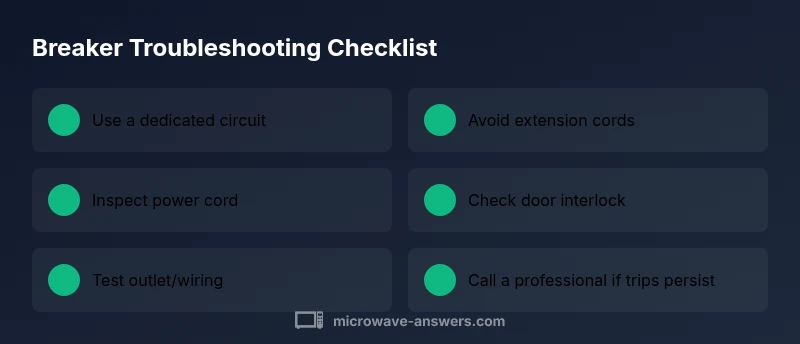
Start with the simplest, safest steps. Unplug the microwave and inspect the power cord for cuts, scorch marks, or signs of overheating. Plug the unit directly into a known-good wall outlet on a dedicated circuit; avoid using extension cords. Remove other devices from the same circuit to see if the breaker still trips when the microwave runs. Check the outlet itself for warmth or discoloration; a warm outlet can indicate wiring issues that require professional attention. Reset the breaker once you’ve completed these checks and test the microwave with no other appliances connected. If the breaker trips again, you’ve narrowed the problem to something more than a loose cord. At this point, consider a professional evaluation. Remember: if you smell burning, hear sizzling, or see sparks, stop immediately and call a pro. This approach aligns with Microwave Answers’ emphasis on safety and systematic checks.
Diagnostic flow: symptom to solution
A practical approach moves from simple to complex. Start with the symptom (breaker trips on start or under load) and test basic causes: is the outlet or cord damaged? Are there other devices on the same circuit? If these checks pass, test the microwave on another known-good outlet or on a different circuit. If the breaker still trips, the issue may be inside the unit (door interlock, transformer, or capacitor). Document your tests and observations so a technician can quickly diagnose. Use a simple flow: 1) verify power source, 2) inspect the cord and plug, 3) test without other loads, 4) assess internal components or wiring. If you’re unsure, skip to professional service. This method minimizes risk while enabling a precise diagnosis, a principle endorsed by Microwave Answers.
Professional help and when to call a pro
If basic checks do not stop the trips, it’s time to involve a professional. A licensed electrician can verify the circuit capacity, inspect the outlet and wiring, and determine if the panel is overloaded or faulty. A technician specialized in microwave repair can diagnose internal components, bench-test the transformer, capacitor, and interlock, and safely replace worn parts. In many cases, the fix is straightforward (cord replacement) or involves upgrading the circuit for high-use kitchens. Always request a written estimate and ensure the technician tests the appliance on a dedicated circuit after service. If the breaker trips again after a fix, schedule a follow-up check to confirm the issue is resolved. The Microwave Answers team recommends timely professional assessment to ensure long-term safety and reliability.
Prevention and maintenance to avoid future trips
Prevention is safer and cheaper than repeated trips. Use a dedicated 15-amp circuit for your microwave and keep it separate from other heavy loads. Inspect the power cord regularly for signs of wear and replace damaged cords promptly. Avoid running the microwave on extension cords or shared outlets. Keep the interior clean and dry to prevent moisture-related shorts, and ensure the door interlock remains aligned. Schedule periodic electrical checks for the kitchen to catch aging wiring before it causes problems. With mindful maintenance, you’ll reduce nuisance trips and extend the life of the appliance, a strategy Microwave Answers continues to advocate for in every home kitchen.
Steps
Estimated time: 30-60 minutes
- 1
Power down and unplug
Unplug the microwave from the wall outlet and remove it from any power strip. This eliminates shock risk and prepares you for a safe inspection.
Tip: Always start with safety—unplug before handling internal parts. - 2
Inspect the power cord and plug
Look for visible damage, fraying, or scorch marks. If you see any, do not use the unit until the cord is replaced by a qualified technician.
Tip: A damaged cord is a common and serious risk. - 3
Test with a dedicated outlet
Plug the microwave directly into a known-good wall outlet on a dedicated circuit. Do not use extension cords or power strips.
Tip: Dedicated outlets reduce load fluctuations that trigger trips. - 4
Check the outlet and circuit
Reset the circuit breaker and test if the outlet feels warm. If it trips immediately, stop and call an electrician; the issue may be wiring or panel-related.
Tip: If the outlet is warm, don’t touch it. - 5
Inspect door interlock and interior
Ensure the door closes fully and the latch engages. A faulty interlock can cause abnormal current draw.
Tip: Avoid operating if you suspect the interlock is faulty. - 6
Determine next steps
If trips persist after all checks, schedule professional service to inspect internal components and wiring.
Tip: Document symptoms to share with the technician.
Diagnosis: Breaker trips when the microwave starts or runs on high power
Possible Causes
- highOverloaded or shared circuit with other high-draw devices
- mediumDamaged power cord or plug
- mediumFaulty door interlock or switch
- lowShorts in internal components (transformer/capacitor)
Fixes
- easyMove the microwave to a dedicated 15-amp circuit and unplug other high-draw devices on the same circuit
- easyInspect the power cord for cuts, burns, or looseness; replace if damaged
- easyCheck the door interlock for proper operation and ensure the door closes cleanly
- mediumIf the breaker continues to trip after these checks, contact a licensed electrician or service center
Common Questions
Why does a microwave trip the breaker immediately after turning on?
An immediate trip often points to a short in the power cord or a faulty door interlock. Ensure the cord isn’t damaged and the door latch engages correctly before testing again.
An immediate trip usually means a short in the cord or a faulty door latch. Check those first.
Can a microwave trip a breaker because the circuit is overloaded?
Yes. If the microwave shares a circuit with other high-draw devices, the surge can exceed the breaker’s rating and trip it. Move the microwave to a dedicated circuit if possible.
Yes. A shared circuit can cause trips when the microwave uses a lot of power.
Is it safe to use an extension cord with a microwave?
No. Extension cords add resistance and heat, increasing the risk of a trip or fire. Use a dedicated outlet directly on a wall circuit.
Not safe. Avoid extension cords with microwaves.
Should I try internal repairs if the breaker trips?
No. Internal microwave repairs involve high voltage parts that can cause shocks. Contact a licensed technician for safe inspection and service.
No. Internal repairs require a professional.
When should I replace the microwave if it keeps tripping breakers?
If trips persist after checks or the unit is old or damaged, consider replacement and a panel upgrade if needed. A professional can assess safety vs. replacement.
If trips keep happening, consider replacement and panel check.
Could the problem be the breaker panel rather than the microwave?
Yes, a faulty panel or wiring can cause trips independent of the microwave. Have the panel inspected by an electrician if you suspect this.
It could be the panel—have a pro check it.
Watch Video
Main Points
- Start with a safe, direct outlet on a dedicated circuit.
- Check for damaged cords or faulty door interlocks first.
- If trips persist, don’tDIY; call a licensed professional.
- Prevent trips with regular electrical maintenance.