Why Would a Microwave Catch Fire? A Practical Troubleshooting Guide
Learn why a microwave may catch fire, common triggers, immediate safety steps, and practical prevention tips from Microwave Answers. A comprehensive, home-friendly troubleshooting guide for quick fixes and safer cooking.


Most microwave fires start from arcing due to metal or foil, or from overheating fatty foods. The quickest fix is to stop using the unit, unplug it, and remove contents once cooled. Inspect for metal fragments, a damaged door seal, or scorched components before attempting to reuse.
What makes a microwave catch fire?
If you search for why would a microwave catch fire, you’re asking about the most common failure modes in modern ovens. In general, fires begin when energy interacts with metal, or when food heats unevenly and carbonizes fat and sugar. A microwave's primary danger isn’t fuel or flame in the way a stove might produce; it’s an electrical or arcing event that ignites overheated material. By understanding the root causes, you can prevent incidents and respond quickly if something goes wrong. This guide, based on Microwave Answers' research, breaks down the main scenarios and practical steps you can take in everyday cooking.
Safety note: always prioritize unplugging the appliance if you suspect a fire, and never open the door while smoke is visible.
Common Triggers: Arcing, Sparks, and Metal in Food
Arcing is the most recognizable hazard in microwaves. When metal or foil is present in or near food, the magnetron’s energy can jump across the surface, creating sparks. Those sparks can ignite fats, oils, or paper packaging, especially if the food is irregularly shaped or unevenly heated. Another frequent trigger is damaged cookware or metal trim on containers that reflect microwave energy instead of absorbing it. Regularly inspect dishes and avoid metal utensils inside the oven. A damaged turntable or cracked cavity can also concentrate heat and start a fire under the right conditions.
Understanding these triggers helps home cooks prevent incidents before they happen.
Overheating Food, Fats, and Sugary Mixes
High-fat foods, sugary syrups, or oil-heavy sauces can ignite or carbonize quickly if overheated. Even when food is microwave-safe, clumped or dense portions heat unevenly, creating hotspots that scorch the container or lining. Grease buildup in the cavity or on the magnetron can also smolder and produce smoke. Always use appropriate power settings, stir or rotate meals halfway through, and avoid heating substances that are prone to splatter or ignite at microwave temperatures.
Damaged Components: Magnetron, Door, and Wiring
A failing magnetron or degraded wiring can produce overheating and sparks, increasing the risk of fire. The door seal, hinges, and latches are critical safety barriers; any wear can allow leakage of microwave energy or heat buildup that leads to ignition. If you notice physical damage, unusual warmth near the door, or flickering lights while the unit runs, discontinue use and have a professional inspect the appliance. Regular service checks extend the life of the microwave and reduce fire risk.
Signs of a Problem: Smell, Smoke, Noise
Unusual smells like burning plastic or hot metal, visible smoke, or unusual buzzing and crackling are warning signs. Do not ignore these cues. If you observe sparking, turn off and unplug the unit immediately. After it cools, inspect for melted plastic, scorch marks, or foreign objects inside the cavity. Prompt action can prevent a small incident from becoming a full-blown fire.
Immediate Safety Protocols If Fire Starts
If you see a fire in or around your microwave, do not open the door. Unplug the appliance if it’s safe to do so. If unplugging is not safe, keep the door closed and evacuate the area. Do not attempt to extinguish with water inside the oven; call emergency services if the fire grows. After any incident, ventilate the area, and contact a service technician before reuse to ensure the unit is safe.
Diagnostic at Home: Quick Checks You Can Do
Start with simple, safe checks: remove any metal objects nearby, inspect the door seal for cracks or gaps, and ensure the interior is free of food debris or melted plastics. If you see sparks, smoke, or a burning smell, unplug and do not use the microwave again until it’s been inspected by a qualified technician. When in doubt, replace the unit to protect your home.
Fixes, Maintenance, and Prevention Tips
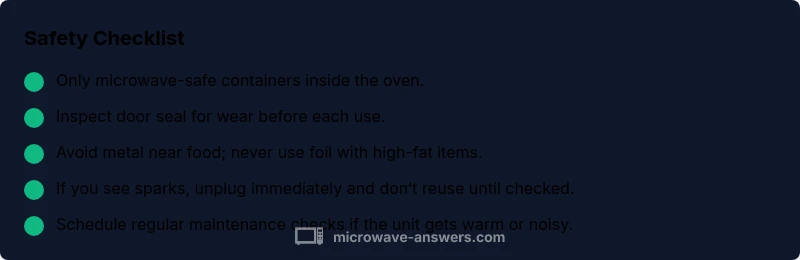
Key fixes focus on removing metal hazards, replacing damaged parts, and ensuring proper operation. Regular maintenance includes cleaning the cavity, inspecting the door seal, and following the manufacturer’s guidelines for wattage and cooking times. Use only microwave-safe containers, avoid heating metal utensils or foil, and never operate an appliance with a visibly damaged door or humming noise that seems abnormal. Prevention is the best defense against fires.
When to Call a Professional
If there is any doubt about the appliance’s safety, or if you notice repeated sparking, overheating, or internal damage, contact a licensed technician or the manufacturer’s support line. Do not rely on DIY fixes for electrical components. A professional inspection can reveal problems with the magnetron, wiring, or control board, reducing the risk of future incidents.
Steps
Estimated time: 15-30 minutes
- 1
Power down and unplug
As soon as you suspect a problem, stop the microwave and unplug it. This removes the energy source and reduces the risk of further arcing. Wait at least 5-10 minutes before handling.
Tip: Do not touch the interior until cooled. - 2
Remove the contents safely
Carefully take out any food with potholders; inspect for metal pieces. Keep your hands clear of hot steam and use dry towels to protect yourself.
Tip: Metal fragments can stay hot after exposure. - 3
Inspect the interior for damage
Look for burn marks, melted plastic, or unusual smells. Note any discoloration or residue that could indicate overheating.
Tip: Take photos for service documentation. - 4
Check the door seal and hinges
A damaged seal can cause sparking; don’t reuse until repaired or inspected by a tech.
Tip: Look for gaps or crusty buildup on the gasket. - 5
Test the appliance without food
Run the microwave empty for a short burst (10-15 seconds) to observe sparking; do not run if you see sparks.
Tip: Stay nearby and watch closely. - 6
Decide on next steps
If you observe sparking or smoke, stop and unplug; if damage is present, do not use. Seek professional evaluation.
Tip: When in doubt, consult a professional.
Diagnosis: Microwave sparking, smoke, or burning smell during operation
Possible Causes
- highMetal or foil left in or near food causing arcing
- highDamaged door seal or latch allowing arcing or heat escape
- mediumOverheated fatty or sugary foods causing ignition of residue or insulation
Fixes
- easyStop operation immediately, unplug, and do not open door until cool
- easyRemove metal, foil, or containers with metal trim; transfer contents to microwave-safe dish
- mediumInspect door seal, hinges, and handle for damage; call service if damaged
- hardHave magnetron and wiring checked by a professional if the unit shows repeated issues
Common Questions
Can a microwave catch fire without any metal involved?
Yes. Overheating fatty foods, paper near the magnetron, or a failing component can ignite or smolder even without metal. Sparks may still occur due to other faults.
Yes, fires can happen without metal if overheating is extreme or components fail.
Is it safe to put water in the microwave to extinguish a small fire?
Do not try to extinguish an electrical fire with water inside the oven. If there’s a fire, unplug the unit and evacuate if necessary.
No—unplug and evacuate if needed; water is not safe for electrical fires inside the oven.
Should I use the microwave if the door feels warm?
A warm door indicates excess heat and potential failure. Stop using it and have it inspected before attempting to cook again.
A warm door means stop using it until it’s checked.
What should I do after a microwave fires or sparks?
Unplug, ventilate, inspect the interior for damage, and contact a technician if any part looks damaged or abnormal. Do not reuse until cleared.
Unplug and have it checked before reuse.
Can I continue using the microwave after cleaning residue?
Only after a professional confirms it’s safe. If there was fire or smoke, replacement or repair is often recommended.
Only if a professional says it’s safe.
How can I prevent fires in the future?
Use microwave-safe containers, heat foods evenly, clean regularly, and avoid metal and foil. Follow wattage and cooking guidelines from the manufacturer.
Stick to safe containers and routine maintenance.
Watch Video
Main Points
- Unplug at first sign of trouble to cut energy flow.
- Metal near food is the top arcing trigger.
- Inspect seals and interior for damage after any incident.
- Don’t ignore smells, smoke, or sparks—safety first.
- Consult a professional for repeated issues.