Why Oatmeal Overflow Happens in the Microwave and How to Prevent It
Struggling with oatmeal overflowing in the microwave? This guide reveals why it happens and offers urgent, practical fixes to keep oats tidy, safe, and delicious every morning.


Why does oatmeal overflow in microwave? The most likely cause is rapid boiling foam formed by starch, which pushes liquid upward. A quick fix is to switch to a larger microwave-safe bowl, cover loosely, and stir halfway through cooking. To prevent future overflow, use lower power, shorter intervals, and plenty of space for bubbling.
Quick primer: why does oatmeal overflow in microwave
Oatmeal overflow in the microwave is not a mystery, it's a foam and boil issue. When oats heat, starch molecules swell and create a foamy head that traps steam. If the container is too small or the heat is too intense, the foam can spill over the edge. If you’re asking why does oatmeal overflow in microwave, the answer lies in heat control, container size, and stirring. According to Microwave Answers, incidents spike when people cook large portions on high wattage. Understanding this helps you adjust technique before the first minute passes. This is not just a mess; it can scatter hot liquid and damage surfaces, so getting the method right matters for safety and cleanliness in a busy kitchen.
Core factors that cause overflow
Container size matters: a shallow, narrow bowl concentrates foam. Power level: microwaves run differently; high power boosts rapid boiling. Stirring: foam forms more quickly if you don't stir midway. Liquid-to-oats ratio: too little liquid relative to oats increases foam density. Altitude and humidity can play tiny roles too. Each factor interacts: high wattage plus a big scoop of oats almost guarantees a bubble avalanche. By recognizing these, you can tailor your setup before heating. In practice, a common culprit is simply not using a tall enough bowl for the amount of oats planned.
The science: starch, foam, and steam
Starch granules swell when heated, releasing amylose and amylopectin that thickens the liquid. This creates a viscous foam that traps steam. The vapor builds pressure under the foam cap, pushing bubbles upward. The faster the liquid boils, the more dramatic the overflow. If you’ve ever had a spill, you’ve seen this foam dynamic in action. Understanding the underlying science helps you anticipate and manage foam production rather than chasing after the spill after it happens.
Practical setup: bowls, covers, and power settings
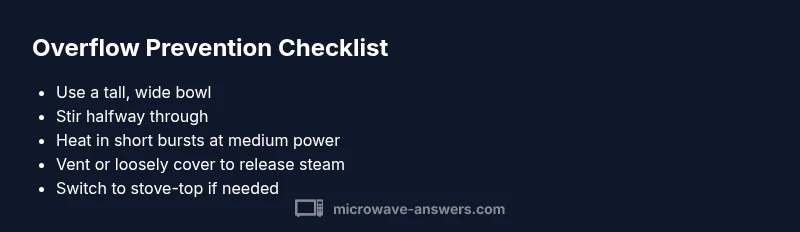
Guidelines: choose a tall, wide bowl with a stable base; use a vented lid or microwave-safe plate; set power to medium or 50-70% depending on wattage; heat in short bursts lasting 30-60 seconds; stir after the first interval to break up foam; if the foam looks dense, pause and stir again before continuing. A little prep goes a long way toward preventing messes and burns. Remember, proper setup is the most reliable defense against overflow.
Troubleshooting: what to do mid-cook
If you notice foaming rising toward the rim, stop heating, remove the dish safely, and give it a thorough stir. Add a splash of water or milk if needed, then resume heating at a lower power. If overflow has already occurred, wipe up spills carefully, let the mixture cool, and start over with the adjusted setup. For persistent issues, switch to stove-top cooking for better control, especially with large batches.
Prevention habits for future batches
- Always pre-measure oats and liquid to maintain a 1:2 ratio or as recommended on the package.
- Use a tall, wide, microwave-safe bowl and a vented cover.
- Heat in short bursts at medium power; stir between intervals to collapse foam.
- If you’re cooking in a rush, reduce the oats by one-quarter and increase liquid slightly.
- Allow the oats to rest for a minute after microwaving; they continue to thicken and don’t need further heating.
When to switch methods: stove-top or overnight soaking
If you consistently fight overflow or cook for multiple servings, consider stove-top preparation for greater control or overnight soaking to reduce foam formation. Stovetop simmering lets you regulate temperature precisely and avoid sudden bursts that cause spatter. Overnight soaking can soften the oats with less risk of foaming dramatically during heating.
Steps
Estimated time: 15-20 minutes
- 1
Choose the right container
Select a tall, wide, microwave-safe bowl with a stable base. A generous surface area helps the foam expand without overflowing, and a tall shape gives foam room to rise safely. Tip: avoid shallow mugs for larger batches.
Tip: Always check the bowl’s rating for heat and ensure it has a rim that’s above the expected foam height. - 2
Measure oats and liquid accurately
Use the recommended ratio on the oats package (usually around 1:2 by volume). If you’re experimenting with different oat brands, start with the manufacturer’s guidance and adjust spacing to prevent foam from reaching the rim.
Tip: Heavier oats may need slightly more liquid to prevent thick foams. - 3
Set heat to medium and heat in bursts
Power your microwave at medium (or 50-70% of full power) and heat in short intervals like 30-60 seconds. This slows boiling, giving you a chance to manage foam before it spills.
Tip: Pause to stir after the first interval to disrupt foam growth. - 4
Stir and watch closely
Stir the oats thoroughly to break foam and distribute heat evenly. If you see active foaming, pause and stir again before resuming. Repeat until you reach the desired texture.
Tip: A quick, vigorous stir reduces surface bubbles dramatically. - 5
Finish and cool safely
When the oats reach the right thickness, stop heating and let them rest a minute. The mixture will thicken a bit as it cools, reducing the chance of further overflow during serving.
Tip: Always use oven mitts when handling hot bowls and wipe spills promptly to prevent burns.
Diagnosis: Oatmeal overflows or foams over the rim during microwave heating.
Possible Causes
- highHigh-wattage microwave cooking at full power with insufficient bowl size.
- highNot using a vented or sufficiently tall container, or not covering loosely.
- mediumDisproportionate liquid-to-oats ratio (too little liquid for the amount of oats) or very thick mixture.
Fixes
- easyReduce the power level and heat in short bursts (e.g., 50-70% power in 1-minute intervals).
- easySwitch to a larger, tall microwave-safe bowl and cover loosely or use a vented lid.
- easyStir the oats halfway through and adjust liquid if necessary.
- easyIf overflow persists, switch to stove-top preparation as a last resort.
Common Questions
Why does foam overflow happen more with some microwaves than others?
Overflow tends to be higher in higher-wattage microwaves and with large batches, because heat and foam form faster. Power and container shape play a big role in whether the foam can breach the rim. Adjusting power and using a larger bowl usually resolves this.
Overflow happens more with powerful microwaves and large batches; use lower power and a bigger bowl to fix it.
Prevent overflow in mug?
Mugs are too small for most oatmeal quantities. Switch to a tall, wide bowl, or heat in two shorter sessions with stirring in between. A vented lid helps trap steam without building up too much pressure.
Mugs usually overflow; use a bigger bowl and vented lid, heat in short bursts.
Is a bigger bowl always best?
A bigger bowl helps, but so does a proper liquid ratio and moderated power. The key is space for foam, not just volume. Combine a large vessel with measured liquid and gentle heat for best results.
Bigger helps, but pair the bowl with correct liquid and gentle heat.
Milk vs water for oats?
Milk can make foam thicker due to fats and proteins, increasing spill risk. Water or a watered-down milk solution often behaves more predictably. Adjust liquids according to flavor and texture goals, keeping safety in mind.
Milk can foam more; try water or diluted milk for easier control.
Overflow starts—what to do?
Pause the microwave, carefully stir, and check the level. If foam is still rising, reduce power further and restart in shorter intervals. If spills continue, switch to stove-top to finish cooking.
If it starts to overflow, pause, stir, and lower power. Switch to stove-top if needed.
Is there a safety risk from overflow?
Overflow can cause burns or damage if hot liquid spills onto skin or surfaces. Always handle hot bowls with mitts and clean spills promptly. If your microwave or cookware shows signs of damage, stop using them and inspect for hazards.
Yes—hot spills can burn; always handle carefully and clean up promptly.
Watch Video
Main Points
- Start with a tall, wide bowl to give foam room.
- Use medium power and short intervals to control boiling.
- Stir halfway and after cooking to prevent overflow.
- If overflow persists, switch to stove-top for control.