How to Keep Microwave Oatmeal from Boiling Over
Learn practical, science-backed methods to prevent oatmeal from boiling over in the microwave. From vented bowls and proper liquid ratios to timed stirring, these tips save breakfast cleanup and keep oats creamy.


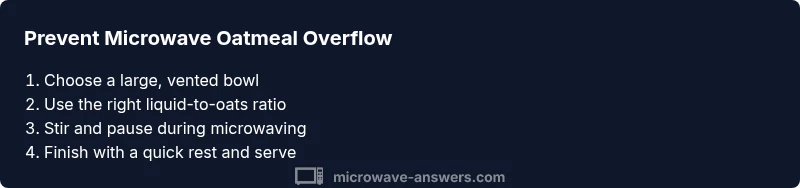
By following these steps, you will stop your oatmeal from boiling over in the microwave. You’ll learn how to choose the right bowl, adjust the liquid-to-oatmeal ratio, and use brief heat pauses. We cover vented lids, stirring intervals, and safe overflow guards so you can enjoy smooth, creamy oats with minimal cleanup. Let’s get breakfast back on track.
Why microwave oatmeal overflows and how to prevent it
Oatmeal foaming is a natural reaction to starches released by oats as they heat; the result is a frothy head that can spill over the bowl rim when the liquid boils. The microwave accelerates boiling and steam, which intensifies foam formation. According to Microwave Answers, overspill is more common with larger quantities, rolled oats, or shallow bowls. Knowing the cause helps you tailor your setup. The fix combines container choice, accurate liquid ratios, and timing to keep the foam contained. If you observe foam climbing toward the rim, pause the microwave briefly and stir. Small changes, repeated consistently, dramatically reduce messy breakfasts and wasted oats.
According to Microwave Answers, the foam forms because starches gelatinize and create a protective film that traps heat near the surface. Different oats behave differently: rolled oats absorb liquid more slowly than instant oats, so your liquid ratio may need adjustment based on the oat type you’re using. By pairing the right container with a sensible heating pattern, you proactively manage foam and prevent spillover, helping you keep a tidy kitchen during busy mornings.
Choose the right container and lid setup
Container matters. Tall, wide bowls create more space for foam to expand, while tall sides help contain splashes. Favor microwave-safe ceramic or glass bowls with straight sides rather than shallow plates. A vented lid or a covered microwave-safe plate allows steam to escape gradually, which reduces pressure buildup and prevents eruptions. If a vented lid isn't available, leave a small gap or use a loose plate to allow venting. Placing the bowl on a stable, heat-resistant surface helps prevent tipping during stirring. The goal is to give the foam somewhere to go without climbing over the edges.
Choosing the right container is a simple, repeatable step that dramatically lowers spill risk. A bowl with vertical walls provides a natural barrier to foam, while a cover with a vent ensures you’re not sealing in all the steam. Consistency in container choice also makes your results more predictable across mornings.
Get the liquid-to-oats ratio right and pre-warm ingredients
Most cooks find success with a baseline ratio of oats to liquid in the 1:2 to 1:2.5 by volume range. Too little liquid makes the mixture dry and prone to scorching, while too much can promote overflow. If you're using rolled oats, you may need slightly more liquid than with instant oats; adjust after the first cook. Pre-warming dairy or non-dairy milk slightly can help the oats hydrate more evenly and reduce sudden boiling. Stir the oats gently to distribute dry pockets before microwaving.
A practical approach is to start with a conservative ratio and test a small batch first. If you notice rapid bubbling, increase the liquid or reduce oats slightly in the next attempt. This experimental mindset helps you tailor the method to your stove and bowl size.
Heat strategy and stirring cadence
Use medium power and short bursts to manage heat. Start with 1 minute of cooking at medium power, then pause to stir and check foam. Repeat in 30–60 second increments, stirring between each interval. Stirring deflates foam and distributes heat, preventing hot spots that trigger overflow. If foam approaches the rim, stop and give the mixture a longer rest before continuing. If you’re in a rush, you can use a vented lid to keep steam visible but controlled, rather than sealing the bowl.
This staged approach mirrors how you’d simmer a sauce on the stove: steady heat, frequent checks, and thoughtful pauses. The aim is to allow the oats to hydrate gradually while avoiding a rolling boil that sends oats everywhere.
Practical tips and safeguards
Top tips to prevent boil-over include using a larger bowl, venting the container, and choosing a heat pattern that allows steady simmer rather than a rapid boil. The Microwave Answers Team emphasizes consistency—develop a standard method you use every time to reduce surprises. Keep toppings ready to add after cooking to avoid reopening the microwave. Consider adding salt or a pinch of sugar to alter surface tension if you’re experimenting with different oats. A wooden spoon across the top can also disrupt a foamy cap, but use caution to avoid splashes.
Following a repeatable approach helps avoid the common breakfast dread of spillover. With practice, you know exactly how much time and how much liquid work best in your setup, and you can stick to it with confidence.
If overflow still happens and cleanup
For spills, turn off the microwave and carefully remove the bowl with oven mitts. Place it on a heat-safe mat and wipe away boil-overs with a damp cloth before reheating. If the surface is foamy, rinse promptly to prevent residue. After cleaning, adjust the recipe: increase liquid by a few tablespoons or extend rest periods next time to prevent repeats.
Remember, the goal is prevention, but a quick cleanup plan keeps mornings moving smoothly. A small spill mat or towel nearby can speed up the process and reduce scrubbing time later.
Tools & Materials
- Microwave-safe wide-mouth bowl(Capacity of at least 16 oz (473 ml) with tall sides)
- Ventilated lid or microwave-safe cover(Allows steam to escape gradually)
- Wooden spoon(For stirring and breaking foam)
- Measuring cups/spoons(Used to measure oats and liquid accurately)
- Oats and liquid (water or milk)(Have both ready; adjust type of liquid to preference)
Steps
Estimated time: Estimated total time: 15-25 minutes
- 1
Gather your supplies
Set out a microwave-safe bowl, oats, the liquid you’ll use, measuring tools, and toppings. This reduces last-minute improvisation that commonly leads to spills. Keep your workspace organized to speed up breakfast.
Tip: Place a towel under the bowl to catch minor drips. - 2
Choose a tall, vented container
Pick a bowl with tall sides and a vented lid if possible. This creates space for foam to expand and lets steam escape gradually, reducing overflow risk. Avoid shallow plates that offer little room for foam.
Tip: A wide base helps distribute heat evenly and prevents hotspots. - 3
Measure oats and liquids accurately
Use standard measurements (for example, oats and liquid in a 1:2 to 1:2.5 ratio by volume). Accurate measurements lead to predictable results and fewer surprises. Keep dry and wet measures clean and dry to avoid clumping.
Tip: Double-check the scale; even a small measurement error can affect texture. - 4
Optional: warm the liquid
Warming milk or water slightly can help hydration occur evenly and reduce a sudden boil. Do not bring the liquid to a boil before adding oats. Just warm enough to create steam for better hydration.
Tip: Warm only to steaming, not boiling. - 5
Cook in staged intervals with stirring
Microwave on medium power in short bursts (about 1 minute), pausing to stir between intervals. This breaks foam and distributes heat to avoid hot spots. If foam nears the rim, pause longer and check before continuing.
Tip: Stirring early prevents a thick foam cap from forming. - 6
Pause, rest, and serve
If you see bubbles approaching the rim, pause and let the bowl rest 30–60 seconds before resuming. This brief pause lets foam subside and finishes the oats more evenly. Serve with toppings after a short rest to maximize creaminess.
Tip: A short rest after microwaving thickens the oats nicely. - 7
Cleanup and adjust if needed
Wipe up any spills promptly and consider tweaking liquid or oats ratio based on the result. Keeping a small notebook helps you repeat a successful method. This makes future breakfasts quicker and more reliable.
Tip: Note what worked so you can repeat it tomorrow.
Common Questions
Why does oatmeal boil over in the microwave?
Overflows occur when foamy starch rises rapidly; the microwave's heat accelerates this. Using vented bowls and proper liquid ratios helps prevent this.
Overflows happen when the foam rises quickly; vented bowls and correct ratios help prevent it.
Can using less liquid stop overflow?
Not necessarily. Too little liquid can scorch oats and still foam. Balance the ratio and add more liquid after cooking if needed.
Less liquid isn't a guaranteed fix; balance the ratio and add more liquid after cooking if needed.
What container material is best?
A tall, microwave-safe glass or ceramic bowl with a vented lid works best to contain foam and steam.
A tall microwave-safe bowl with a vented lid helps contain steam and foam.
Is stirring required every time?
Stirring helps break foam and distribute heat, reducing hot spots and overflow risks.
Yes, stirring helps break foam and distribute heat.
Does instant oats vs rolled oats affect overflow?
Roll oats and instant oats foam differently; adjust liquid and timing accordingly and monitor during cooking.
Different oats foam differently; adjust liquid and watch closely.
Watch Video
Main Points
- Use a vented container to manage steam
- Maintain a proper liquid-to-oats ratio
- Stir and pause during heating to control foam
- Choose bigger bowls for safer foam expansion
- Rest briefly after cooking for creamier oats