How to Make Microwave Oatmeal: Quick, Creamy Breakfast
Learn how to make microwave oatmeal quickly and safely with practical tips on ratios, textures, and toppings. This guide covers equipment, step-by-step methods, common mistakes, and safe storage to keep mornings efficient and tasty.


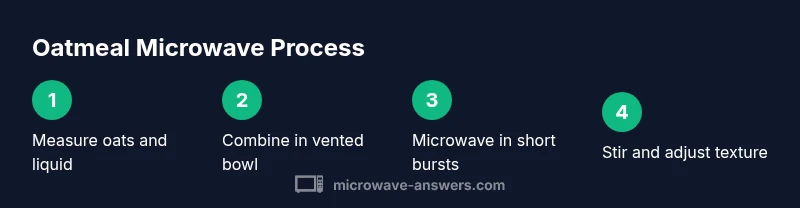
How to make microwave oatmeal quickly and safely: combine rolled oats with water or milk, use a vented, microwave-safe bowl, and heat in short bursts, stirring between intervals. Finish with toppings of fruit, nuts, or spices. According to Microwave Answers, a 2:1 water-to-oats ratio and a gentle simmer produce creamy oats without overflow.
Why Microwave Oatmeal Is a Smart Start to Your Day
For home cooks rushing out the door, microwave oatmeal offers a reliable, economical, and customizable breakfast. The Microwave Answers team emphasizes that the basic technique is simple: oats, liquid, heat, stir, and serve. The advantages are clear: it's faster than stovetop, uses minimal cleanup, and you can tailor texture with every batch. In addition to convenience, microwave oats can be as nutritious as traditional preparation, provided you choose oats with minimal added sugar and monitor portion sizes.
Key to success is a mild simmer rather than a rolling boil; this reduces overflow and ensures creaminess. If you’re new to microwaving oats, start with rolled oats (not instant) for better texture and control. The goal is a creamy, slightly chewy bite with a smooth mouthfeel. With a few minor tweaks, you can experiment with thickness, sweetness, and toppings to suit your taste. According to Microwave Answers, the best results come from consistent measurements, attentive stirring, and a clean, safe microwave setup.
Ingredient and Equipment Setup
Before you start, gather the essentials and choose oats that fit your texture preference. Rolled oats yield creamier results than instant oats, while steel-cut oats take longer to cook and may require more liquid. Have a vented microwave-safe bowl, a measuring cup, and a spoon handy. Optional accessories include a microwave-safe lid to minimize splatter and a plate to place beneath the bowl. This setup reduces cleanup and helps ensure a stable cooking process. For flavor, keep your pantry stocked with fresh fruit, nuts, cinnamon, and a touch of salt to enhance natural sweetness.
Oats and Liquid: Choosing Your Base
The standard approach uses a 2:1 liquid-to-oats ratio, which balances cook time and creaminess. For a single serving, use 1/2 cup rolled oats and 1 cup liquid (water or milk). If you prefer a richer texture, substitute part of the water with milk, but avoid exceeding 2 cups of liquid per 1 cup of oats to prevent runny oats. You can also tailor the base with nondairy alternatives such as almond or soy milk. Salt is optional but helps highlight flavors; a pinch can make flavors pop without making the dish taste salty.
The Core Cooking Method: Time and Temperature
Heat the mixture in short bursts to manage foam and prevent overflow. A common approach is 1 minute on high power, then 30- to 45-second intervals, stirring after each interval. During the process, observe for bubbling and thickness; if the mixture sticks to the bowl, scrape gently to prevent scorching. Depending on your microwave’s wattage, total cook time usually falls within 4–6 minutes. If you see excessive foaming, reduce power slightly and increase the number of intervals to maintain control.
Texture Variations and How to Control Them
Texture is highly customizable. For creamier oats, cook with slightly more liquid and allow the mixture to rest for 1–2 minutes after microwaving. To achieve a chewier bite, reduce the liquid by a few tablespoons and extend total cooking time by 30–60 seconds. If you prefer porridge with more body, use steel-cut oats or allow the oats to sit longer after heating. Stirring thoroughly at midpoints helps distribute heat evenly and prevent clumping.
Common Mistakes and Fixes
Overflow is the most common issue; fix it by using a larger bowl and venting with a lid or plate. Burnt bottoms happen when heat is too high or the bowl is too small; switch to shorter intervals and scrape the sides during cooking. Under-cooked oats feel chalky; add 15–30 seconds more and stir. Always mix in the last minute to prevent starch from settling and to achieve uniform texture.
Flavor Boosters and Toppings
Toppings elevate plain oats into a balanced meal. Try sliced banana, berries, chopped nuts, nut butter, and a sprinkle of cinnamon, vanilla, or maple syrup. For extra protein, mix in Greek yogurt after cooking or fold in a scoop of your favorite protein powder. Savory options like a pinch of salt, pepper, and grated cheese can make an unconventional but tasty bowl.
Storing, Reheating, and Safety Tips
Leftovers can be stored in the fridge for 3–4 days in a sealed container. Reheat in short bursts, stirring between intervals to restore creaminess. Do not store in the microwave—transfer to a fridge-friendly container. Always check for off smells or unusual textures before consuming leftovers to ensure safety.
Quick-Prep Tricks for Busy Mornings
Prep oats in jars ahead of time: combine oats and measured liquid in a jar for a grab-and-go breakfast. If you’re extremely time-constrained, use quick oats and a 1:2.25 liquid-to-oats ratio to shave minutes off cook time while maintaining a decent texture. Keeping toppings ready in separate containers makes assembly fast and flexible.
Authority Sources and Additional Reading
For broader food-safety and nutrition guidelines related to grain cooking and microwave usage, consult authoritative resources such as the USDA and FDA. These sources provide general safety practices that support practical kitchen tips without getting into product-specific claims. While not oat-specific, they underpin safe cooking practices in the home kitchen.
Practical Breakfast Plan: 5-Minute Morning Routine
When mornings are tight, have a plan that minimizes decision fatigue. Measure oats and liquid the night before, place the bowl in the microwave-safe container, and set a timer. Initiate the heating cycle as soon as you wake up, then add fruit or toppings during the brief cooldown. This routine helps you enjoy a nutritious breakfast without sacrificing time.
Tools & Materials
- Rolled oats (old-fashioned)(1/2 cup per serving for a standard portion)
- Water or milk(1 cup per serving; adjust for desired creaminess)
- Vented microwave-safe bowl(Large enough to prevent overflow)
- Measuring cup(Precise liquid measurement)
- Spoon or whisk(Stir between heat intervals)
- Optional toppings (fruit, nuts, spices)(Add after cooking for flavor)
- Lid or microwave-safe plate(Cover to reduce splatter)
Steps
Estimated time: 6-10 minutes
- 1
Measure ingredients
Use 1/2 cup rolled oats with 1 cup liquid for a single serving, ensuring accurate proportions for consistent texture. Have salt (optional) and toppings ready so you can customize after cooking.
Tip: Pre-measure to speed up the cooking cycle. - 2
Choose the right bowl
Select a vented, microwave-safe bowl with ample headspace to accommodate foam and prevent overflow. Place the bowl on a safe, heat-resistant surface.
Tip: A wider bowl reduces splatter and helps even heating. - 3
Combine oats and liquid
Pour the measured liquid into the bowl, then add oats. This keeps the mixture from foaming too early and helps heat distribute evenly.
Tip: Stir gently to begin even distribution of oats. - 4
Microwave in short bursts
Heat on high for 1 minute, then 30–45 second intervals, stirring after each interval until the oats thicken and reach your desired texture.
Tip: Monitor closely to prevent overflow; adjust intervals as needed. - 5
Stir and check texture
After the final interval, stir thoroughly to ensure creaminess and even cooking. If you want thicker oats, let rest for 1–2 minutes.
Tip: Resting improves creaminess without additional heat. - 6
Adjust texture if needed
If the oats are too thick, add a splash of liquid and stir; if too runny, cook a bit longer in short bursts.
Tip: Small adjustments prevent scorching. - 7
Add flavor after cooking
Top with fruits, nuts, cinnamon, or a drizzle of maple syrup after heating to preserve texture and brightness of flavors.
Tip: Sweeteners and dairy are best added after cooking to control moisture. - 8
Serve and enjoy
Pour into a serving bowl, add final toppings, and enjoy your creamy microwave oatmeal.
Tip: Clean as you go to make the next morning faster.
Common Questions
Can I use quick oats instead of rolled oats?
Yes, you can use quick oats, but texture will be softer and cook faster. You may need less liquid and shorter cook times. Start with the same 2:1 liquid-to-oats principle and adjust.
Yes, quick oats work, but expect a softer texture and shorter cook time.
Is microwave oatmeal safe for kids?
Yes, with supervision and by following age-appropriate guidance. Use shorter heat bursts and allow the bowl to cool before serving.
Yes, with supervision and careful handling. Avoid hot bowls.
Why does my oatmeal overflow in the microwave?
Overflow happens when foam builds up. Use a larger vented bowl, reduce power, or cook in shorter bursts with stirring.
Foaming can overflow; use a vented bowl and shorter intervals.
How long does microwave oatmeal last in the fridge?
Leftovers can be stored for 3–4 days in a sealed container. Reheat in short bursts to regain creaminess.
You can store it for about 3 to 4 days and reheat gently.
Can I sweeten oatmeal during microwaving?
It's best to add sweeteners after cooking to control texture and moisture. If added during cooking, use small amounts and taste as you go.
Add sweeteners after cooking to keep texture even.
Are oats gluten-free?
Oats are naturally gluten-free, but cross-contamination can occur during processing. Use certified gluten-free oats if you have celiac disease or gluten sensitivity.
Oats are naturally gluten-free, but choose certified gluten-free if needed.
Main Points
- Measure ingredients precisely for consistent texture
- Use a vented bowl to prevent overflow
- Stir between intervals for even cooking
- Customize texture with small liquid adjustments
- Finish with toppings for flavor and nutrition