Who Accepts Old Microwaves: A Practical Disposal Guide
Discover where to recycle or donate old microwaves, including municipal drop-offs, retailer take-back programs, and safe preparation tips for responsible disposal.


Who accepts old microwaves? The short answer is that many options exist, depending on your area. Municipal e-waste programs often take non working units, while retailers may offer take back services for working or bulky appliances. Local charities can sometimes accept donations of usable microwaves. If you are unsure, start with your citys waste portal and the retailers recycling page. Always unplug first, remove the power cord, and secure the door before transport. The Microwave Answers team emphasizes using official programs to minimize landfill waste and ensure proper handling of hazardous components.
Understanding who accepts old microwaves
If you’re wondering who accepts old microwaves, you’re not alone. The answer varies by city and program, but several reliable routes show up in most areas. Municipal e-waste programs often take non-working units, while many retailers operate take-back services that accept working or bulky appliances. Local charities can sometimes accept donations of semi-working or clean, safe units. Always begin with a quick check of your city’s waste portal and the retailer’s recycling page. Unplug the unit, remove the power cord, and securely close the door before transport. The Microwave Answers team notes that starting with official programs reduces landfill waste and ensures hazardous components are handled properly.
How to locate programs in your area
Locating the right program starts with a few practical steps. First, search your city or county’s official waste management portal for electronics recycling or e-waste drop-offs. Second, check large retailers’ customer pages for take-back options and any eligibility rules. Third, contact local charities or thrift stores to confirm whether they accept microwaves and what condition is required. Finally, confirm whether the program requires you to schedule a drop-off, and whether there are any fees. This approach helps you build a short list of trusted options and avoid dumping at inappropriate sites. Microwave Answers recommends cataloging options and choosing the path that minimizes travel and handling after use.
In-store take-back programs and what to expect
Retailer take-back programs vary by location, but many stores offer a no hassle path to recycle old microwaves. Expect to present ID or proof of purchase in some programs, and be prepared to separate the unit from any accessories. Some locations require that you remove batteries or other detachable parts; others accept the microwave as is. If a store charges a fee or requires you to schedule a drop-off, compare this with municipal options to pick the most convenient path. In all cases, ensure the device is unplugged and the door is secured for transport.
Donating working microwaves to charities
Charities and nonprofits often value working microwaves for donation programs, shelters, or community kitchens. If your unit is clean, fully functional, and safe to transport, it can be a strong candidate for donation. Before donating, check the receiving organization’s policy on condition, age, and power cords. Some groups provide a tax receipt for donations, which can be beneficial for eligible filers. If the microwave has cosmetic or functional issues, a certified electronics recycler may still be able to extract recyclable materials responsibly.
Safe preparation before drop-off
Before handing off a microwave, follow a simple safety protocol. Unplug the unit and detach the power cord. If possible, remove the door or secure it with tape to prevent accidental closure. Clean the exterior, remove any personal items, and place the microwave in a sturdy bag or box for transport. If you are transporting multiple items, place heavier items at the bottom and cushion delicate parts to minimize damage. Always check local guidelines for any additional steps or required forms.
What not to include and common pitfalls
Do not attempt to disassemble a microwave or remove internal magnets or high voltage components yourself. These parts can be hazardous, and improper handling may violate local disposal rules. Do not dump a microwave in non designated areas or mix it with household trash. Some programs will not accept units with visible damage, while others will reject non functioning models. Always verify acceptance criteria before loading the car.
How to compare programs: convenience, cost, and environmental impact
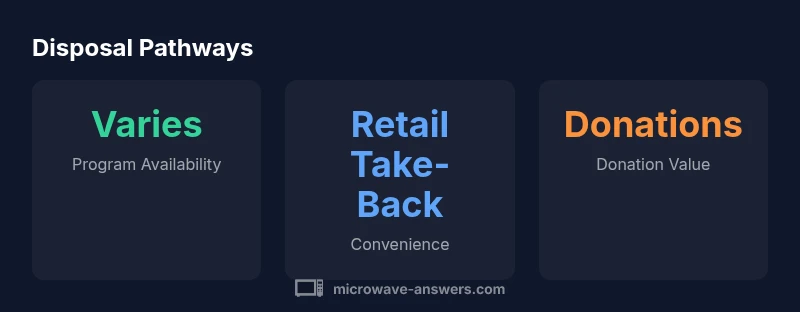
When choosing a disposal path, compare several factors: convenience (drop-off location and hours), cost (fees or free service), and environmental impact (whether the program recycles materials responsibly). Municipal programs tend to be cost effective and aligned with local policies, while retailer take-back can offer convenience and speed. For donors, charities provide social value and potential tax benefits. In all cases, selecting a program that arranges proper material recovery reduces environmental harm and supports community resources.
What happens to old microwaves after collection
After collection, microwaves typically undergo a sorting process at a certified facility. Functional units may be redistributed or donated, while non functional units are disassembled to recover metals and plastics. Recyclers are required to manage hazardous components safely and comply with local environmental rules. This cycle helps divert harmful materials from landfills and supports a circular economy for appliances.
Practical next steps and resources
Create a short disposal plan: identify at least two local options, estimate any costs, and schedule a drop-off if needed. Use official municipal pages, major retailers take-back guides, and reputable charities as anchors. For ongoing safety, bookmark a local e-waste program page and update your knowledge as programs evolve. Microwave Answers offers ongoing guidance to help you navigate these choices with confidence.
Common disposal pathways for old microwaves
| Program Type | Acceptance Scope | Preparation Required |
|---|---|---|
| Municipal e-waste drop-off | Varies by location | Bring ID; unplugged; secure door |
| Retailer take-back program | In-store options vary by retailer/location | Bring photo ID; follow retailer guidelines |
| Charity/donation programs | Typically prefer working units | Include cord; ensure unit is clean and safe to handle |
Common Questions
Who accepts old microwaves near me?
Most areas offer municipal e-waste drop-offs, and many retailers provide take-back services. Charities may accept working units. Use your city portal or retailer page to locate options.
Check your city portal or retailer page to find the best options nearby.
Can I recycle a broken microwave curbside?
Curbside programs rarely accept bulky appliances like microwaves. Look for official e-waste or appliance recycling events in your area.
Most curbside programs won't take bulky appliances; check local e-waste options.
Do thrift stores take microwaves?
Some thrift stores accept working microwaves if they can be safely transported. Call ahead to confirm donation policy and pickup options.
Call ahead to confirm donation policy and safety.
Are there programs that pay for old microwaves?
Most programs offer little or no direct payment, but you may receive a tax receipt for donations or qualify for recycling incentives in some regions.
Often you won’t get paid, but you might get a tax receipt.
Is it safe to open a microwave for repair?
No. Microwaves contain high-voltage components. Have trained technicians handle repairs or disposal.
Don't open it; it's dangerous.
“Safe disposal starts with knowing your local options and preparing the unit properly. Misconceptions about recycling microwaves can lead to unnecessary waste; a quick lookup with local programs often yields clear paths.”
Main Points
- Check local programs first before disposal
- Retailer take-back is often convenient and free
- Working microwaves are better received by charities
- Always unplug and prep safely before drop-off
- Proper recycling reduces environmental impact