What to Do with an Old Microwave: Safe, Practical Options
Discover practical, safe options for an old microwave: donate when usable, recycle responsibly, repair if feasible, or repurpose the exterior while safeguarding hazardous internals.


If your microwave still works, donate it to a charity or thrift shop first. If it doesn’t power on or no longer heats safely, recycle it through an authorized electronics recycler or your local waste program. For safety, never attempt dangerous disassembly; contact a technician for any internal work. These paths reduce waste and keep hazardous materials out of landfills.
Understanding why disposal matters and what counts as “old”
What you do with an old microwave matters for safety, environmental health, and community benefit. An aging unit may still work, but performance can decline, energy use can climb, and components such as the magnetron and capacitors pose hazards if mishandled. The Microwave Answers team emphasizes that the best path is usually determined by usability, condition, and local programs. By planning ahead, you avoid dumping a usable appliance and prevent risk to children or pets from damaged cords, heat vents, or broken glass. When you start from the question what to do with old microwave, you open up options that honor safety, legality, and sustainability, rather than simply trashing a bulky appliance.
Quick self-check: is it still usable?
A practical test starts with safety. Unplug the unit, inspect the exterior and door seal for damage, and remove any food residue or utensils. Plug it in and observe if the control panel responds, the light comes on, the turntable rotates, and the magnetron sounds normal during operation. If the unit powers up without strange smells, excessive heat, or smoke, and heats food evenly, it may be a candidate for donation or resale. If you notice buzzing, arcing, persistent odors, or leaking from the interior, treat it as non-working and proceed to recycling or professional evaluation. Keep the user manual handy to confirm model-specific warnings and warranty considerations. According to Microwave Answers, evaluating usability first helps you choose the most responsible disposal path.
Donation options for working microwaves
Donating a functioning microwave is a generous choice that extends the life of the appliance and supports households that need affordable kitchen staples. Start by contacting local charities, thrift stores, shelters, or community centers to confirm acceptance criteria, especially regarding power cords, intact doors, and cleanliness. Many donation programs require a working unit and proof of safe operation, plus basic information about the model and age. If the recipient can arrange pickup, offer to schedule a convenient time and ensure the microwave is thoroughly cleaned and decontaminated. Always retain a receipt or donation acknowledgment for your records and potential tax considerations. From Microwave Answers’ perspective, this is the most eco-friendly option when feasible.
Recycling and e-waste programs: what to expect
If the microwave no longer heats or shows signs of life, recycling is the prudent choice. Electronics recyclers strip valuable metals and plastics and safely manage hazardous components, like certain capacitors and magnets. Check your city’s e-waste guidelines or use a national list of approved facilities. Many programs accept appliances for curbside pickup or at drop-off events, sometimes at no cost. When you bring a non-working unit to a center, you may need to remove the glass tray and any detachable cords, but avoid disassembly that exposes hazardous internals. Recycling is essential to keep fluorinated oils, metals, and plastics out of landfills and to recover materials for reuse. The Microwave Answers team notes that using authorized centers reduces environmental impact and protects your community’s health.
Repair considerations: is fixing it worth it?
Repairing an old microwave is rarely a cost-effective option unless you have a straightforward, non-hazardous fault and a professional who can perform a cautious repair. Most common issues involve the door switch, latch mechanism, or control board—areas where a licensed technician can diagnose and replace parts safely. Do not attempt high-voltage repairs at home; capacitors and the magnetron present serious electric and thermal hazards. If a repair estimate approaches or exceeds the price of a new unit, or if the appliance shows multiple failing signs (unreliable heating, odd noises, or frequent tripping), disposal is the wiser choice. In short, weigh repair costs against replacement and consider long-term efficiency gains. Microwave Answers cautions that safety must come first when evaluating repair options.
How to prepare a working microwave for donation or sale
Before you hand over a working microwave, give it a thorough refresh to maximize its appeal. Unplug, clean the interior with a mild dish soap solution, and dry completely. Remove the glass plate and any removable turntable parts for easier cleaning and transport; wrap them separately to avoid scratches. Take clear, well-lit photos of the exterior and interior, including the control panel and door seal. Gather essential details: brand, model number, approximate age, and any quirks. Some donation centers want to know how many watts the unit uses and whether it powers on reliably. By providing accurate information and presenting a clean, functioning appliance, you increase the likelihood of a successful donation or resale. This reduces waste and gives someone a dependable kitchen appliance.
Handling non-working units: what not to do and who to contact
Don’t attempt to disassemble the microwave to salvage parts yourself. High-voltage components can remain energized even after unplugging, and the magnetron may contain hazardous materials. Instead, place the unit in a safe, accessible location for pickup or transport to an approved recycler. If you’re unsure about local programs, contact your city’s solid-waste department or an EPA-approved electronics program for guidance. If you are curious about salvaging non-electrical exterior parts (like the door handle or outer shell) for safe crafts, only do so without exposing internal electronics or wiring. The goal is to reduce risk while ensuring the device is disposed of responsibly. Microwave Answers urges you to choose professional pathways whenever safety concerns arise.
Safety reminders, common mistakes, and a quick next-steps checklist
- Do: unplug before moving, wipe away spills, and transport in a sturdy container.
- Don’t: disassemble the unit or attempt high-voltage repairs yourself.
- Do: verify donation eligibility or recycling acceptance before transport.
- Do: save receipts and take photos of the disposal step for your records.
- Do: ask local programs about any pickup options or fees. A simple, clear plan saves time and prevents hazards. The final takeaway is to prioritize safety and sustainability, with a bias toward donation when the microwave still functions.
Quick decision checklist and next steps
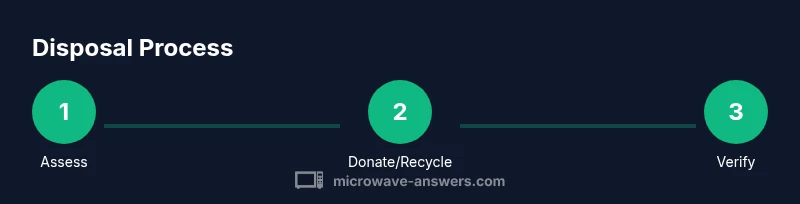
- Assess usability and condition.
- If usable, contact local charities for donation or check resale options.
- If non-working, locate an authorized e-waste recycler.
- Never attempt unsafe disassembly; seek professional help if needed.
- Log your action with receipts or confirmations for future reference. By following these steps, you’ll minimize environmental impact and maximize the appliance’s value to someone else.
Tools & Materials
- Gloves (nitrile or work gloves)(Protect hands during cleaning and handling)
- Soft cloths or sponges(Interior and exterior cleaning)
- Mild dish soap(Safe for appliance surfaces)
- Bucket or spray bottle(For cleaning solutions)
- Trash bags or recycling bin(Transport and containment)
- Labeling tape and marker(Mark for donation or recycling)
- Your vehicle with adequate space(For drop-off or pickup transport)
- Model number and serial information(Helpful for donors and recyclers)
- Optional screwdriver set(If professional inspection is needed)
Steps
Estimated time: 60-120 minutes
- 1
Unplug and inspect the exterior
Before touching any components, unplug the microwave. Visually inspect the power cord for cracks or heat damage and check the door seal and hinges for wear. This initial check helps prevent shock hazards and identifies obvious safety concerns.
Tip: If the cord is damaged, do not move the unit; contact a professional. - 2
Test basic operation safely
Plug in the unit and confirm the display lights up, the turntable rotates, and the door latches securely. Listen for unusual noises or smells during the first few seconds of operation. If anything sounds off, treat the unit as non-working and proceed to disposal.
Tip: Do not run a test with metal utensils inside the cavity. - 3
Determine disposal path
Based on the test, decide whether to donate, recycle, or seek professional repair. If it powers on and heats reliably, donation is preferred. If it fails any test, skip repairs and choose recycling or a certified recycler.
Tip: Call ahead to confirm donation centers accept microwaves and recycling facilities accept large appliances. - 4
Prepare for donation or sale
Clean the exterior and interior, removing food residue and odors. Remove the glass turntable and set aside for cleaning. Gather model details (brand, model, approximate age) and take clear photos for the recipient.
Tip: Wrap or shield the glass plate to avoid breakage during transport. - 5
Find a recipient or recycler
Reach out to local charities, thrift stores, or electronics recyclers. Verify acceptance policies, drop-off timings, and any fees. If pickup is available, schedule a window that minimizes contact with others and ensures safe handling.
Tip: Keep a copy of the donation receipt or recycling confirmation. - 6
Transport and documentation
Transport the unit in a stable position; avoid tipping or dropping. Carry documentation such as the model number and disposal confirmation. Upon arrival, obtain a receipt and verify the item’s categorization as donated or recycled.
Tip: Do not transport a damaged corded unit near pets or children. - 7
If non-working, seek professional recycling
If the microwave is non-functional, do not attempt internal disassembly. Take it to an authorized e-waste recycler or your city’s hazardous waste program. This ensures safe handling of materials like the magnetron and metals.
Tip: Ask for a certificate of reuse or recycling as proof of proper disposal. - 8
Document and reflect
Keep digital or paper receipts for tax or environmental reporting. Note what path you chose and the date of disposal. This helps track your personal sustainability efforts.
Tip: Store receipts with home maintenance records for future reference. - 9
Explore safe upcycling ideas (non-intrusive)
If you want to repurpose, stick to exterior uses that don’t expose internal components. For example, the outer shell or glass plate can be repurposed as storage or decorative pieces after professional advice.
Tip: Never remove internal electronics unless done by a qualified technician.
Common Questions
Can I still use an old microwave that powers on?
If it powers on and heats reliably without unusual noises or smells, it may be usable for donation or personal use. Inspect the door seal and interior for safety concerns such as cracks or odors. If unsure, err on the side of caution and treat it as non-working for disposal.
If it works safely, you can donate or continue using it. If you’re unsure, get a professional opinion before using it again.
Is DIY repair at home ever safe?
DIY repair can be dangerous due to high voltage and the magnetron. Most fixes require a qualified technician. For safety, do not attempt internal repairs yourself and contact a professional.
No, DIY microwave repair is not recommended due to high-voltage risks; hire a pro.
Where can I donate a working microwave?
Many charities, shelters, and thrift stores accept working microwaves. Call ahead to verify acceptance criteria and arrange pickup if available. Documentation of the donation receipt can be helpful for records.
Check with local charities for donation options and pickup availability.
What do recyclers require when dropping off a microwave?
Most recyclers want the unit intact and safe to transport; some may require removal of the glass plate. Avoid disassembly that involves hazardous components. Confirm whether the center handles complete units or parts.
Bring the unit to an approved recycler and follow their packaging guidelines.
Can I reuse any parts from a dead microwave?
Internal components are hazardous and should not be removed or reused by nonprofessionals. If you want to reuse parts, consult a licensed technician who can safely handle them.
Don’t remove internals; only handle exterior parts with guidance from a pro.
Watch Video
Main Points
- Assess usability before disposal to choose the best path.
- Donate functional microwaves when possible to maximize impact.
- Recycle non-working units through authorized centers to protect the environment.
- Never attempt risky internal repairs or disassembly yourself.
- Keep receipts and records for proof of proper disposal.