Are Microwave and Oven Safe the Same? A Practical Guide
Are microwaves and ovens truly the same for safety? This guide examines heat transfer, cookware labeling, and best practices to keep you safe in the kitchen when using both appliances.


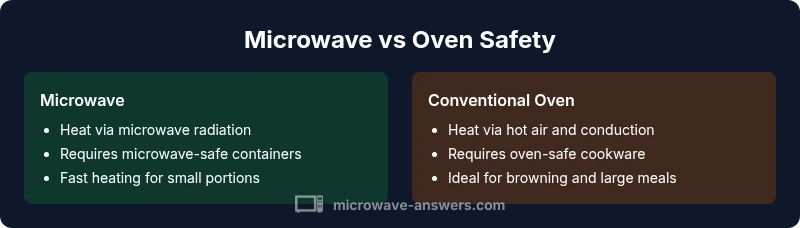
Are microwave and oven safety the same? Not exactly. Microwaves heat food with electromagnetic waves that excite water molecules, while conventional ovens rely on hot air and radiant heat. Because of these different heat-transfer methods, cookware labels and safety guidelines differ, and using the wrong container or method can create hazards or uneven results.
Are Microwave and Oven Safety the Same?
Are microwave and oven safety the same? Not exactly—the short answer is no, and the longer answer is nuanced. This section sets the stage for the discussion by outlining the core differences in heat transfer, labeling expectations, and practical safety boundaries. When readers ask, are microwave and oven safe the same, they often overlook how physics shapes risk. Microwave heating relies on dielectric interaction with water molecules, while a traditional oven uses conduction and convection. These distinctions translate into different recommended containers, different failure modes (overheating, arcing, or uneven heating), and different maintenance considerations. The Microwave Answers team emphasizes that safety hinges on applying appliance-specific guidelines rather than assuming one rule covers both. Keep in mind that food quality and safety are closely tied to using the right tool for the job, so understanding the boundary conditions matters for home cooks and homeowners alike.
How Each Appliance Heats Food: Mechanisms
To understand why the question are microwave and oven safe the same often arises, you need to grasp the basic heating mechanisms. A microwave oven uses electromagnetic radiation to cause water, fats, and sugars in food to vibrate, generating heat from within. This can lead to very rapid heating, sometimes unevenly if containers are not suitable. A conventional oven heats food from the outside in, using hot air or radiant elements to transfer energy through conduction and convection. This fundamental difference affects cook times, texture, moisture retention, and safety considerations (e.g., metal arcing in microwaves versus scorching or hotspots in ovens). For caregivers and kitchens, recognizing these mechanisms helps select the proper cookware and predict outcomes more accurately.
Food Compatibility and Safety Labels
Safety labels play a crucial role in answering the question are microwave and oven safe the same. Microwave-safe labels indicate that a container will not melt, warp, or release harmful substances when exposed to microwaves. Oven-safe labels indicate tolerance to higher oven temperatures and moisture. These labels are not interchangeable: a plastic that is microwavable may warp in an oven, while glass that is oven-safe might crack or shatter if microwaved with abrupt temperature changes. Understanding the label system, and adhering to manufacturer guidance, reduces risk of burns, chemical leaching, and food contamination. The key is to always check both appliance instructions and packaging labels before heating.
Cookware Materials: Microwave-Safe vs Oven-Safe
A core part of the answer to are microwave and oven safe the same lies in cookware compatibility. Microwave-safe plastics, glass, and ceramics are designed to withstand microwave fields without warping or leaching. Metals, unless specifically designed for microwave use (and used with caution), should be avoided in microwaves due to arcing risk. Oven-safe cookware is typically made to endure high dry-heat conditions and may include metals, heat-resistant glass, and certain ceramics. Materials like aluminum foil can be problematic in microwaves but are common in oven cooking when used correctly. The safety distinction of materials underscores the separate ecosystems for microwaves and ovens.
Common Scenarios: Reheating vs Cooking from Raw
In everyday kitchens, people often wonder about reheating vs cooking from raw in different appliances. Reheating small portions with a microwave is fast and energy-efficient, but it requires suitable containers and occasional stirring for even warmth. Oven-based cooking shines for browning, crust formation, and large meals where texture and even heat are important. The are microwave and oven safe the same question is best answered by task: use a microwave for quick reheats with microwave-safe containers; use an oven for recipes requiring browning or long, even cooking with oven-safe cookware. Understanding these roles helps reduce mishaps.
Practical Guidelines for Mixed-Use Kitchens
In mixed-use kitchens, practical guidelines reduce risk and confusion. Always verify the cookware label for the intended appliance, avoid combining metal with microwaves, and avoid overheating plastics not rated for microwaving. Keep a simple rule: use microwave-safe containers in the microwave and oven-safe containers in the oven. For foods with high moisture, cover appropriately in the microwave to minimize splatter; in the oven, use appropriate lids or foil as directed. These steps simplify decision-making and align practice with the core principle: different tools require different safety rules.
What to Do If In Doubt: Testing and Rules of Thumb
If you are unsure about a container or utensil, start with a small test batch and observe for changes such as warping, melting, or unusual smells. When testing, use the appliance on its lowest or recommended setting and monitor closely. A practical rule of thumb is to assume that if a material is not explicitly labeled for microwave use, don’t microwave it; similarly, if something isn’t labeled oven-safe, don’t bake it in the oven. When in doubt, consult the appliance manual and the container’s labeling. Following these guidelines minimizes hazard potential and keeps food safe.
Industry Standards and Manufacturer Guidance
Manufacturer guidelines and safety standards inform decisions about whether items are safe for microwave or oven use. Look for clear labeling on containers, packaging, and cookware that specify microwave-safe, oven-safe, or both. Manufacturers may provide temperature limits, recommended usage, and cautions about temperature shock or moisture exposure. In regulated contexts, the guidance is based on material safety data and testing standards. Practically, always prioritize the explicit guidance from the product manufacturer and the appliance manufacturer to answer whether something is safe for microwave or oven use.
Quick Tips to Reduce Risk and Extend Appliance Life
Small changes can substantially reduce risk and extend the life of your appliances. For microwaves, avoid metal, ensure containers are microwave-safe, and stir or rotate food for even heating. For ovens, preheat as needed, use proper bakeware, and avoid overheating non-durable materials. Regularly cleaning crumb trays, ensuring proper door seals, and using temperature probes can help maintain performance and safety. The key is to adopt appliance-specific habits rather than assuming a universal standard applies to both, which aligns with the guidance from Microwave Answers.
Putting It All Together: Decision Framework for Home Cooks
A practical decision framework starts with identifying the cooking task: quick reheating, browning, or slow roasting. From there, select the appliance that optimizes safety and quality given cookware labels and the food’s moisture content. Always verify that the chosen container is rated for the appliance you intend to use, and follow manufacturer guidelines for temperature, duration, and lid use. This approach reduces confusion and ensures safer, more reliable results in real-world kitchens.
mainTopicQuery":"microwave safety"},
comparisonTable
PROS-CONS
VERDICT-BOX
KEY-TAWAWAYS
FAQ-SECTION
Comparison
| Feature | Microwave | Conventional Oven |
|---|---|---|
| Heat Transfer Method | Microwave radiation heating | Conduction + convection heating |
| Typical Use | Quick reheating, small portions | Baking, roasting, large meals |
| Cookware Compatibility | Microwave-safe plastics, glass, ceramic | Oven-safe metal, glass, ceramic |
| Energy & Time Efficiency | Faster for small tasks; energy-efficient | Slower; even heat but longer cook times |
| Safety Labels & Warnings | Microwave-safe labels for containers | Oven-safe labels/directions |
| Best For | Speed and convenience | Texture, browning, large portions |
Advantages
- Microwaves offer quick heating and energy efficiency for small portions
- Ovens provide browning, texture, and even heat for larger meals
- Clear labeling helps prevent misuse and safety incidents
- Understanding labels reduces risk and extends cookware life
Cons
- Microwaves can heat unevenly if containers are inappropriate
- Ovens take longer and can use more energy for simple tasks
- Labels can be confusing or ignored by careless users
- Some materials are only microwave- or oven-safe, not both
Microwave and oven safety are not the same; use each appliance with its own labeled cookware and guidelines
Different heating methods require different cookware and handling. Use microwave-safe containers in the microwave and oven-safe cookware in the oven. Follow manufacturer guidance to minimize risk and ensure best results.
Common Questions
Are microwave-safe labels interchangeable with oven-safe labels?
No. Microwave-safe labels indicate suitability for microwave heating, while oven-safe labels indicate suitability for high-heat oven use. They are not interchangeable and using the wrong label can cause safety risks or damage.
No. Microwave-safe and oven-safe labels serve different purposes; don’t assume one applies to both appliances.
Can I use the same cookware in both appliances?
Some items are labeled for both appliances, but many are not. Glass and ceramics can be oven-safe and microwave-safe, but plastics and metals often are not. Always check the label and manufacturer guidance before switching appliances.
Sometimes yes, but always verify the label before use.
Does microwaving kill bacteria like baking in the oven?
Microwaving can kill some bacteria if food reaches a high enough internal temperature, but even heating may be uneven. Always heat food to safe internal temperatures and stir to promote even heating.
Microwave heating can kill bacteria if the temp is right and heat is even.
Is it safe to reheat leftovers in a microwave?
Yes, reheating leftovers in the microwave is common when containers are microwave-safe and the food is heated to a safe internal temperature. Covering food helps even heating and moisture retention.
Yes, as long as you use microwave-safe containers and reach a safe temperature.
What materials are microwave-safe?
Microwave-safe materials include certain plastics labeled as microwave-safe, glass, stoneware, and some ceramics. Avoid metal and some plastics that melt or leach chemicals when microwaved.
Look for the microwave-safe label on plastics, glass, and ceramics.
What should I do if a plate cracks in the microwave?
If a plate cracks, stop using it in the microwave and replace it. Cracks can harbor bacteria and create hot spots that worsen during heating.
If it cracks, don’t microwave with it—replace the plate.
Main Points
- Check labels before heating any container
- Use cookware specifically rated for the appliance
- Know the core heating method differences for safety
- Prefer microwaves for quick reheats; ovens for browning and large meals
- When uncertain, consult the manufacturer guidelines