When to Replace a Microwave Oven: A Practical Guide
Learn practical signs you should replace vs repair, cost considerations, and a step-by-step plan to choose and install a new microwave safely.


Deciding when to replace a microwave oven comes down to safety, reliability, and downtime, not age alone. Look for persistent failures, unusual noises, burning smells, or arcing that repairs can’t safely fix. According to Microwave Answers, weigh safety risks and downtime alongside repair costs when you decide. The Microwave Answers team found that replacement is often wiser when repairs become frequent or expenses rise.
Why replacement matters more than you think
A microwave is a workhorse in most kitchens, quietly handling reheats, defrosts, and quick meals. When it starts acting up, the disruption isn’t just about comfort—it affects food safety, energy use, and household convenience. Replacement decisions should balance reliability, safety, and the time you spend managing repairs. Microwave Answers emphasizes that a failing microwave isn’t just an annoyance; it can impact meal planning and create risk if components degrade. By prioritizing safe operation and predictable performance, you minimize downtime and avoid risky, repeated repairs. This section lays out how to gauge when replacement becomes the smarter option and how to structure your decision to avoid overspending or compromising safety.
Signs it’s time to replace: what to look for
Look for persistent issues: frequent heating failures, inconsistent temperatures, or a unit that takes much longer to heat than it used to. Unusual noises, arcing, or smells of burnt plastic are red flags that internal components may be failing. A door seal that won’t maintain a tight closure or a visibly warped cavity suggests structural wear that compromises safety. If service visits become routine or repairs push past the cost of a comparable new model, replacement is worth serious consideration. Energy efficiency matters too—sudden drops in performance without a clear cause can indicate aging components. Finally, verify warranty status; a long warranty can tilt the balance toward repair, while no coverage argues for replacement to avoid future catastrophes.
When repairing is worth it: a quick reality check
Not every malfunction warrants a new unit. If the issue is a replaceable component (like a diode or magnetron) and the quoted repair cost remains well below the price of a new model, repair can be sensible. If the appliance is otherwise sound—no bent door, no overheating, and clean interior—a targeted repair may restore performance without sacrificing convenience. Always obtain a written diagnosis and multiple repair quotes, then compare to the cost of a replacement with similar capacity and features. A repair can also buy time if you’re waiting for a sale or a better model on the market.
Safety concerns that demand replacement
Certain issues pose safety risks that make continued use unsafe. If you notice arcing or sparking inside the cavity, overheating that softens or damages plastic parts, or a burning odor, stop using the appliance immediately. Damaged door latches, warped frames, or exposed wiring are clear signs a repair may be unsafe or inadequate. Older components can fail without warning, creating fire or electrical shock hazards. In these cases, replacing the unit eliminates a known risk and simplifies future maintenance. Safety should always trump short-term savings when a device could threaten household well-being.
How to compare replacement options: key features to prioritize
Size and fit come first: measure interior cavity dimensions, exterior footprint, and countertop clearance. Verify wattage compatibility with your cooking needs and ensure venting requirements align with your kitchen setup. Check for turntable compatibility and cord length for practical placement. Energy efficiency matters; compare Energy Star rated models when possible. Features such as sensor cooking, auto-reheat presets, kid locks, and durable interiors add long-term value. Finally, review warranty length and service options—these reduce risk over time and can influence total cost of ownership.
The true cost of replacement: repair vs replace, downtime, and convenience
Total cost extends beyond the sticker price. Include installation or removal fees, potential disposal costs, and the downtime required to select and install a new unit. A newer model may offer energy savings that offset a higher upfront price over time, but this depends on how often you use the microwave and your local energy rates. Don’t forget hidden costs like coordinating delivery, possible venting or electrical upgrades, and any required permits for built-in configurations. Evaluating total cost of ownership helps prevent impulsive buys or overzealous repairs.
Step-by-step decision framework: plan, compare, decide
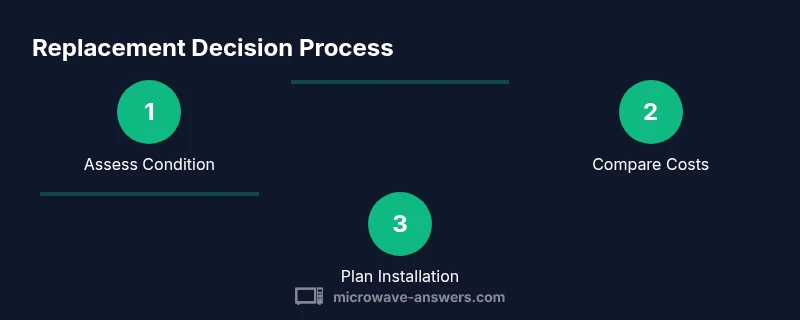
Follow a structured approach: (1) document symptoms and gather repair quotes, (2) identify replacement options that fit your space and cooking needs, (3) compare total costs and downtime, (4) check warranties and service options, (5) plan installation and disposal of the old unit, (6) finalize purchase and schedule installation. This method reduces guesswork and ensures you choose a model that aligns with safety, space, and budget. It also helps you avoid selling yourself short on reliability or convenience.
Disposal and recycling: finish responsibly
Before discarding the old microwave, check local e-waste guidelines and retailer take-back programs. Remove the door to prevent injuries and place the unit in an appropriate recycling stream if allowed. Some municipalities require certified disposal for electrical devices; if so, coordinate with a professional to handle safe removal. Recycling reduces environmental impact and aligns with best practices for household electronics. Consider donating a still-working unit to reduce waste if a local charity accepts small appliances.
Quick checklist before you buy a new microwave
- Confirm size, fit, and venting needs for built-in or over-the-range models.
- Match wattage to expected cooking tasks and available power outlets.
- Compare energy efficiency and warranty coverage.
- Review features that matter to you (sensor cooking, presets, child lock).
- Plan delivery, installation, and old unit disposal in one step.
Tools & Materials
- Tape measure(to verify space and door clearance)
- Level(to ensure stable installation)
- Screwdriver set (Phillips/flat)(for mounting brackets or trim screws)
- Voltage tester(to confirm power is off during installation)
- Replacement microwave (matched wattage and size)(fit space and use-cases)
- Anti-tip bracket (optional)(for safety in installable setups)
- Safety gloves(protect hands when moving heavy units)
- Duct tape or mounting hardware (optional)(for cable management or secure mounting)
Steps
Estimated time: 2-4 hours
- 1
Assess condition and needs
Document symptoms, note heat patterns, and check for safety signs. Compare how often the microwave has needed repairs with the cost and downtime involved. This helps you decide if replacement is warranted.
Tip: Take photos of interior components and door seal to reference during quotes. - 2
Check warranty and repair history
Read the model’s warranty documentation and review any past service reports. If the unit is still under warranty for the current issue, weigh the likelihood of a covered repair vs replacement.
Tip: Call the service provider to confirm if the current problem is covered. - 3
Get repair quotes
Ask two or three technicians for written quotes. Ensure each quote covers parts, labor, and any travel fees. Compare these costs directly with the price of a new unit with equivalent capacity.
Tip: Ask for breakdowns to identify hidden charges. - 4
Research replacement options
Review models that fit your space, budget, and cooking needs. Prioritize wattage, size, sensor features, and warranty. Shortlist a few models for a side-by-side comparison.
Tip: Create a simple comparison table to visualize trade-offs. - 5
Plan installation logistics
Measure space, check outlet amperage, and confirm venting needs for built-ins. Decide if you’ll need professional installation or if a DIY install is feasible.
Tip: If wiring or venting upgrades are needed, hire a qualified professional. - 6
Arrange disposal and purchase
Coordinate delivery, remove the old unit, and arrange for recycling or donation. Ensure new unit wiring and mounting are aligned with your kitchen layout.
Tip: Schedule disposal together with delivery to minimize downtime.
Common Questions
When should I replace my microwave instead of repairing it?
If repairs are frequent or the cost approaches or exceeds a new unit, replacement is often wiser. Safety concerns or unreliable heating also support replacing rather than patching up an old appliance.
If repairs keep coming back or the cost is high, replace. Safety issues are a strong signal to upgrade.
Are microwaves safe to use after many years?
A microwave can remain safe if it’s in good condition with intact door seals and no arcing or overheating. However, aging components may fail unexpectedly, creating hazards.
Yes, if still in good shape, but aging parts can be risky.
How do I assess the cost of replacement?
Obtain quotes for a new unit with similar capacity and features, then compare to repair estimates. Include delivery, installation, and disposal costs to get a true total.
Get quotes for both options and compare total costs.
Can I move a microwave to a new home safely?
Yes, if you have proper space and power elsewhere. Unplug before moving, avoid bending cords, and ensure ventilation in the new location.
Unplug, move carefully, and verify outlet and ventilation at the new place.
What is the typical lifespan of a microwave?
Microwaves last several years with normal use. Heavier use, repeated heating cycles, or poor maintenance can shorten lifespan.
They last several years; heavy use can wear them out sooner.
What are disposal options for old microwaves?
Check local e-waste programs or retailer take-back schemes. Many centers recycle metals and plastics and offer safe disposal options.
Recycle responsibly through local programs or retailer take-backs.
Watch Video
Main Points
- Assess safety risks before deciding.
- Weigh repair costs against replacement value.
- Plan installation and disposal upfront.
- Choose a model that fits space and energy needs.
- Review warranties to reduce long-term risk.