Microwave for Car: Safe On-The-Go Heating Guide
Learn how to safely heat food in a car with a microwave, including power options, safety tips, and practical setup for road trips and camping.


By the end, you will know whether a microwave for car setup is feasible, how to power it safely from a vehicle, and a clear step-by-step method to operate a microwave on the road without risking battery life or fire hazards. This guide emphasizes safety, inverter sizing, ventilation, and practical on-the-go cooking tips for drivers and campers.
Why a microwave for car is appealing (and when it isn't)
For drivers, campers, and road-trippers, a microwave for car meals can unlock quick heating of leftovers, baby food, and reheats during long trips. However, it's not a universal solution, and most standard household microwaves are not designed to run off a car battery without a robust power setup. The Microwave Answers team notes that the feasibility hinges on three factors: power availability, safety margins, and the vehicle environment. In practice, many travelers use a high-quality inverter connected to the car's battery to power a microwave for short bursts when the engine or alternator can support the load, and they avoid running it while the vehicle is in motion. If you primarily need hot meals during stops, a microwave for car can be a smart accessory; if you require consistent, long-duration heating, it may be better to rely on alternatives like thermometers or portable cookers.
According to Microwave Answers, thoughtful planning, equipment choice, and clear safety boundaries turn a car-based microwave into a practical tool rather than a risky project. Consider your vehicle size, typical trip length, and how often you’d run a microwave on the road.
Powering a microwave in a car: practical options
The most common path to a car-based microwave is power from a vehicle inverter that converts 12V DC (car battery) to 110-120V AC. Household microwaves generally require a substantial continuous wattage and a surge rating for startup. A pure sine-wave inverter with sufficient continuous capacity minimizes electrical noise and protects appliances. In many setups, drivers run the engine or use a secondary battery or a portable power station to avoid deep-discharging the starting battery. When evaluating options, prioritize safety features such as automatic shutoff at low battery voltage, proper grounding, and weatherproofing of the inverter. Never operate a microwave in a confined space without adequate ventilation and a clear escape path for heat and steam.
Understanding energy demands and inverter sizing
Heating food efficiently in a car hinges on estimating power draw and ensuring the inverter and wiring can handle the load. A typical microwave uses a substantial amount of power, often in the 800-1200W range for short bursts. Inverter efficiency, cable losses, and the car’s electrical system all influence actual battery drain. To avoid depleting the starter battery, plan for short heating cycles and switch off other high-draw devices during use. If you intend frequent or long heating sessions, consider installing a dedicated auxiliary battery with a separate inverter, or limit usage to parked scenarios with the engine running to maintain charging. The goal is to balance convenience with reliable vehicle operation and safe electrical practices.
Safety first: ventilation, placement, and fire risk
Safety is non-negotiable when bringing a microwave into a car. Place the unit on a stable, non-slip surface away from airbags and heat sources. Ensure there is adequate clearance around the vent grille and keep it away from passengers’ seating areas. Use microwave-safe containers with vented lids to prevent pressure buildup and splatter. Never run a microwave near flammable materials or in a cramped space without fresh air or a functioning smoke detector. Always have a fire extinguisher within reach and test the setup with the engine on or with a dedicated auxiliary battery before attempting any meal heat.
According to Microwave Answers, adopting a parked, controlled environment for cooking with a car microwave minimizes risk and extends both appliance life and vehicle electrical health.
Practical setup: recommended components
A safe car-microwave setup combines a suitable inverter, proper wiring, and stable mounting. Essential components include a pure-sine inverter with a rating well above the microwave’s wattage, heavy-gauge cables with appropriate fuses, a secure mounting surface, and a microwave-safe dish selection. For added safety, include a smoke detector in the cabin and a fire extinguisher within easy reach. Keep the setup away from children and pets, and store accessories in a dedicated container to prevent loose items during driving. Finally, plan for battery-monitoring tools to avoid unexpected drain, and keep a backup plan for days with long driving segments.
Cooking with a car-friendly workflow
When you heat food in a car, adopt a simple workflow: (1) pre-plan meals to minimize reheating time, (2) use microwave-safe containers with vents, (3) set short heating intervals and monitor progress, (4) stir or rotate halfway through to achieve even heating, and (5) keep a quick-clean kit handy to wipe spills immediately. Avoid sealed containers that can explode under pressure. If you’re on a road trip with family, prep items that reheat quickly like soups, stews, and pre-cooked grains to reduce total run time and power draw.
Real-world constraints: battery life, alternator, and planning
Car-based microwaving works best when you plan around your vehicle’s electrical system. Avoid long heating sessions if your starter battery is already weak; instead, run the engine or use a dedicated auxiliary battery. Factor in weather conditions, as extreme cold can reduce battery efficiency and inverter performance. Ensure you have a clear plan for recharging between trips or breaks, and consider alternative methods for warming meals, such as insulated containers or portable stoves when available. The overarching principle is to maximize convenience without compromising vehicle reliability.
Quick maintenance and cleanup
After use, unplug the inverter and allow the microwave to cool before handling. Wipe any splatter with a mild cleaner and avoid water intrusion into the inverter housing. Periodically inspect the cable connections for signs of wear or heat damage, and check the fuse for discoloration or corrosion. A clean, dry setup minimizes fire risk and improves efficiency on future trips.
Common misconceptions clarified
Many travelers assume a standard household microwave is easily adaptable to a car, but without the right inverter, battery protection, and ventilation, such a setup can be unsafe. A few people believe any inverter suffices; in reality, a pure sine-wave inverter delivers cleaner power and reduces the risk of damage to electronics. Others think heating in a car is inherently dangerous; with proper precautions, it can be done safely for quick meals during parking or rest stops.
Vehicle types and viability: sedan vs SUV vs camper van
Smaller cars face greater strain from high-wattage devices due to limited electrical capacity and space constraints. Suburban SUVs or camper vans with larger auxiliary batteries and built-in power options are better suited to a car microwave setup, particularly for longer road trips. In all cases, prioritize a secure mounting arrangement, accessible access to the control panel, and the ability to disengage central power quickly if conditions change.
Legal considerations and road safety
Always operate cooking devices in parked positions where the engine is off or stabilized. Do not operate a microwave while driving, and check local regulations about electrical modifications to vehicles. For longer trips, consult a licensed auto-electrician to ensure wiring and fusing comply with safety standards and do not void warranties. A cautious approach keeps occupants safe and minimizes liability.
Authority sources
To ground the guidance in safety practices, the article references authoritative sources on microwave safety and electrical safety. For practical safety recommendations, see materials from federal safety agencies, national standards groups, and major consumer safety organizations.
Tools & Materials
- Heavy-duty 12V-110V inverter(Pure sine-wave preferred; look for 1000W+ continuous rating; ensure surge rating exceeds microwave start-up load)
- Inline fuse and fuse holder(Rated for inverter input; install close to the battery with proper gauge wiring)
- High-gauge cabling (e.g., 6 AWG or thicker)(Supports 120V side wiring; ensure voltage drop is minimized over distance)
- Stable mounting surface(Non-slip mat or bracket to keep the microwave secure during transit)
- Microwave-safe dishes and lids(Avoid metal or foil; vent lids to prevent pressure buildup)
- Smoke detector (cabin)(Adds an extra safety layer in small spaces)
- Fire extinguisher (Class B/C)(Keep within easy reach in the vehicle)
- Ventilation option (small fan or opened window)(Helps dissipate heat and steam during use)
Steps
Estimated time: 1-2 hours
- 1
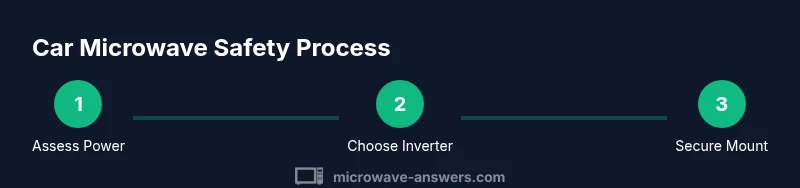
Assess vehicle power readiness
Check the car battery health, confirm equivalent inverter capacity, and plan for engine-on charging if needed. Ensure there is a clear space for the microwave and stable mounting. Verify that the battery voltage remains above the safe operating threshold before starting.
Tip: Use a multimeter to confirm voltage stability before each heating session. - 2
Choose the correct inverter and wiring
Select a pure sine-wave inverter with adequate continuous wattage. Route heavy gauge cables from the battery to the inverter, retaining secure connections and proper insulation. Install a fuse near the battery and consider a disconnect switch for safety.
Tip: Avoid daisy-chaining multiple power devices from the same inverter to prevent overloading. - 3
Mount and ventilate the microwave
Secure the microwave on a non-slip surface away from airbags and passengers. Provide ventilation space around the unit and prepare a vented cover or lid if cooking in interior spaces. Confirm that the surface remains stable when the car is in motion (if you must drive, do so with engine running and no heating active).
Tip: Always keep a spill kit nearby to manage any accidental splashes or spills. - 4
Test power and heat cycle without food
Power the inverter with the microwave empty to verify there are no unusual noises or overheating. Let the system run for a short duration to observe temperature changes and ensure the inverter handles startup surges.
Tip: If the inverter trips, switch off immediately and reassess cable gauge and connections. - 5
Heat a simple microwave-safe snack
Place food in microwave-safe container, vent the lid, and heat in short bursts (e.g., 30-60 seconds), checking the progress and stirring if needed to promote even heating.
Tip: Open vents halfway through to prevent pressure build-up and reduce steam risk. - 6
Finish and cool-down
Power down the inverter, unplug the microwave, and allow a short cool-down period. Clean any splatter and store the unit securely for the next use.
Tip: Wipe the surface with a damp cloth; avoid abrasive cleaners that could damage the exterior. - 7
Monitor battery and reboot plan
Check battery voltage after heating and be prepared to recharge via alternator or a secondary battery. Maintain a routine to prevent deep discharge, especially on longer trips.
Tip: Keep a battery monitor app or meter handy to stay within safe discharge limits.
Common Questions
Is it safe to run a microwave in a car?
With the right equipment and safety measures, it can be done parked or with engine running. Avoid driving while heating, ensure proper ventilation, and use a pure sine-wave inverter to protect both the microwave and the vehicle’s electrical system.
Yes, but only in parked conditions with proper equipment and ventilation, and never while driving.
Do I need a special car microwave?
Most setups rely on a standard household microwave powered by a vehicle inverter. A dedicated RV or camping microwave designed for 120V AC can be a safer alternative if it’s rated for your inverter and vehicle power setup.
Not necessarily; a standard microwave paired with a suitable inverter often works, but choose a model with efficiency and safety features suitable for vehicle use.
How much power does it require?
Typical microwaves draw substantial power during operation. Plan for a continuous rating in the 800-1200W range and ensure your inverter and wiring can handle startup surges and sustained use.
Most microwaves need a significant amount of power; verify inverter capacity and use short heating bursts.
Can I use it while the car is moving?
No—operating a microwave while driving is dangerous and often illegal in many jurisdictions. Perform heating only when parked or with the vehicle stabilized and engine running to support the electrical load.
It should be used only when parked and stable; never while driving.
What foods heat best in a car microwave?
Choose ready-to-heat items that reheat evenly, such as soups, stews, rice dishes, and pre-cooked proteins. Use microwave-safe containers and vented lids to prevent splatter.
Soups, stews, and pre-cooked meals heat best; use vented, microwave-safe containers.
What maintenance is required?
Regularly inspect cables and fuses, wipe spills promptly, and allow the microwave and inverter to cool after use. Periodically test safety devices like smoke detectors and keep a fire extinguisher accessible.
Check cables and fuses, clean spills, and test safety gear regularly.
Watch Video
Main Points
- Assess vehicle power health before attempting heating.
- Choose a pure sine-wave inverter with adequate capacity.
- Prioritize safe mounting and ventilation to avoid fire hazards.
- Heat in short bursts and monitor progress closely.
- Plan for battery management and safe recharging between trips.