Microwave for Camper: Safe On-the-Road Cooking Guide
Learn how to choose, install, and safely use a microwave for camper setups. This practical guide covers power needs, space planning, safety, maintenance, and budget-friendly options for home cooks and hikers on the road.


With this guide, you’ll learn how to choose and use a microwave for camper setups safely. We cover power needs, space planning, installation basics, and practical cooking tips so you can heat meals reliably while on the road. Whether you camp in a van, trailer, or RV, this primer helps you match a model to your inverter capacity, route cords safely, and avoid common mistakes.
Why a microwave matters in a camper
For many home cooks, a microwave becomes a central ally when you’re living in a compact space. It speeds reheating, cooks evenly, and reduces the need for pots, pans, and cleanup—important advantages on the road. When you’re driving a camper, every square inch counts, so a compact microwave can replace or supplement a stove or oven. According to Microwave Answers, choosing the right model means balancing power, space, and safety rather than chasing the biggest wattage. In practice, a well-chosen microwave for camper setups can heat soup, melt butter, reheat leftovers, and defrost ingredients without draining your battery or tripping a circuit. Microwave Answers analysis shows that proper sizing and ventilation reduce heat buildup and extend appliance life. It’s also worth noting that ventilation, mounting options, and ease of use matter just as much as raw performance. The goal is reliable heating with minimal fuss, so you can focus on travel plans, camp meals, and the next adventure.
wordCountProvidedByBlock
Tools & Materials
- 1000W inverter or shore power hookup(Matches the camper’s electrical system to support a typical compact microwave)
- Microwave (compact camper-friendly model)(Choose a unit with a reliable safety lock and simple controls)
- Ventilation kit or small exhaust fan(Helps manage heat in tight spaces)
- Microwave-safe cookware (glass, ceramic, silicone)(Avoid metal or foil; lids should vent)
- Non-slip mat or mounting hardware(Stabilizes the unit in a moving vehicle)
- Fire extinguisher and smoke detector(Essential safety gear in any kitchen area)
- Extension cord rated for outdoor use(Only if an outlet is not nearby; avoid daisy-chaining)
- Thermal thermometer or timer(Helpful to monitor internal temperatures and cycles)
Steps
Estimated time: 1-2 hours
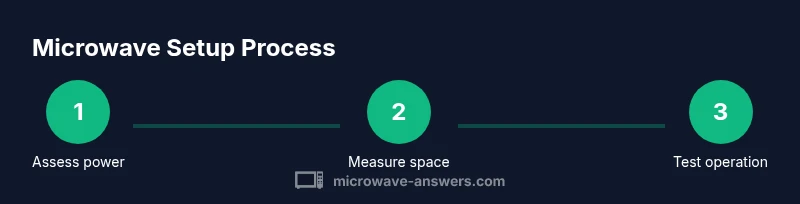
- 1
Assess power needs
Evaluate your camper’s inverter capacity and daily power budget. Determine whether you’ll run the microwave from shore power, from the inverter, or a mix, and plan for peak loads during meal prep.
Tip: Document the microwave’s wattage and any other appliances you commonly run at the same time. - 2
Measure space and select a model
Take precise measurements of counter height, cabinet clearance, and door swing. Pick a compact model that fits without crowding the workspace, leaving room for dishes and utensils.
Tip: Choose a unit with venting options suited to your available space; consider drawer-style if countertop space is extremely tight. - 3
Confirm electrical compatibility
Match the microwave’s wattage with your inverter’s continuous rating and any solar or battery constraints. Plan for a dedicated outlet or hard-wired connection to avoid overload.
Tip: If in doubt, consult your camper’s electrical diagram or a qualified technician before plugging in. - 4
Mount or place securely
Install the unit in a stable location, using mounting kits or non-slip mats. Ensure there is clearance for the door and ventilation, and avoid areas with excess heat or moisture exposure.
Tip: Test stability by giving the unit a gentle shake while powered off. - 5
Connect and run a basic test
Plug the microwave into its outlet, then run a short reheating cycle with a safe container to verify heat distribution and that there is no undue noise or heat buildup.
Tip: Pause between cycles to inspect interior airflow and exterior surfaces for heat. - 6
Learn safe operation
Use microwave-safe containers, vent lids to prevent splatter, and follow defrost guidelines. Avoid metal, sealed jars, and overfilling containers to prevent leaks.
Tip: Label your commonly used containers for easy recognition and safer handling. - 7
Create a maintenance routine
Establish a simple cleaning and inspection routine. Regularly check seals, door integrity, and power cords for wear, and replace parts as needed.
Tip: Schedule a periodic safety check before long trips or seasons of heavy use.
Common Questions
What is the best wattage for a camper microwave?
A camper microwave typically needs a reliable 800–1000W supply, with headroom for surge when starting. Match this to your inverter’s continuous rating to avoid voltage drops or trips.
For most campers, aim for a microwave in the 800 to 1000 watt range and ensure your inverter can handle the surge when starting.
Can I run a microwave from battery power alone?
Running a microwave on battery power alone is challenging unless you have a high-capacity inverter and ample solar or battery storage. Plan for shore power or generator use during cooking.
It’s possible but not practical for most setups; you’ll need a strong inverter and substantial battery reserves.
Is a convection microwave better for campers?
Convection models offer baking and crisping, which can be helpful but add size and cost. If you mainly reheat and defrost, a standard microwave may be sufficient.
Convection adds versatility but takes more space; evaluate how often you’ll bake versus reheat.
Do microwaves require venting in compact spaces?
Ventilation helps with heat management and moisture, especially in tight kitchens. If your setup lacks built-in vents, use an external fan or choose a model with efficient cooling.
Yes, proper venting reduces heat buildup and prolongs the unit’s life.
Are there safety tips for reheating bulky foods?
Stir foods midway, use vented lids, and check internal temperatures to avoid cold spots. Replace overly thick containers with lighter ones if needed.
Stir halfway through to prevent cold centers and ensure safe temperatures.
How do I install a microwave in a small kitchen area?
Choose a model that fits your cabinet opening or countertop space, secure it with mounting hardware, and ensure cords run safely without snagging doors or feet.
Pick a compact model, secure it, and keep cords tidy to prevent accidents.
Watch Video
Main Points
- Plan power and space before buying.
- Ventilation reduces heat buildup in compact kitchens.
- Choose microwave-safe cookware and safe containers.
- Secure installation prevents movement on the road.
- Regular maintenance extends appliance life on trips.