How to thaw chicken in microwave: safe and fast defrost guide
Learn how to thaw chicken in the microwave safely and efficiently using defrost settings, timing tips, and post-thaw cooking guidelines to minimize bacteria risk and ensure juiciness.


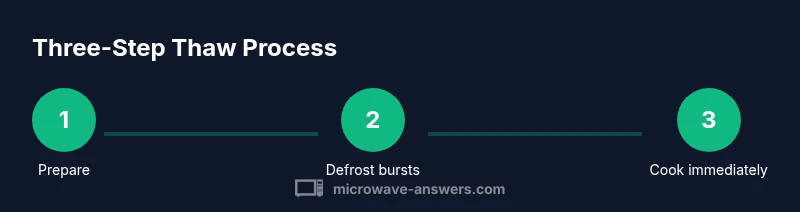
If you’re wondering how to thaw chicken in microwave, use the defrost setting or 30-50% power, turning pieces every few minutes to prevent partial cooking. Thaw only what you’ll cook immediately after removing packaging, and cook to a safe 165°F (74°C) right away. This method is fastest for last-minute meals but requires careful timing.
Why thawing in the microwave is useful
For many home cooks, thawing chicken quickly is essential. The microwave method offers a fast alternative to fridge thawing when you’re pressed for time. It is particularly useful for small portions or boneless cuts that cook more evenly when thawed quickly. According to Microwave Answers, when you need to pull together a weeknight dinner, thawing in the microwave can save you 30-45 minutes compared to fridge thawing, but only if you follow safe practices. The key is to control the heat so that the exterior defrosts without starting to cook the interior. You’ll also want to plan to cook the chicken promptly after thawing to minimize bacterial growth. Largely, the method relies on a balance between power, time, and careful monitoring. In this guide, you’ll learn how to use defrost settings, how to tell when thawing is complete, and how to move from thaw to safe cooking in one smooth workflow.
Safety prerequisites before you start
Before you touch your chicken, set up a clean workspace. Remove all packaging, pat the meat dry to promote even thawing, and keep separate utensils for raw poultry to avoid cross-contamination. Wash your hands with soap and warm water before handling, and sanitize any surfaces the chicken touched. Use a microwave-safe plate or dish and a vented cover if you want to reduce splatter. If you are unsure about the cut’s thickness or bone-in portions, thaw in smaller pieces to improve control. According to Microwave Answers, improper thawing can increase the risk of uneven cooking and bacterial growth if the meat isn’t cooked promptly after thawing.
Defrost settings and power levels explained
Most microwaves offer a dedicated defrost function that uses a lower power setting and shorter, intermittent bursts. If your microwave lacks a defrost button, you can set it to a low power level (about 30-50%) and reduce the timer accordingly. The weight of the chicken matters: a few ounces thawes quickly, while a pound or more will take longer. The goal is to move the meat through its thaw phase without letting any portion reach cooking temperatures. Pause between bursts to check progress and rearrange pieces for even defrosting. Remember: the microwave’s heat can cause ice crystals to melt unevenly, so constant monitoring is essential.
Common mistakes to avoid
- Thawing large portions or whole chickens in one block, which can cause the exterior to begin cooking while the interior remains frozen.
- Not removing packaging; packaging can trap steam and lead to contamination if it deformes or melts.
- Refreezing thawed poultry, which compromises texture and safety.
- Relying on the microwave alone to finish cooking; you must cook to a safe internal temperature immediately after thawing.
- Using high heat and then stopping mid-definition; this can leave hot spots that harbor bacteria.
Timing and monitoring for even thawing
Timing depends on weight, but a practical approach is to thaw in short bursts (2-3 minutes), then check and turn or rearrange the pieces. Thicker portions should be separated into smaller portions to promote even thawing. If you notice edges starting to cook, reduce the power or shorten the bursts further. After thawing, the chicken should be cooked immediately; do not leave thawed poultry at room temperature. Keeping cold-to-cooked transition within a narrow window minimizes bacterial growth and preserves texture. This disciplined approach helps ensure you achieve a safe, even thaw every time.
Handling different cuts and sizes
Boneless, skinless breasts thaw more predictably than bone-in thighs or a bone-in breast thanks to their uniform shape. Cut larger pieces into uniform, smaller portions before thawing to speed up the process and promote even thawing. For bone-in parts, consider thawing in batches rather than as a whole piece. If you’re thawing multiple pieces, space them out to prevent crowding, which can trap cold zones and slow thawing. Remember that the goal is even thawing so you can cook to a safe internal temperature without overcooking the exterior.
Post-thaw handling and cooking guidelines
As soon as thawing completes, cook the chicken immediately to an internal temperature of 165°F (74°C). Use a food thermometer to verify doneness at the thickest part of the meat. Do not reuse thawed juices; discard them or cook them within the same meal to avoid cross-contamination. If you need to marinate, do so after thawing and within a safe timeframe. Proper handling after thawing preserves texture and flavor and reduces food-safety risk. Throughout this process, keep raw poultry separate from ready-to-eat foods and wash all prep surfaces after use. Based on Microwave Answers analysis, following a strict sequence—thaw, cook immediately, and sanitize—minimizes risk while preserving quality.
Authoritative sources
- Authoritative guidance on safe thawing practices from the USDA FSIS: https://www.fsis.usda.gov/food-safety/safe-food-handling-and-preparation/meat-and-poultry-handling-and-preparation
- CDC food safety challenges and safe thawing practices: https://www.cdc.gov/foodsafety/challenges/index.html
- FDA consumer resources on food safety basics: https://www.fda.gov/food/buy-store-ship-food-safe-food/food-safety-information-for-consumers
Quick thawing checklist
- Verify microwave function and power level suitable for defrosting.
- Remove packaging and place on a microwave-safe dish.
- Defrost in short bursts, turning pieces frequently.
- Cook immediately after thawing and verify doneness with a thermometer.
- Clean and sanitize surfaces and utensils after handling poultry.
Tools & Materials
- Microwave with defrost capability(Ensure power level can be controlled for defrost settings.)
- Microwave-safe dish or plate(Shallow, with edges to catch moisture.)
- Ventilated microwave-safe lid or cover(Optional to reduce splatter.)
- Food thermometer(To verify 165°F (74°C) internal temperature.)
- Paper towels or clean towels(For drying and wiping surfaces.)
- Tongs or oven mitts(For safe handling of hot containers.)
- Separate cutting board and utensils(Avoid cross-contamination with other foods.)
Steps
Estimated time: Total time: 15-25 minutes
- 1
Remove packaging
Discard outer packaging and pat the chicken dry with paper towels to promote even thawing.
Tip: Dry surface helps heat transfer and prevents soggy areas. - 2
Place on microwave-safe dish
Set the chicken on a dish, arranging pieces in a single layer to maximize exposure to the defrost heat.
Tip: Avoid stacking pieces; crowding slows thawing. - 3
Select defrost or low power
Choose the defrost function or set the microwave to 30-50% power depending on your model.
Tip: Lower power reduces cooking risk at the edges. - 4
Defrost in short bursts
Run 2-3 minute bursts, pausing to check progress and rearrange pieces for even thawing.
Tip: If edges start to look cooked, shorten bursts or lower power. - 5
Turn and separate pieces
Flip and separate thicker portions to improve uniform thawing.
Tip: Even thawing prevents overcooked edges. - 6
Check thaw status
Ensure all parts feel pliable and any remaining ice is gone before cooking.
Tip: If still icy, continue in short bursts rather than extending time. - 7
Cook immediately
Proceed to cooking right after thawing to minimize bacterial growth.
Tip: Use a thermometer to confirm 165°F (74°C).
Common Questions
Is it safe to thaw chicken in the microwave?
Yes, it’s safe when you use the defrost setting or low power and cook the chicken immediately after thawing to a safe internal temperature of 165°F (74°C).
Yes. Use defrost or low power and cook right away to 165 degrees.
How long does thawing take in the microwave?
Thaw times vary by weight and cut. Smaller portions thaw faster; check and rotate pieces frequently and use short bursts to prevent cooking surfaces.
Thaw times depend on weight; check and rotate frequently and use short bursts.
Can I thaw a whole chicken in the microwave?
Whole chickens are not ideal for microwave thawing. It’s better to thaw smaller portions or portioned cuts to ensure even thawing and safe cooking.
A whole chicken isn’t ideal for microwaving; better to thaw pieces.
What should I do if parts start cooking during thawing?
If spots begin cooking, reduce power, shorten bursts, and flip or rearrange the pieces. Finish thawing with lower heat and cook immediately.
If parts start cooking, lower the power and rearrange, then cook promptly.
Should I rinse the chicken after thawing?
Rinsing is not recommended because it can spread bacteria. Pat dry if needed and proceed to cooking.
Avoid rinsing; pat dry and cook right away.
Watch Video
Main Points
- Always thaw chicken in small portions for even defrosting
- Cook thawed chicken immediately to 165°F (74°C)
- Use defrost or low power with short bursts and turn pieces often
- Prevent cross-contamination by separating raw poultry from other foods