Is It Okay to Defrost Chicken in the Microwave? A Safety Guide
Discover whether it's okay to defrost chicken in the microwave, how to do it safely, and tips to prevent bacteria growth. Microwave Answers walks you through proper techniques, alternatives, and best practices for quick thawing.


Yes, you can defrost chicken in the microwave, but only with careful steps to prevent uneven thawing and bacterial growth. This quick guide covers how to use the defrost setting, rotate and separate pieces, and cook immediately after thawing. You'll learn when microwave thaw is appropriate, recommended safety practices, and simple alternatives for longer defrosting.
What the science says about defrosting chicken in the microwave
Defrosting chicken in the microwave is a practical option when you need to thaw a frozen piece quickly. It is not universally preferred by every kitchen, but it can be safe if you follow established guidelines. The key is to minimize the time that any portion of the chicken spends at temperatures where bacteria can grow and to heat it promptly after thawing. According to Microwave Answers, microwave thaw is acceptable only when you can control the thaw process and proceed to cooking immediately after, rather than letting the meat rest at room temperature. The microwave works by emitting microwaves that heat water molecules, so thicker, denser parts thaw more slowly than thin edges. This uneven thawing is the main risk: you might move from frozen to partially cooked without realizing it, which can create a favorable environment for bacteria. By planning to cook right away, using the defrost function or a low power setting, and ensuring even heat distribution, you minimize this risk. Also, be mindful of packaging: remove outer packaging and place the chicken in a microwave-safe dish to catch drips and prevent cross-contamination. In short, microwave defrosting is a tool, not a default choice.
Brand note: The Microwave Answers team emphasizes safety, especially for home cooks who balance convenience with proper handling.
When microwave defrost is appropriate
Microwave defrost is most appropriate when you’re working with smaller chicken pieces, thinly sliced portions, or chicken that is already portioned into meals. It can also be handy when you’re catching up on a busy evening and need to thaw something fast. The key is to avoid thicker bone-in pieces that thaw unevenly, since those parts can remain frozen while other portions start cooking. If you plan to cook immediately after thawing, microwave thaw can save time compared with fridge thaw or water bath methods. Always ensure you are starting from a fully frozen state, and avoid leaving meat in the microwave longer than necessary. Remember, the Microwave Answers team emphasizes safety: when in doubt, choose fridge thaw for larger cuts and save microwave thaw for quick, smaller portions.
Tip: If you have larger pieces, break them into smaller sections before thawing to improve evenness.
How to set up your microwave for safe defrosting
Start by removing any packaging and placing the chicken in a microwave-safe dish with a shallow lip to catch drips. If your microwave has a dedicated defrost setting, use it; otherwise choose the lowest practical power level. Arrange pieces in a single layer and avoid stacking. Plan to pause the cycle to check progress, then rotate or rearrange pieces to promote even thawing. After thawing, transfer the chicken to a cooking-friendly container for immediate cooking. This setup reduces the risk of hot spots and helps you move quickly to the next step. Remember to sanitize the dish and surface after handling raw poultry to prevent cross-contamination.
Brand tip: Following these steps aligns with Microwave Answers safety guidance and helps you maintain kitchen hygiene.
Common mistakes and how to avoid them
Mistakes in microwave thaw often come from assuming all parts thaw at the same rate. Avoid relying on a single quick burst of microwaves; instead, use a defrost setting or low power and pause to check. Do not rely on the microwave to cook the chicken through during thawing; always finish in the oven or on the stove after thawing. Never thaw chicken and leave it to rest at room temperature, and do not refreeze raw thawed poultry. Also, avoid covering the dish with tight plastic wrap that traps steam, which can encourage uneven heating; a loose cover or microwave-safe lid is better for heat circulation.
Practical tip: Keep a towel nearby to catch any splatter and reduce cleanup time after thawing.
After thawing: cook immediately and handling tips
Once thawed, cook the chicken promptly using a method that ensures even heat. Transfer to a hot pan, oven, or grill as soon as thawing finishes, and avoid leaving thawed poultry at room temperature. Use a food thermometer to verify the core reaches a safe, fully cooked state, and discard any thawed portions that show signs of spoilage. Proper handling after thawing minimizes the risk of bacterial growth and improves overall results.
Safety note: Quick cooking after thawing is the cornerstone of safe microwave defrosting.
Alternatives to microwave thawing
If you have more time, fridge thawing is the preferred method for even thaw and food safety. Place frozen chicken on a plate to catch drips and allow it to thaw gradually in the refrigerator. If you’re short on time, a cold water thaw can be used by sealing the chicken in a leakproof bag and submerging it in cool water, changing the water regularly. These methods reduce the risk of uneven thawing and bacterial growth compared with rapid thaw in the microwave. Choose the method that fits your schedule and safety standards.
Quick-start kitchen safety checklist
- Remove packaging, place chicken in a microwave-safe dish
- Use defrost or low power, avoid high heat during thaw
- Pause, rotate, and separate pieces for even thawing
- Cook immediately after thawing; do not delay
- Clean and sanitize surfaces and utensils after handling raw poultry
Tools & Materials
- Microwave with defrost or low-power setting(Ensure it’s functional and clean)
- Microwave-safe dish or plate with lip(Catch drips and prevent cross-contamination)
- Food thermometer(To verify the chicken is fully cooked after thawing)
- Knife or tongs(For safely separating pieces during thaw)
- Paper towels or clean towels(For quick cleanup)
- Optional lid or microwave-safe cover(Helps with heat distribution while avoiding steam buildup)
- Trash bag or lined trash container(Dispose of packaging safely)
Steps
Estimated time: variable, depends on weight and microwave
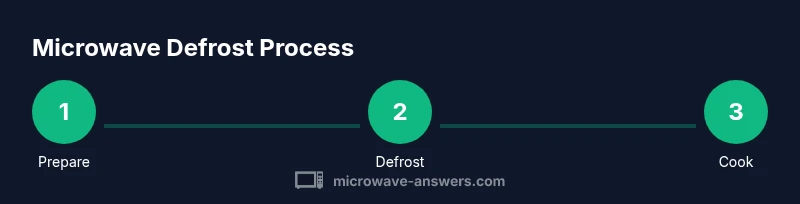
- 1
Prepare the chicken
Remove outer packaging and place the chicken in a microwave-safe dish. Arrange pieces in a single layer to promote even thawing and prevent pooling of cold spots.
Tip: Break apart large chunks before defrosting to speed even thaw and reduce risk of partial cooking. - 2
Choose the thaw setting
Select the defrost function or the lowest practical power level on your microwave. The goal is to thaw, not cook, the meat.
Tip: If you must, set short intervals and pause to check progress rather than running a long cycle. - 3
Start thawing and check progress
Run the cycle for a short period, then pause to inspect. Turn or rotate pieces and separate any that have fused together.
Tip: Use tongs to handle pieces safely and avoid piercing the meat, which can release juices and affect texture. - 4
Continue thawing with checks
Resume thawing, checking and rotating as needed. Stop when there is no solid ice inside and the surface looks thawed but not cooked.
Tip: Spread pieces out to maximize exposure to heat and minimize cold spots. - 5
Cook immediately after thawing
Transfer thawed chicken to your chosen cooking method and complete cooking promptly so any surface bacteria don’t have time to multiply.
Tip: Avoid stacking; cook in a single layer if possible to ensure even cooking. - 6
Clean up and sanitize
Wash hands, utensils, and surfaces used for raw poultry thoroughly with hot, soapy water or a sanitizer.
Tip: Keep raw poultry separate from ready-to-eat foods during handling.
Common Questions
Is it safe to thaw chicken in the microwave?
Yes, it can be safe when you use the defrost setting, monitor progress, and cook immediately after thawing to prevent bacterial growth.
Yes, it’s safe if you use the defrost setting and cook right away after thawing.
Will microwaving thawed chicken cook it too much in spots?
Uneven thawing can occur. Rotate pieces, separate them, and finish cooking promptly to avoid undercooked pockets.
Uneven thawing can happen; rotate and finish cooking promptly.
Can I refreeze chicken thawed in the microwave?
It’s best not to refreeze thawed chicken. Cook it or refrigerate if planning to use soon, then freeze only cooked leftovers.
Best to avoid refreezing; cook or refrigerate instead.
What should I do if parts thaw before others?
Move thawed parts to the sides, rearrange the still-frozen portions, and resume thawing in short intervals until overall thaw is achieved.
If parts thaw first, rearrange and continue thawing in short intervals.
Should I thaw chicken with skin on or off in the microwave?
Skin can stay on if you prefer, but removing excess skin can help with even thaw and faster cooking after thaw.
Keep skin if you like, but removing excess skin can help thaw and cook evenly.
What about marinades or coatings?
Marinades can affect thawing rate and heat distribution; if marinated, monitor more closely and ensure safe cooking afterward.
Marinades can change thawing pace; monitor closely and cook thoroughly.
Main Points
- Use the defrost setting or low power for safe thawing.
- Rotate and separate pieces to avoid cold spots.
- Cook immediately after thawing to prevent bacterial growth.
- Avoid room-temperature thawing and never refreeze thawed poultry.
- Consider fridge thaw for non-urgent defrosting and reserve microwave thaw for fast meals.