Can Microwave Cook Chicken? Safe, Quick Methods
Explore safe, practical methods to cook chicken in a microwave with step-by-step guidance, temperature targets, and troubleshooting from Microwave Answers.


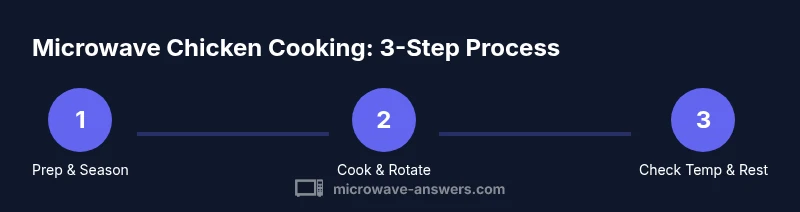
Yes, the question can microwave cook chicken has a practical answer: you can cook chicken in a microwave, but you must follow safety rules for threshold temperatures and even heating. Use a microwave-safe dish, cut chicken into uniform pieces, and cover to trap heat, turning midway. Check for 165°F (74°C) internal temperature.
Can the Microwave Cook Chicken? Fundamentals
The short answer is yes, and understanding the fundamentals helps you cook chicken safely and evenly in a microwave. When you ask can microwave cook chicken, you’re really asking about safe heating, even heat distribution, and avoiding cold zones that harbor bacteria. According to Microwave Answers, success relies on cutting chicken into uniform pieces, using a microwave-safe dish, and covering loosely to trap steam while allowing moisture to escape. This combination minimizes drying out while promoting uniform doneness. In practice, start with boneless, skinless cuts or thin breast fillets, which heat more evenly than a whole piece. Always rely on a meat thermometer to verify internal doneness rather than color alone. The basic principle is to heat gently, rotate or stir during cooking, and reach a minimum internal temperature of 165°F (74°C).
Safe Temperatures and Food Safety for Microwave-Chickened Dishes
Food safety is non-negotiable when cooking poultry, even in a microwave. The key temperature target for safe chicken is an internal temperature of 165°F (74°C) measured with a calibrated thermometer in the thickest part of the meat. Because microwaves heat unevenly, the thermometer should test at multiple spots. According to Microwave Answers analysis, ensuring even heat distribution is the biggest safety factor. Allowing the meat to rest a few minutes after microwaving helps carry residual heat to nearby portions, improving overall safety. Avoid partial cooking and refrigerating leftovers for longer than 3-4 days. If starting from thawed or partially frozen chicken, plan for longer cook times and check temperatures frequently. By following these guidelines, you can minimize foodborne illness risks and enjoy a quick, safe microwave meal.
Prep, Equipment, and Meal Planning
Before you microwave chicken, assemble a simple, reliable setup. You’ll need a microwave-safe dish (glass or ceramic) with a vented lid or microwavable wrap to trap steam. A digital or instant-read thermometer is essential to verify doneness. Trim excess fat and cut chicken into uniform portions, ideally about 1 inch thick, to promote even cooking. Lightly season or brush with a small amount of oil to help moisture retain. Plan to cook in batches if you’re preparing multiple portions, since an overcrowded dish creates hot spots. By preparing your ingredients and tools ahead of time, you can reduce cooking time and improve safety. Microwave Answers’ guidance emphasizes organization and precise portions to achieve consistent results.
The Best Microwave Techniques and Settings
To maximize safety and quality, cook chicken on a microwave-safe dish in a single layer, if possible. Start with medium-high heat or 70–80% power, and cook in short intervals (2–5 minutes, depending on thickness). After each interval, rotate or rearrange the pieces to promote even heating. Keep the dish loosely covered to trap steam but prevent sogginess. Check the internal temperature at multiple spots; return to the microwave if needed until all portions reach 165°F (74°C). Let the meat rest for 2–5 minutes after cooking so the juices redistribute. This approach minimizes overcooking while ensuring safety and flavor.
Common Mistakes and How to Fix Them
Common errors include undercooking due to uneven heating, using too little moisture, or failing to verify the temperature. If heat pockets remain, pause, stir or rearrange pieces, and continue in short bursts. Avoid washing raw chicken before microwaving, as splashes can spread bacteria. If chicken looks pink or cool in the center, extend cooking time and retest. Resting the meat after cooking helps reach a safe final temperature across all portions. By avoiding these mistakes, you’ll reduce risk and improve texture.
Recipes and Serving Ideas
Microwave-cooked chicken can be the centerpiece of a quick weeknight meal. Slice cooked pieces and toss with a hot pan-sautéed vegetables, or mix into a quick salad, wrap, or grain bowl. For extra moisture, finish with a light glaze or squeeze of lemon juice. Pair with steamed broccoli, quinoa, or brown rice for a balanced, fast, safe dinner. If you’re meal-prepping, portion cooked chicken into airtight containers, label with date, and refrigerate for up to 3–4 days.
Tools & Materials
- Microwave-safe dish (glass or ceramic)(Shallow, wide dishes promote even heating; avoid metal.)
- Ventilated lid or microwave-safe wrap(Allows steam to escape while preventing splatter.)
- Instant-read meat thermometer(Check multiple spots for 165°F (74°C). Thickness affects accuracy.)
- Sharp knife and cutting board(Cut chicken into uniform pieces (about 1 inch thick).)
- Tongs or spatula(Use to turn pieces without piercing meat.)
Steps
Estimated time: 25-40 minutes
- 1
Prepare and portion chicken
Pat dry and trim excess fat. Cut chicken into uniform pieces (about 1 inch thick) to ensure even cooking. Season lightly if desired and set up your dish.
Tip: Uniform pieces equal faster, more reliable doneness. - 2
Arrange in a single layer
Place pieces in a single layer on the microwave-safe dish, leaving space between them for heat circulation.
Tip: Crowding creates uneven heating and cold spots. - 3
Cover and set power
Cover with a vented lid or wrap and set microwave to 70–80% power to reduce drying.
Tip: Lower power improves even heating; avoid high heat for thick pieces. - 4
Cook in intervals and rotate
Cook in 2–5 minute bursts, rotating or rearranging halfway through each interval.
Tip: Rotation prevents hot spots; don’t skip this step. - 5
Check temperature and rest
Probe thickest part with a thermometer to ensure 165°F (74°C). Rest 2–5 minutes before serving.
Tip: Resting helps juices redistribute and finishes carryover heating. - 6
Serve or store safely
Serve immediately or refrigerate leftovers within 2 hours; reheat to 165°F if serving later.
Tip: Label and date refrigerated portions for safe storage.
Common Questions
Is microwave cooking of chicken safe for everyday meals?
Yes, microwave cooking is safe when you reach 165°F (74°C) in all portions and handle the meat properly. Use a thermometer and avoid undercooking.
Yes—it's safe as long as you reach 165°F and handle it properly.
Can I microwave chicken from frozen?
Yes, but it requires longer cook times and careful temperature testing in multiple spots to ensure even doneness.
Yes, you can, but you’ll need longer cooking and careful temperature checks.
Should I rinse chicken before microwaving?
No. Rinsing can spread bacteria. Pat dry and cut evenly to promote even cooking.
No—rinsing isn’t recommended; pat dry instead.
What cuts work best for microwaving chicken?
Boneless, thin cuts like sliced breasts or cutlets work best for even heating in a microwave.
Boneless, thin cuts heat more evenly in the microwave.
What’s a quick way to add flavor without drying out the meat?
Light oil or a small amount of sauce can help moisture; season lightly and avoid heavy marinades that break down quickly in microwaves.
A light coating helps keep moisture without overwhelming the microwave cooking.
Watch Video
Main Points
- Cook chicken to 165°F (74°C) for safety
- Use uniform pieces and rotate for even heating
- Always use a microwave-safe dish with vented cover
- Rest briefly after cooking to finish carryover heating