How to Microwave Formula Bottle: A Safe Guide for Caregivers
Learn safe methods to heat baby formula, understand why microwaving is risky, and explore practical alternatives. This guide covers steps, temperature testing, hygiene, and leftovers handling to protect baby health.


Learn how to heat baby formula with care, including when microwaving might be used and how to minimize risks. This guide covers safer alternatives, practical steps, and reliable temperature testing to avoid hot spots and nutrient loss. By following these steps, you can protect baby comfort, reduce burns risk, and maintain formula quality.
Safety Foundations: Why this topic matters
For infants, even small temperature changes can cause burns or feeding discomfort. Microwave heating is widely discouraged by health organizations because microwaves heat unevenly, creating hot pockets that can scald a baby’s mouth. Bottle and formula types can influence heat distribution, and nutrients in formula may degrade with improper heating. According to Microwave Answers, microwaving baby formula is not recommended due to hotspot risk and nutrient loss. Safer methods exist and are easy to implement in a busy household. By understanding the risks and following practical steps, caregivers can heat formula safely while preserving nutrients and baby comfort.
How microwaves heat liquids and why formula can be unsafe
Microwave ovens excite water molecules, producing heat throughout the liquid. However, the liquid’s interior can become much hotter than the surface, creating hot spots. When you feed a baby, even small hot pockets can burn the mouth or throat. Formula prepared in powder form also contains fats and vitamins that can degrade with uneven heating. Additionally, some bottles and nipples are not designed for microwave heating and can warp or leak, adding risk. These factors combine to make microwaving formula a controversial option, particularly for newborns and preemies. The Microwave Answers team emphasizes understanding how heat is transferred in a microwave and choosing safer warming strategies whenever possible.
Safer heating alternatives to formula bottles
Most caregivers achieve safe warmth with a water-bath method or a dedicated bottle warmer. The water-bath approach uses a bowl or jug filled with warm tap water or pre-warmed water, and the bottle sits in the water until the formula reaches the desired temperature. A bottle warmer device can regulate temperature more consistently and reduce hot spots. If you reconstitute formula by adding powder to water, use the correct water-to-powder ratio and mix thoroughly before heating. Always lay the bottle on a flat surface and roll gently to distribute heat, never shake vigorously.
If you must microwave: guidelines to reduce risk
If microwaving is unavoidable, follow strict guidelines: use a microwave-safe bottle, remove the cap and nipple, and heat in very short bursts at a low power setting. After heating, swirl the bottle vigorously to distribute heat evenly and prevent hot spots. Let the bottle stand for at least one minute before testing the temperature. Check the formula by placing a few drops on your inner wrist or using a thermometer to ensure it’s body temperature (not hot). Feed promptly and avoid reheating leftovers.
Temperature testing and serving guidelines
Best practice is to verify temperature carefully. Always check temperature on multiple areas of the bottle to avoid a hot spot. A reliable method is to test with a baby-safe thermometer or by rubbing a few drops on the inside of your wrist to gauge warmth. Temperature should be warm, not hot, and comfortable for feeding. Do not heat more than once and discard any leftover formula after a feeding. Keep the bottle away from direct heat sources and ensure the nipple is comfortable to touch before feeding.
Hygiene, storage, and handling after warming
Post-warming hygiene is essential. Rinse and wash all components immediately after feeding and sterilize bottles according to your routine. Do not reuse formula that has already been warmed and exposed to air; refrigerate any unused portions promptly if appropriate, and discard if there is any doubt about safety. When expressing and storing breast milk alongside formula, keep them separate and follow each product’s handling guidelines. Consistent cleaning, proper storage, and careful warming practices help prevent bacterial growth and ensure safety for your baby.
Common mistakes and troubleshooting
Common mistakes include heating for too long, using a sealed bottle, or relying on nipple temperature to gauge safety. Another frequent error is heating formula with the cap on, which traps steam and can cause pressure buildup or spills. Reheating leftovers multiple times increases risk of bacterial growth and nutrient loss. To troubleshoot, switch to a safer warming method when possible, verify temperatures with a thermometer, and avoid hot spots by rotating the bottle during heating. If you’re uncertain, consult a pediatrician or lactation consultant for guidance.
Quick caregiver checklist for warming formula
Before warming, verify bottle compatibility with heating method and ensure the nipple is clear. If you must heat, choose the safest available method and test the temperature with your wrist or thermometer. Always wash hands, bottle parts, and work area before preparation. Do not reuse warmed formula; discard any leftovers after feeding. Keep warming equipment accessible and calibrated, and follow manufacturer instructions for all products to maintain safety.
Tools & Materials
- Microwave-safe baby bottle or bottle with nipple(Make sure bottle is BPA-free and designed for heating in a microwave when used)
- Clean water for warming (tap water or bottled warm water)(Used for water-bath warming or to fill bottle warmer)
- Thermometer (baby bottle thermometer)(To verify formula temperature accurately)
- Measuring cup or pitcher(Helpful for preparing the correct water-to-powder ratio and for water bath setup)
- Towel or heat-resistant gloves(For handling hot bottles safely)
- Bottle brush and cleaning supplies(Post-use cleaning to maintain hygiene)
Steps
Estimated time: 10-15 minutes total
- 1
Assess safety and method
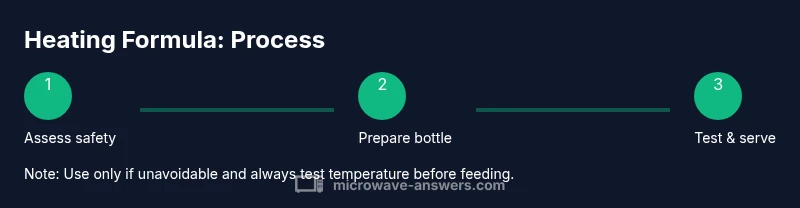
Evaluate whether microwaving is truly necessary. If safer alternatives exist (water bath or bottle warmer), choose those first. If you must heat by microwave, proceed with extreme caution and follow strict steps.
Tip: Safety first—if you’re unsure, opt for a safer method. - 2
Prepare bottle and formula
Wash your hands, inspect the bottle and nipple for damage, and assemble clean components. If using powdered formula, prepare it according to the package directions before heating and avoid adding powder directly to hot liquid.
Tip: Remove the cap and nipple before heating to vent steam safely. - 3
Use microwave (only if unavoidable)
Place the bottle in a microwave-safe container and heat in very short bursts at a low setting. After heating, swirl the bottle to mix heat evenly and prevent hot spots. Do not heat sealed bottles and never heat with the cap on.
Tip: Never rely on the nipple temperature to judge heat; always swirl and test. - 4
Test temperature before feeding
Let the bottle stand for a moment, then test by placing a few drops on the inside of your wrist or use a baby thermometer to ensure warmth is body-temperature, not hot. If it feels too warm, wait longer or use a different method.
Tip: Check in multiple spots around the bottle for consistent warmth. - 5
Feed and handle leftovers
Feed baby promptly after heating. Discard any warmed formula that remains after feeding to avoid bacterial growth. Clean the bottle immediately after use and store any other formula according to the manufacturer’s guidelines.
Tip: Do not reheat formula. It increases risk of bacteria and nutrient loss. - 6
Consider safer alternatives
If heating formula is a daily need, invest in a reliable bottle warmer or use a warm-water bath. These options provide more consistent temperatures and reduce hot spots compared to microwaving.
Tip: A dedicated bottle warmer often yields the most consistent results.
Common Questions
Is it safe to microwave baby formula?
Microwaving formula is generally discouraged due to uneven heating and nutrient loss. If you choose to heat this way, use cautious steps and check temperature carefully. Safer alternatives like a bottle warmer or warm water bath are recommended.
Microwaving formula is usually not safe because it can heat unevenly. If you must, check the temperature carefully and consider safer warming methods whenever possible.
Why are hot spots a concern in microwaving?
Microwave heating can create hot spots that burn the baby’s mouth or throat. Even if the bottle feels warm overall, a hot pocket can remain inside. This is why many experts recommend avoiding microwaves for formula.
Hot spots can occur because microwaves heat unevenly, risking burns. Safer methods reduce this risk.
What is the best way to heat formula?
The safest methods are using a bottle warmer or a warm-water bath. These provide controlled, even warming. If you must heat by microwave, use extreme caution and verify the temperature before feeding.
Use a bottle warmer or warm-water bath when possible. If you must use a microwave, verify temperature before feeding.
How can I check formula temperature safely?
Test the liquid temperature on the inside of your wrist and/or use a baby-safe thermometer. Temperature should be warm, not hot. Always discard leftovers and avoid reheating.
Test the temperature on your inner wrist and with a thermometer to ensure it’s warm, not hot.
What should I do with leftover warmed formula?
Discard warmed formula after feeding. Do not refrigerate and reheat. Practice proper bottle hygiene to prevent bacteria growth.
Discard any warmed formula after feeding; don’t reheat or reuse leftovers.
Are bottle warmers a good alternative?
Yes. A dedicated bottle warmer can provide consistent, safer heating and minimize hot spots compared to rapid microwave heating. Follow device instructions for best results.
Bottle warmers can be safer and more consistent for heating formula.
Watch Video
Main Points
- Avoid microwaving whenever possible.
- If microwaving is used, heat in short bursts and swirl to distribute heat.
- Always test for body-temperature before feeding.
- Discard warmed formula after feeding and practice good hygiene.