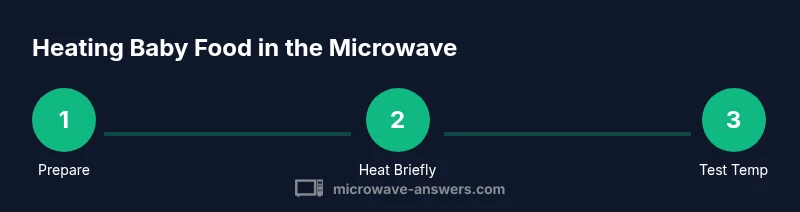
When Can You Microwave Baby Food? A Practical Safety Guide
Discover when it's safe to microwave baby food, how to heat evenly, test temperature, and protect your baby's safety and nutrients with practical steps from Microwave Answers.


You can microwave ready-to-eat baby foods and purees with care. Use a microwave-safe container, heat in short bursts, and stir well after each interval. Check the temperature by testing on your inner wrist before feeding. Avoid overheating, scorching, or concentrated heat, and never microwave for longer than needed. When in doubt, prefer steaming or warming methods.
Why Timing Matters for Heating Baby Food
Heating baby food in a microwave is convenient, but timing and technique matter for safety and nutrition. Uneven heating can create hot pockets that burn a baby's mouth while other parts stay chilly and may harbor bacteria. According to Microwave Answers, heating in short, even intervals helps distribute heat more uniformly and reduces temperature spikes. Start with small portions in a shallow, microwave-safe dish to promote rapid and even warming. If you feed straight from the container, transfer to a clean bowl first to avoid contamination. The goal is a uniform, lukewarm temperature that is comfortable to the touch and safe for delicate taste buds. While the microwave can save time, it demands attention to texture and temperature. The form, humidity, and volume of food all influence how quickly heat travels. Heat travels unevenly through dense purees and thicker textures, so you must balance time and power. By thinking in terms of intervals, not minutes, you minimize hot spots and keep nutrients more intact, which aligns with Microwave Answers' practical approach to everyday kitchen safety.
Safe Heating Standards: Power, Time, and Temperature
When warming baby food, choose low to medium power rather than full power. This setting helps heat the contents more evenly and reduces the risk of scorching the outside while the inside remains cold. Use short bursts—typically 15 to 30 seconds for small portions—and stir between intervals to distribute heat. After each burst, test the temperature in several spots by touching the surface with your wrist or by checking the inside of the spoon. The goal is body-temperature warmth, not boiling heat. Always use a microwave-safe container and keep the dish shallow to promote even heating. If your microwave runs hot, reduce time or switch to a lower power setting. Microwave Answers emphasizes that consistency beats sheer speed: steady, moderate heating preserves texture and nutrients better than rapid, intense heating.
Which Foods Are Best for Quick Warming in the Microwave
Most baby foods heat best when they are smooth and uniform in texture. Purees, single-ingredient vegetables, and finely mashed fruits heat more evenly than chunky mixtures. If you are warming stage-appropriate foods, avoid large lumps and stir to break up any dense pockets. For babies just beginning solids, consider thinning thicker purees with a little breast milk or formula to reach a pourable consistency. This helps you control the texture while warming. Always ensure the food is freshly made or properly stored; reheating stale or previously opened foods can raise safety concerns. The Microwave Answers team notes that the method matters as much as the food: smoother textures heat more predictably, reducing the need for multiple reheats.
How to Heat in Short Bursts: Step-by-Step Heating Protocol
Heating should be done in short bursts with stirring between intervals. Start with a small portion in a shallow microwave-safe bowl and heat on a low to medium setting for 15–30 seconds. Remove, stir thoroughly, and rotate the dish to promote even heating. After stirring, test at the center and edge to check for hotspots. If the center is not warm enough, repeat the heating and stirring cycle in 10- to 15-second increments until the entire portion feels lukewarm. Once warmed, let the food rest for a moment to dissipate residual heat and reduce the risk of scalding. Finally, transfer to a baby-safe feeding dish and verify temperature again before serving. Serve a tiny amount first and wait a minute to observe your baby's reaction before offering more. Refrigerate any leftovers promptly within two hours. Estimated total time: 10–15 minutes.
Stirring, Testing, and Serving Temperature
Stirring is not just for appearance; it ensures an even distribution of heat across the entire portion. After the final heating, test the temperature with the back of your wrist or the inside of your elbow and keep it within a comfortable, slightly warm range. If needed, add a splash of breast milk or formula to adjust the texture—but do not add hot liquid that could raise the temperature too quickly. Never test with a spoon from your mouth; use a clean spoon to sample. Serve a tiny amount first and wait a minute to observe your baby's reaction before offering more. Remember to use clean utensils and avoid rewarming leftovers more than once. By following these practices, you reduce burn risk and support safe feeding routines.
Tips to Preserve Nutrients and Texture
Preserving nutrients means heating gently and avoiding prolonged exposure to heat. Keep liquids minimal to maintain the food's natural moisture; if you need to thin the puree, add expressed breast milk or water after heating, not before. Always choose fresh foods or properly stored leftovers, because spoilage compounds can form during warming. Using a shallow dish with a vented lid helps the heat spread more evenly while containing splatter. Consider starting with a smooth, thin puree when your baby is new to solids, then gradually increase texture as tolerance allows. The right texture also makes feeding easier for the baby and reduces choking risk. Finally, remember that every microwave is different; you may need to adjust intervals and power based on your appliance's wattage.
Common Mistakes to Avoid
Avoid overheating or boiling hot pockets; never use metal containers; do not microwave baby food in sealed containers; never reheat more than once; avoid using pouches in microwave due to inconsistent heating; never heat baby food directly in the mason jar; avoid heating honey or cow's milk for infants under one year.
Special Considerations for Breastmilk and Formula
Breastmilk should never be microwaved; microwaving can create hot spots that burn a baby. Instead, warm by placing the bottle in a bowl of warm water or using a bottle warmer. If you must test, swirl gently to distribute heat. For formula, warm the prepared bottle using the same water-bath method and never rely on microwaving to heat evenly. Any formula leftovers should be discarded after feeding.
When to Skip the Microwave: Alternatives and Safe Methods
If you prefer not to use the microwave, you can gently warm foods in a steamer or a warm water bath until the desired temperature is reached. A stove-top splash-free method works well for thicker textures, and simply mashing or adding a little breast milk or formula can help achieve a suitable consistency. Always confirm the final temperature before feeding and avoid cooldown surprises by testing on the inside of your wrist.
Quick Safety Checklist Before Feeding
- Use microwave-safe, shallow containers with a vented lid.
- Heat in short bursts and stir often.
- Test the final temperature on your inner wrist.
- Avoid overheating and hot spots.
- Check texture for smoothness and safety.
- Store leftovers promptly and reheat no more than once.
Tools & Materials
- Microwave-safe bowl/container(Glass or BPA-free plastic; shallow for even heating)
- Spatula or spoon(for thorough stirring)
- Food thermometer(to ensure lukewarm temperature (below 40C/104F))
- Microwave-safe lid or vented cover(to reduce splatter and help heat distribution)
- Kitchen timer(to manage short heating bursts)
- Paper towels or clean cloth(for quick clean-up and spills)
Steps
Estimated time: 10-15 minutes
- 1
Choose a microwave-safe container
Pick a shallow, microwave-safe bowl or plate. Avoid metal and ensure the surface is smooth to promote even heating. Transfer only the portion you plan to serve to minimize waste.
Tip: Pro tip: a shallow dish heats more evenly than a deep one. - 2
Transfer and prepare the portion
Move the baby food from its original package into the chosen container. If babies are starting solids, thin thicker textures with a little breast milk or formula to reach a pourable consistency.
Tip: Pro tip: label containers with date to track freshness. - 3
Heat in short bursts
Heat on a low to medium setting for 15–30 seconds. For larger portions, extend in small increments while watching surface temperature.
Tip: Pro tip: if your microwave runs hot, reduce time slightly. - 4
Stir and rotate the dish
Remove the dish and stir thoroughly, rotating it to mix edges with the center to eliminate cold spots.
Tip: Pro tip: a silicone spatula works best for smooth mixing. - 5
Test the temperature
Place a small amount on your inner wrist or use a thermometer to ensure it feels lukewarm, not hot. Do not rely on color or steam alone.
Tip: Pro tip: always test before offering to your baby. - 6
Adjust texture or temperature
If the food is too thick, add a splash of breast milk, formula, or water after heating. If it’s too thin, heat a little longer in small bursts.
Tip: Pro tip: re-stir after any liquid addition. - 7
Let it rest briefly
Allow the warmed portion to rest for a minute. This helps equalize heat and avoids scorching your baby's mouth.
Tip: Pro tip: place a finger on the surface to check warmth before serving. - 8
Transfer to feeding dish
If you heated in a generic container, pour the food into a baby-friendly feeding dish. Ensure the dish is clean and ready for use.
Tip: Pro tip: use a clean spoon for final tasting. - 9
Do a final temperature check
Quickly re-test the final portion to confirm it’s comfortably warm. A thin layer on the inside of the wrist is usually enough.
Tip: Pro tip: if your baby is new to solids, introduce gradually. - 10
Store leftovers safely
If you have any remaining warmed food, refrigerate promptly in a sealed container and use within the recommended timeframe. Do not reheat more than once.
Tip: Pro tip: label with date and discard after the stated window.
Common Questions
Is it safe to microwave baby food?
Yes, with precautions: heat in short bursts, stir often, and test temperature to ensure lukewarm servings. Use only microwave-safe containers and avoid overheating. If in doubt, opt for safer warming methods like a water bath.
Yes, you can warm baby food in the microwave, but always heat in short bursts and test the temperature to ensure lukewarm safety.
Can I microwave formula or breast milk?
Breast milk should never be microwaved due to hotspot risk. Warm by placing the bottle in warm water or using a bottle warmer. Formula can be warmed by similar methods; never rely on microwaving to heat evenly.
Breast milk should not be microwaved. Use warm water or a bottle warmer; formula should be warmed by the same gentle method.
How do I test for hotspots?
Stir the food well and test small amounts on the inside of your wrist or with a thermometer. If any part feels notably hotter than another, reheat in shorter bursts and stir again.
Test a small amount on your inner wrist after heating and stir thoroughly to check for hotspots.
Are pouch foods safe in the microwave?
Pouches can heat unevenly; if you microwave contents from a pouch, transfer to a dish first and vent the lid. Always inspect for even warmth before feeding.
Pouches aren’t always safe to heat directly; transfer to a dish and heat evenly, then test the temperature.
How long can warmed food sit out?
Warmed baby food should be fed promptly or refrigerated within two hours. Do not leave out at room temperature for extended periods, as bacteria can grow.
Keep warmed food to feed promptly or refrigerate within two hours to stay safe.
What if there are lumps in a puree?
For babies new to solids, ensure textures are smooth or finely mashed. If lumps persist, blend briefly or add liquid to achieve a pourable consistency before reheating.
If there are lumps, smooth the puree until it’s easily spoonable and safe for your baby to swallow.
Watch Video
Main Points
- Heat in short bursts and stir thoroughly.
- Test temperature on the inner wrist before serving.
- Use microwave-safe containers and vented lids.
- Avoid overheating; aim for lukewarm consistency.
- Store leftovers promptly and reheat only once.