How to Get a Microwave Out of a Cabinet: A Step-by-Step Guide
Learn how to safely remove a microwave from a cabinet with practical tools, a clear plan, and expert safety tips. This Microwave Answers guide covers power-down, mounting hardware, lifting techniques, and reinstallation considerations for 2026.


You can safely remove a microwave from a cabinet by following a controlled sequence: unplug the unit, disconnect any power supply inside the cabinet, remove trim or faceplate, unscrew mounting brackets, and slide the microwave straight out with a helper. Clear the area, protect nearby surfaces, and check vent clearance before reinstallation.
Why getting a microwave out of the cabinet matters
Removing a microwave from a cabinet is a common kitchen upgrade task that improves ventilation, accessibility, and safety. Built-in or partially enclosed microwaves can overheat if airflow is blocked, and misaligned units risk damage to cabinetry or the appliance itself. For most homeowners, a careful, methodical approach minimizes the risk of injury and cabinet damage. The process is particularly relevant in older kitchens where gaps are narrower or trim kits are customized. By understanding the basics of clearance, support, and mounting hardware, you’ll create a plan that protects both the appliance and your cabinetry. The goal is to move the unit smoothly while keeping cords, vents, and brackets intact for reinstallation or replacement. This guidance aligns with Microwave Answers’ safety-first philosophy and is designed for home cooks and DIY homeowners in 2026.
Safety-first mindset for removal
Electrical shock, heavy lifting, and damaged cabinetry are real risks when removing a microwave from a cabinet. Start by ensuring the power is fully off at the wall outlet and, if possible, at the circuit breaker. Wear sturdy gloves to protect your hands and use a helper to share the load. Clear the counter and floor so there are no tripping hazards, and place a soft mat on the floor under the unit in case it slips. If you notice visible damage to the cabinet, loose brackets, or a cracked trim kit, stop and reassess before proceeding. By prioritizing safety, you minimize the chance of injury or costly repairs later.
Planning and prep before you start
A successful removal begins with a clear plan. Measure the cabinet opening, the microwave’s dimensions, and the available space for maneuvering. Gather the necessary tools in advance, including screwdrivers, a putty knife for trim gaps, and protective gloves. Decide who will assist and establish clear communication signals for lifting and moving. If the microwave has a trim kit or mounting brackets, review any manufacturer instructions for disassembly. Having a written checklist helps keep the job organized and reduces the chance of missing fasteners or reinstallation issues.
Understanding cabinet types and their impact on removal
Cabinets vary widely in construction. Some built-ins use side brackets or top screws; others rely on a trim kit that holds the microwave in place. In some layouts, the microwave can be slid out from the front after removing trim pieces. In others, you must detach from rear brackets accessed from inside the cabinet or from the cabinet’s interior. The key is to identify all attachment points before applying force, so you don’t bend the cabinet face or damage electrical connections. When in doubt, consult the manufacturer’s guideline or a professional.
Step-by-step removal overview (high-level)
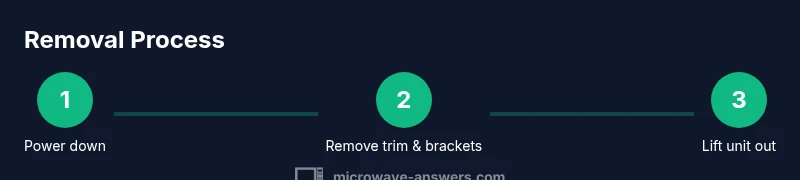
This overview highlights the core phases of removal. Power down and unplug; clear the workspace; access and document mounting hardware; remove brackets or trim; carefully tilt and slide the microwave out; inspect for obstructions and plan reinstallation. Each phase reduces risk and keeps components aligned for future use. For the full, field-tested steps, see the dedicated STEP-BY-STEP block below.
Aftercare and reinstallation considerations
Once the microwave is out, inspect the cabinet for damage, verify ventilated clearance, and confirm the wiring remains intact. If you’re planning to reinstall, ensure the new hardware matches the cabinet’s dimensions and that vent openings are unobstructed. If replacing with a different model, remeasure to confirm a proper fit and consider a revised trim kit or mounting brackets. Proper reassembly preserves safety, airflow, and appliance performance while maintaining cabinet integrity.
Tools & Materials
- Cordless drill or screwdriver(PH2 or Phillips bit; you may need a nut driver for some brackets)
- Screwdrivers (flathead and Phillips)(Have both on hand for different fasteners)
- Utility knife or putty knife(Useful for trimming gaps and removing adhesive trim pieces)
- Work gloves(Protect hands during lifting and fastener removal)
- Safety glasses(Optional but recommended for debris and dust)
- Duct tape or drop cloth(Protect countertops and floors; mask loose debris)
- Two-person helper(Microwaves are heavy; use proper lifting technique)
- Measuring tape(Useful to verify clearances for reinstallation)
Steps
Estimated time: 60-75 minutes
- 1
Power down and unplug
Begin by switching off the wall outlet or circuit breaker feeding the microwave. Unplug the power cord and double-check there is no live power. This protects you from electrical shock and ensures safe handling of the unit.
Tip: If the cord is hard to reach, use a long cord extender labeled for appliance use to safely disconnect at the outlet. - 2
Clear the workspace and protect surfaces
Move any items away from the cabinet and place a drop cloth or old towel on the floor to catch debris. Clear the counter edges so you can approach the unit from the front with full visibility. This reduces the chance of accidental dings to the cabinet or floor.
Tip: Have a helper guide the unit as you reverse out; keep your back straight to avoid strain. - 3
Access mounting hardware
Identify all screws, brackets, or trim pieces securing the microwave. Depending on the model, you may need to remove a front trim kit, unscrew top or side brackets, or loosen rear fasteners accessed from inside the cabinet. Document each fastener’s location before removing.
Tip: Take a photo of the mounting area before removal to simplify reassembly later. - 4
Remove trim or brackets
Carefully detach the trim pieces or brackets holding the unit in place. Keep screws organized in a labeled container. If brackets are painted to match the cabinet, avoid bending them so reinstallation remains clean.
Tip: Use a putty knife to gently pry along trim gaps to prevent chipping. - 5
Lift and slide the microwave out
With the help of your partner, steady the unit and gradually tilt it away from the cabinet while maintaining a straight pull. Slide the microwave straight out; avoid twisting or twisting the cords as you remove it.
Tip: Maintain a wide stance and bend at the knees to reduce back strain. - 6
Inspect and plan reinstallation
Once free, check for any damaged brackets, trim pieces, or cabinet edges. Decide whether to reinstall the same model, switch to a different unit, or secure a dedicated cabinet space with updated hardware. Make a quick note of next steps before you move the unit away.
Tip: If you’re unsure about venting clearance after removal, measure the gap to ensure proper airflow for the new setup.
Common Questions
Is it safe to remove a built-in microwave myself?
Yes, with proper precautions. Ensure power is off, use a helper, and work slowly to avoid damaging cabinets or the unit. If the microwave is tightly fixed or the cabinet is older, consider professional help.
You can remove it yourself if you turn off power, use a helper, and take it slow. If anything feels stuck or risky, seek a professional.
What should I do if the microwave won’t move due to brackets?
Re-check all mounting points and look for hidden screws or clips. Avoid prying aggressively; use a screwdriver to loosen brackets or trim pieces and gently maneuver the unit.
If brackets won’t move, check for hidden screws and clips, loosen them carefully, and gently wiggle the unit free.
Do I need to disconnect power at the wall, or can I unplug from inside the cabinet?
Electricity should be shut off at the wall or circuit breaker before handling. If the cord is accessible inside the cabinet, unplugging there is acceptable only if you can reach it safely without strain.
Turn off power at the wall or breaker. If you can reach the plug safely inside the cabinet, unplug it there, otherwise power off first.
Can I reinstall the same microwave after removal?
If the same model fits the opening and you have intact hardware, reinstallation is possible. Verify vent clearance, bracket alignment, and trim fit before sealing the cabinet.
You can reinstall the same unit if it fits and you have the hardware—check vent clearance and brackets first.
What if I don’t have an extra pair of hands?
Do not force the removal. Use a stable support and consider postponing the task. If moving alone is unavoidable, use a trolley or stabilizing strap and take breaks to rest the load.
If you don’t have a helper, don’t rush. Use a stabilizing setup and take breaks to avoid injury.
What safety should I check after removal?
Inspect brackets, trim pieces, and cabinet edges for damage. Confirm clear airflow and reseal any gaps if you plan to reinstall or replace the unit.
After removal, inspect all parts for wear and ensure airflow is clear before reinstalling or replacing.
Watch Video
Main Points
- Power down and unplug before handling.
- Identify and release all mounting hardware safely.
- Use a two-person lift for heavy units.
- Protect surfaces and maintain clear airflow for reinstallation.