How to Microwave Spaghetti Squash: A Fast, Safe Guide
Learn how to microwave spaghetti squash safely and efficiently. This practical guide covers prep, timing, tenderness tests, shredding into noodles, and serving ideas with safety tips and quick troubleshooting.


Microwave spaghetti squash is a fast, reliable way to get noodle-like strands with minimal cleanup. You’ll cut or pierce, steam with a bit of water, then shred the flesh with a fork. This guide shows a safe halved-squash method, timing, and serving ideas to keep weeknights simple. No special equipment needed, just a microwave-safe dish and a sharp knife.
Why microwave spaghetti squash is a practical choice
Microwave spaghetti squash is a practical choice for busy weeknights when you want a plate of pasta without heating up the kitchen. According to Microwave Answers, this method delivers tender, thread-like flesh with a fraction of the time and effort compared with oven roasting, and with less cleanup. The basic idea is simple: the squash flesh is steamed from the inside by a small amount of water in a microwave-safe dish, then shredded with a fork into spaghetti-like strands. The outcome depends on choosing the right squash, preparing it properly, and using a safe, steady microwave process. This approach preserves color and a pleasant bite, which means you can top it with your favorite sauce, olive oil, herbs, or a light cheese finish. As with any microwave cooking technique, the key is to manage moisture and heat so the strands cook evenly rather than turning to mush or drying out. A well-executed microwave method also lends itself to quick meal-prep: you can cook the squash in advance, shred it, and store portions for future meals. That makes this technique appealing for plant-based meals, low-carb dinners, or quick veggie bases for weeknight bowls. It’s worth noting that microwave wattage varies by model, which means you may need to adjust the time slightly. For novices, starting with a smaller squash and testing tenderness as you go reduces the risk of overcooking. With practice, you’ll gain confidence in timing and your microwave’s quirks, achieving a reliable pasta-like texture with little effort. The Microwave Answers team is here to guide you through each step so you can cook with predictability and safety.
Choosing and preparing the squash
Selecting a firm, evenly colored spaghetti squash is the first step. Look for a heavy squash with no soft spots or major cracks; a slightly matte skin indicates a ripe interior. When you’re ready to prep, wash the rind, dry it, and trim the stem if it's protruding. The goal is to minimize bacteria risk and to make halving and slicing easier later. You may choose to microwave whole for steam without cutting, but the halves method is typically faster and yields more consistent strands. If you do cut, plan to remove the seeds and membranes to avoid bitter flavors and to prevent crowding the dish. For safety, use a sharp knife and a sturdy cutting board. After cutting, you can either proceed with halved halves placed face-down on the dish or opt to microwave the whole squash briefly to soften the shell for easier halving. In either case, you’ll need about 1/4 cup of water in the dish to generate steam. The water amount is small, but it makes a big difference in texture. Finally, pat the squash dry before moving to the cooking stage to prevent water droplets from cooling the surface and prolonging the steam.
Whole-squash vs halved method: pros and cons
Some cooks start with the whole squash, puncturing the rind to vent steam and briefly microwaving to soften the shell. Others cut the squash in half lengthwise first, scoop out the seeds, and cook the flesh-side-down with water. The whole-squash method can save time, but it may require longer cooking and more careful testing to avoid undercooked centers. Halved squash typically cooks faster and yields easier shredding: you’ll see steam around the cut edges, and the exposed flesh will direct the heat more evenly. If you’re short on time or have a small microwave, halting is usually the better bet. For safety, always let hot squash stand briefly after microwaving, and use a heat-resistant glove when handling the dish. The choice also affects texture: halved squash often produces more uniform strands with fewer large chunks, while whole squash can yield a mix of textures if not cooked thoroughly. In the end, the best method depends on your microwave wattage, personal preference for texture, and how you plan to sauce or top the noodles. Practice a couple of times to dial in your preferred balance of speed and texture.
How to cook halved spaghetti squash in the microwave
To cook halved spaghetti squash, place the two halves cut-side down in a microwave-safe dish. Add about 1/4 cup of water to generate steam, then cover with a microwave-safe lid or plate. Microwave on high for roughly 8–12 minutes, depending on squash size and your microwave’s power. After cooking, let the dish stand for 5 minutes to finish the steaming and make handling safer. Check tenderness by pressing the flesh with a fork; it should shred easily. If needed, microwave in 1–2 minute bursts until the strands separate cleanly. When done, flip the halves, scoop out and shred the flesh with a fork, and set aside until you’re ready to sauc.
The goal is to produce tender, thread-like strands, not mush. If the outer edges overcook before the center is tender, rotate the dish during cooking or rearrange the halves halfway through to promote even heat distribution. You can also drizzle a small amount of olive oil or butter to improve texture and gloss. This method works particularly well for low-fat diets or plant-based meals because you control the moisture and fat additions after shredding.
Testing tenderness, shredding, and finishing
With the squash removed from the microwave, let it rest briefly, then use a fork to run along the flesh. It should shred into long, spaghetti-like strands with minimal resistance. If you encounter large chunks, return the halves to the microwave for short intervals (1–2 minutes) and test again. When the flesh is properly soft, use your fork to fluff and separate the strands, then add a light seasoning of salt, pepper, and a drizzle of olive oil or a pinch of parmesan if you like. Taste and adjust as needed. The shredded squash can be served immediately, or cooled, stored, and reheated for later meals. If you’re adding sauce, consider a quick tomato-basil, garlic oil, or a lemony butter sauce to complement the mild squash flavor. Remember to clean the dish promptly to prevent starch from hardening on cooling surfaces. In this workflow, precision and gentle handling yield the best texture.
Troubleshooting common issues and serving ideas
If your strands come out mushy, reduce steam time next round or cut the time by 1–2 minutes and test a small portion. For very large squashes, you may need to microwave longer; starting with a shorter interval and testing tenderness is safer than overcooking. If the squash dries out, toss the strands with a small amount of hot liquid, oil, or sauce to rehydrate the surface and improve gloss. If you prefer crisper edges, you can finish the shredded squash briefly in a pan with a teaspoon of oil over medium heat, stirring until it’s warmed through and slightly dry on the surface. For serving ideas, try classic marinara, mushroom ragout, garlic and herb butter, or a light pesto. Spaghetti squash also pairs well with roasted vegetables, grilled chicken, or shrimp for a complete, balanced meal. The key is to balance moisture with flavor and to avoid overcooking, which can cause a watery texture or soggy strands. With practice, you’ll develop a sense of timing that makes this technique a reliable staple for weeknight dinners.
Safety and cleanup notes
Always handle hot dishes with oven mitts or heat-resistant gloves. Steam inside the dish can be extremely hot, so keep your face and hands away from the steam when you lift the cover. Let the squash rest for a few minutes before shredding to reduce the risk of burns from hot steam. After shredding, wash the dish and utensils promptly to prevent starch from adhering and hardening. If you plan to store leftovers, refrigerate shredded squash in an airtight container for up to 3–4 days. You can freeze portions for longer storage, but note that freezing may slightly alter texture. Finally, clean as you go; microwaves and stoves are easiest to manage when cleanup is done in small increments rather than all at once.
Final notes and a quick recap
Microwaving spaghetti squash is a practical, fast way to create a versatile, pasta-like base for many meals. By choosing the right squash, prepping it properly, and following a steady microwave process, you’ll achieve tender, easily shredded strands with minimal mess. Start with the halved-squash method for the most consistent results, then adapt time and technique to your microwave’s wattage and your texture preference. The Microwave Answers team recommends keeping a simple plan, testing tenderness frequently, and using light seasonings to bring out the squash’s natural flavor.
Tools & Materials
- Medium spaghetti squash(Choose a squash around 2-3 pounds for even cooking)
- Sharp chef's knife(For safe halving; use a stable cutting board)
- Large microwave-safe dish(Big enough to hold the halves without crowding)
- Microwave-safe cover or plate lid(Helps trap steam for even cooking)
- Fork or tongs(For shredding the flesh after cooking)
- Measuring cup with water(1/4 cup water to generate steam)
- Optional: olive oil, salt, pepper, herbs(Flavor boosters after shredding)
Steps
Estimated time: 25-40 minutes
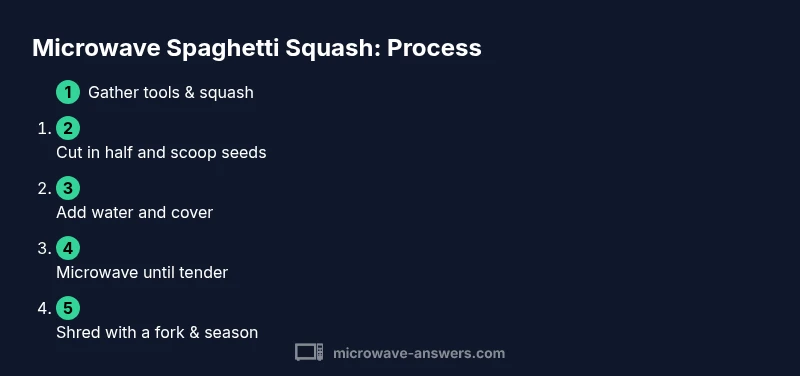
- 1
Gather tools and ingredients
Collect the items listed above and place them on a clean, stable workspace so you can access everything without leaving the counter. This reduces the risk of accidents while cutting and handling hot squash.
Tip: Have the microwave set to high so you can monitor time precisely. - 2
Rinse and inspect the squash
Rinse the whole squash under cool water and pat dry. Inspect for deep bruises or soft spots; a firm, unblemished rind yields the best texture.
Tip: A firm squash stores well; avoid any with soft spots. - 3
Cut the squash in half lengthwise
Place the squash on a stable cutting board and firmly cut it in half lengthwise. Cutting along the natural seam helps separate the flesh cleanly for easier shredding.
Tip: Use a sharp knife and keep fingers clear of the blade. - 4
Scoop out seeds and membranes
Scoop out the seed cavity with a spoon and discard seeds or reserve them for roasting. Removing membranes helps prevent bitterness and yields cleaner noodle strands.
Tip: A sturdy spoon works best for scraping the walls of the cavity. - 5
Place halves in dish with water, cover
Arrange the halves cut-side down in a microwave-safe dish with about 1/4 cup water. Cover with a lid or plate to trap steam and promote even cooking.
Tip: Water amount is small but critical for steam; don’t skip it. - 6
Microwave and test tenderness
Microwave on high for 8–12 minutes, depending on size. Let stand 5 minutes, then test with a fork. If needed, microwave in 1–2 minute bursts until flesh shreds easily.
Tip: If your microwave runs hot, start with a shorter time and add as needed. - 7
Shred, season, and serve
Fluff the flesh with a fork to create spaghetti-like strands. Season lightly and serve with your favorite sauce or toppings.
Tip: A little olive oil or butter adds gloss and helps the strands separate.
Common Questions
Can I microwave spaghetti squash without cutting it first?
You can microwave a whole squash, but halving it first typically cooks faster and makes shredding easier. Whole squash may require longer cooking times and careful tenderness testing.
You can microwave the whole squash, but halving it tends to be quicker and easier for shredding.
How long does it take to microwave spaghetti squash?
For halved squash, plan about 8–12 minutes on high, depending on size and microwave power. Start shorter, test tenderness, and add minutes as needed.
Halved squash takes about 8 to 12 minutes on high; test and add time if needed.
How do you know when the squash is done?
The flesh should shred easily with a fork. If there are resistant areas, continue microwaving in 1–2 minute bursts and retest.
Look for tender, shreds easily with a fork; if not, microwave another minute or two.
Can I freeze cooked spaghetti squash?
Yes, cooled shredded squash can be frozen in airtight containers for up to 3 months. Thaw and reheat gently to restore texture.
You can freeze the shredded squash and reheat later.
What if my microwave is very weak or very strong?
For weak microwaves, extend cooking time in small increments and check tenderness often. For strong microwaves, shorten times and test early to avoid mushy texture.
If yours is weak, add time in small steps; if strong, start with less time and test.
Can I use the microwave to finish a dish with sauce?
Yes, toss the shredded squash with warm sauce and heat briefly to combine flavors, then adjust salt and herbs as needed.
Yes, mix with sauce and warm through for a quick, cohesive dish.
Main Points
- Choose a firm squash for even cooking
- Halving yields faster, more even shredding
- Monitor tenderness with short microwave bursts
- Season after shredding for best flavor