Cooking Spaghetti Squash in the Microwave: A Step-by-Step Guide
Learn how to cook spaghetti squash in the microwave with a reliable, time-saving method. This guide covers prep, timing, texture, safety, and simple flavor ideas.


Goal: cook spaghetti squash in the microwave quickly and safely. Start by selecting a firm squash, cutting it in half, and removing the seeds. Microwave until tender, then use a fork to scrape into pasta-like strands. The guide below covers prep, timing, texture checks, flavor ideas, and safety tips to avoid soggy results.
Why microwave spaghetti squash is a practical option
For home cooks wanting a quick, hands-off method to prepare a healthy vegetable base, microwaving spaghetti squash is a strong option. It uses less energy than oven-baking and keeps your kitchen cooler on hot days. With careful prep and timing, the flesh becomes tender enough to shred into pasta-like strands, with most of the squash's flavor preserved. According to Microwave Answers, the microwave can preserve texture when you avoid overcooking and use a vented lid to let steam escape. By choosing a medium-sized squash and halving it, you create uniform cooking zones, reducing the risk of an underdone center. In practice, many households enjoy a weeknight-friendly lunch or side dish using this method because it minimizes wait time while delivering consistent results. If you’re new to microwave cooking, this approach reduces the guesswork and helps you master texture control without turning on the oven.
Selecting the right spaghetti squash and basic prep
To achieve fluffy, pasta-like strands in the microwave, start with a squash that feels heavy for its size and has a smooth, unblemished rind. A medium-sized spaghetti squash (roughly 4 to 5 pounds) typically cooks evenly in a standard home microwave, while larger specimens may require extra time or division into halves or quarters. Inspect the squash’s skin: dull, matte-finish skin is typically ripe; shiny or soft spots can indicate overripeness. Rinse under cold water and dry; then slice it lengthwise from stem to tip using a sharp knife. Scooping out the seeds and membranes with a spoon is essential for even cooking and clean shredding later. If your microwave dish sits high off the counter, place the halves cut-side down in a small amount of water to keep the flesh moist and prevent scorching. This prep phase sets the stage for uniform heat distribution and a more controllable texture outcome.
Equipment and safe tools you need
Microwave cooking works best with properly chosen tools. Gather a microwave-safe dish large enough to hold both squash halves comfortably, plus a vented lid or a piece of microwave-safe plastic wrap. A sturdy knife, a cutting board, and a fork or spoon for shredding are essential. Have silicone potholders or oven mitts handy since the dish will be hot when you remove it. Optional items include a silicone spatula for scraping and a splash of olive oil or a light seasoning to boost flavor. Using glass or ceramic containers minimizes the risk of chemical migration and ensures even heating. If you own a microwave with a turntable, that helps with uniform rotation; otherwise manually rotate the dish halfway through microwaving. Safe handling practices during handling and after cooking save you from steam burns and heat injuries.
Step-by-step cooking method: prep, cut, soften, shred
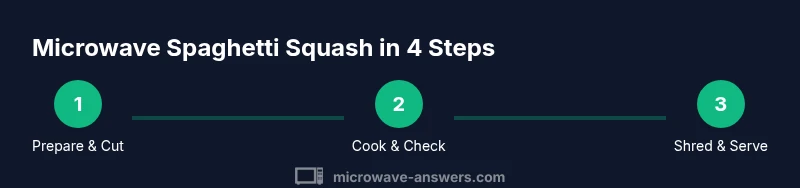
Begin with clean, prepared halves. Place halves cut-side down in the dish, add a tablespoon of water per half if desired, then cover loosely. Microwave on high for about 8-12 minutes, depending on squash size and microwave wattage. Let the dish rest for 1-2 minutes before flipping or shredding. Use a fork to rake the flesh; the strands should separate easily when cooked through. If it resists, microwave in 1-2 minute increments, testing after each interval to avoid overcooking and soggy textures. For extra moisture, you can loosen strands with a fork and dab with a tiny splash of water or broth. Let the shreds cool briefly before serving to avoid scorching your tongue.
tip":"If your microwave is underpowered, add 1-2 extra minutes and test tenderness in 1-minute intervals."
Tools & Materials
- Sharp kitchen knife(For safely halving the squash)
- Microwave-safe large dish with vented lid(Glass or ceramic works best; do not use metal)
- Fork or spoon for shredding(Used to scrape strands after cooking)
- Silicone oven mitts or gloves(Handle hot dish safely)
- Optional: olive oil or light seasoning(Adds flavor if desired)
Steps
Estimated time: Total: 12-20 minutes
- 1
Prepare the squash
Rinse the squash under cold water. Pat dry. Set up a stable cutting surface and lay the squash on its side to minimize slips. Have your knife ready for a clean cut.
Tip: Secure the squash with a stable hand position and cut away from your body. - 2
Halve and seed
Slice the squash in half lengthwise from stem to tip. Use a spoon to scoop out the seeds and membranes from each half. Removing the stringy flesh reduces moisture pockets that can trap steam.
Tip: Trim the seed cavity thoroughly to prevent crowding during cooking. - 3
Arrange for microwaving
Place the halves in a microwave-safe dish, cut-side down, with a small amount of water in the dish to generate steam. If the dish is shallow, you can lay a small rack or fold a paper towel to raise the squash slightly.
Tip: Water helps steam cook the flesh more evenly. - 4
Microwave on high
Cover loosely and microwave on high for 8–12 minutes for a medium squash, rotating the dish halfway if your microwave lacks a turntable. Larger squashes may require 12–15 minutes.
Tip: If unsure, start with 8 minutes and test tenderness in 1-minute increments. - 5
Test tenderness
Carefully check the flesh with a fork. It should shred easily into spaghetti-like strands without being mushy. If needed, microwave another 1–2 minutes and re-check.
Tip: Let steam disperse for 1–2 minutes before handling. - 6
Shred the flesh
Use a fork to rake the softened flesh into long strands. If some bits resist, continue shredding until the strands look uniform.
Tip: Work while the squash is warm but not scalding to avoid uneven texture. - 7
Season and serve
Toss strands with a pinch of salt, pepper, and a light drizzle of olive oil or your favorite sauce. Serve immediately for best texture, or hold warm for up to 15 minutes in a covered container.
Tip: A little acidity (lemon zest or a splash of vinegar) brightens the flavor. - 8
Clean up and store
Wash knives and the dish with warm, soapy water. Cool any leftovers, then store in an airtight container in the fridge for 3–4 days, or freeze for longer storage.
Tip: Cool fully before refrigerating to prevent condensation and sogginess.
Common Questions
Can I microwave spaghetti squash without cutting it first?
Cooking a whole squash in the microwave is generally not recommended because it can cook unevenly and may explode. Cutting it in half ensures even heat distribution and makes shredding easier after cooking.
Avoid cooking a whole squash in the microwave; cut it in half for even cooking and easy shredding.
How long does it take to cook spaghetti squash in the microwave?
Time varies with size and wattage. A medium half typically needs 8–12 minutes, while larger squashes may take 12–15 minutes. Rotate the dish halfway for even heating.
Most halves finish in under 15 minutes; larger ones may take a bit longer, so check tenderness frequently.
What texture should the strands have after microwaving?
The strands should be tender and easily shred with a fork, resembling al dente spaghetti. If the flesh is stringy or mushy, microwave in short intervals and test again.
Tender, easy-to-shred strands are the goal; avoid mushy textures by careful timing.
Can I freeze the cooked spaghetti squash?
Yes, but cool completely first and store in airtight containers or freezer bags. It freezes best in portions and can be reheated in the microwave or on the stove.
Cooked spaghetti squash freezes well; freeze in portions and reheat as needed.
What safety steps should I follow after microwaving?
Carefully remove the dish using oven mitts; steam will escape. Let the squash rest briefly before shredding to prevent burns.
Use oven mitts and let the dish rest a moment before handling to avoid burns.
What if the squash is undercooked in the center?
Return halves to the microwave in 1–2 minute increments, then check again. Avoid overcooking to prevent mushy strands.
If the center is still firm, microwave in short bursts and test until tender.
Watch Video
Main Points
- Cook spaghetti squash in the microwave for speed and energy efficiency
- Proper prep (halving, seeding, and adding water) yields tender, shred-ready flesh
- Monitor texture in short intervals to avoid mushy strands
- Season lightly and pair with sauces for versatile meals
- Safe handling and proper cleanup prevent burns and cross-contamination