How Long to Microwave Steam Broccoli: A Practical Guide
Discover exact microwave times to steam broccoli for perfect texture. Learn timing by wattage, prep, doneness cues, safety tips, and quick fixes for crisp-tender or tender florets.


You can steam broccoli in the microwave in about 3 to 5 minutes, depending on florets size and microwave wattage. For crisper results, use shorter times and test with a fork; for tender florets, add 1–2 minutes. Always cover to trap moisture and finish with a quick fluff to avoid sogginess.
What microwave steaming is and why it works
Microwave steaming is a quick method to tenderize broccoli florets using steam generated inside a covered dish with a small amount of water. The method relies on the microwave's energy turning water into steam, which softens the vegetable without boiling. According to Microwave Answers, this approach preserves color, nutrients, and flavor better than some longer boiling methods when you manage time and power carefully. For many home cooks, the key is delivering even heat across the florets and preventing soggy edges. Smaller florets respond faster, while large crowns need a touch longer. Fresh broccoli works best; frozen florets can be steamed, but they may require slightly more time due to ice crystals and uneven thawing. Prep is simple: rinse well to remove any soil, trim the stems so the pieces cook evenly, and pat dry to reduce extra moisture that can waterlog the texture. This technique is handy for quick weeknight sides and for keeping your kitchen cool while cooking.
Timing basics: how long to steam broccoli in the microwave
Timing is the single most variable part of microwave steaming. A typical range is about 3 to 5 minutes for fresh broccoli florets in a standard 1000W microwave. If your microwave is lower wattage (e.g., 700W), plan for 4 to 6 minutes, and if you have a very powerful 1200W unit you may see 2.5 to 4 minutes. The exact time depends on: florets size, whether you start with rinsed and dry pieces, and how much water you use. Always start with the shorter end of the range, then test and add 1-minute increments as needed. Covering the dish helps trap steam and prevents drying out, while leaving a small vent allows excess moisture to escape so you don’t end up with soggy broccoli.
Prep and selection: choosing broccoli for microwave steaming
Choose fresh broccoli with bright green color and firm heads. Avoid florets that look yellowed or limp, as their texture will not improve with microwaving. Slice large crowns into uniform 1 to 2-inch pieces to ensure even cooking. Rinse thoroughly to remove any grit, then pat dry; extra moisture can steam off with the cover and lead to mushy spots. For frozen broccoli, thawing is optional but may extend cooking time; if you do use frozen, use shorter, more frequent checks to avoid overcooking. Keep stems intact for structural support, but trim the thickest parts so all pieces reach tenderness together.
Doneness targets and texture cues
People often want a balance between crisp-tender and tender-soft broccoli. For a vibrant bite, aim for florets that yield slightly to pressure with a fork but still hold their shape; this is typically reached in the 3 to 4 minute range for 1000W microwaves with small florets. For a softer, more tender texture, push toward 4 to 5 minutes and test with a fork. Color should stay bright green, not olive-dull, and there should be minimal steam water pooling at the bottom. If you see water pooling, drain carefully before finishing with salt, pepper, or lemon zest to brighten flavor.
Step-by-step timing scenarios by wattage and size
Here are practical scenarios to tailor timing to your equipment and produce: - 3 minutes for 8–12 small florets in a 1000W microwave; check and add 1 minute if needed. - 4 minutes for 12–16 medium florets; stir once at 2 minutes to promote even cooking. - 5 minutes for large crowns or frozen broccoli, then test and add 0.5 to 1 minute if not tender enough. If you have a 700W unit, add 1 to 2 minutes to each interval and test frequently. Always rely on texture cues rather than a clock alone.
Using a microwave steamer vs. plate-and-wrap method
A dedicated microwave steamer insert distributes steam more evenly and can help prevent sogginess by keeping florets above any pooled moisture. If you don’t have a steamer, place the broccoli in a microwave-safe dish with water, cover tightly with a vented lid or plastic wrap, and leave a small vent. The plate-and-wrap method (covering a dish with plastic wrap) is acceptable, but ensure the wrap is vented or use a microwave-safe lid so steam can escape and prevent a pressure buildup. Either method works well when you monitor doneness and avoid overcooking.
Testing doneness and finishing touches
After microwaving, let the broccoli rest for 30 seconds; this helps equalize heat. Test a piece with a fork—it should result in a clean point with slight resistance for crisp-tender. If not tender enough, microwave in 30-second bursts, then test again. Season with a little salt, a drizzle of olive oil or a pat of butter, and a squeeze of lemon for brightness. Quick flavor boosters like garlic powder, red pepper flakes, or parmesan can elevate the dish with minimal effort.
Safety tips and cleaning up after microwave steaming
Always use a microwave-safe container and lid or wrap. Steam can scald skin, so handle the dish with oven mitts and avoid opening the lid toward your face immediately after cooking. If your dish is very hot, set it on a heat-resistant surface and rotate to distribute heat. After serving, allow the dish to cool before washing; some plastics can warp under heat; wash with warm, soapy water and dry thoroughly to avoid residue. Regularly inspect the vented lid for cracks to maintain safe operation.
Quick troubleshooting and common mistakes
Common mistakes include overloading the dish with water, which dilutes flavor and makes soggy results, or starting with cold broccoli straight from the fridge; both can skew timing. Another pitfall is removing the cover too early, which dumps steam and can lead to uneven texture. If your broccoli comes out pale or mushy, shorten cook time next batch and ensure florets are uniform in size. Conversely, if it stays hard, increase a little and re-check in small increments.
Quick-reference at a glance
- Fresh broccoli, 1000W microwave: 3–5 minutes depending on floret size. - Smaller florets, shorter times; larger florets may require additional 1–2 minutes. - Always cover to trap steam and stir or rotate halfway through for even cooking. - Use a small amount of water (2–3 tablespoons) to generate steam; drain if necessary after cooking to avoid sogginess.
Tools & Materials
- Microwave-safe dish with lid or vented wrap(Glass or ceramic dish with a vented lid works best; avoid metal.)
- Fresh broccoli florets(Cut into uniform 1–2 inch pieces for even cooking.)
- Water (about 2-3 tablespoons)(Adds steam; adjust for very large batches.)
- Microwave-safe steamer insert (optional)(Can improve even steam distribution.)
- Paper towels or kitchen towel(Used to pat dry or cover if not using lid.)
- Oven mitts(Handle hot dish safely.)
- Timer(Use to track multiple batches.)
Steps
Estimated time: 8-12 minutes
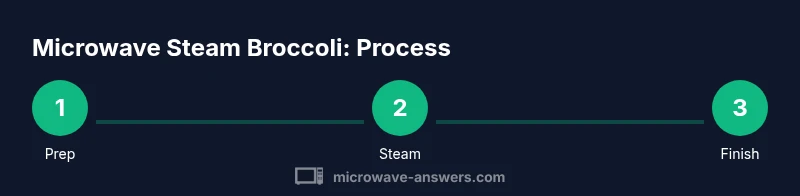
- 1
Prep broccoli and gather tools
Wash broccoli thoroughly and trim stems so all pieces cook evenly. Cut crowns into uniform florets and pat dry to reduce extra moisture.
Tip: Uniform pieces ensure even steam penetration. - 2
Add florets and water to dish
Place florets in a single layer in the dish and add 2–3 tablespoons of water. The water creates steam without turning the broccoli into boiled bits.
Tip: Too much water can lead to soggy results; less is more. - 3
Cover securely for steam
Cover with a vented lid or wrap, leaving a small vent for steam to escape. This traps heat and cooks more evenly.
Tip: Vent the lid slightly if your florets look crowded. - 4
Microwave on high and monitor
Cook on high for an initial interval (around 3 minutes for 1000W). Check and continue in 30–60 second bursts if needed.
Tip: Start with the lower end and adjust in small increments. - 5
Test doneness and adjust
Carefully open and test a piece with a fork. If it’s not tender enough, microwave in short bursts until desired texture is reached.
Tip: Avoid overcooking; texture changes quickly as it rests. - 6
Finish, drain, and season
Drain excess moisture, fluff with a fork, and season to taste. A drizzle of oil or a squeeze of lemon brightens flavor.
Tip: Let it rest 30 seconds before serving to even out heat.
Common Questions
Can I microwave steam broccoli from frozen?
Yes. Frozen broccoli can be steamed in the microwave, but it usually requires extra time and more careful checking to avoid overcooking. Start with a longer interval and test frequently.
Yes. Frozen broccoli can be steamed in the microwave, but you may need more time and careful checking to avoid overcooking.
Should I add water when microwaving broccoli?
A small amount of water (about 2–3 tablespoons) creates steam and helps tenderize florets without boiling them. Too much water dilutes flavor and can make them soggy.
A small amount of water creates steam and helps tenderize florets without boiling.
Is microwaving broccoli safe?
Yes. When using microwave-safe containers and lids, broccoli microwaves safely and helps preserve nutrients better than some long-boiling methods when timed properly.
Yes. With the right containers, microwaving broccoli is safe and preserves nutrients well when timed correctly.
How should I reheat leftover microwave-steamed broccoli?
Reheat in the microwave with a splash of water for 30–60 seconds, then rest a moment. This helps reintroduce moisture and avoid drying out the edges.
Reheat with a little water for 30–60 seconds, then rest briefly.
Why is my broccoli turning pale or mushy after microwaving?
Overcooking or too much water can cause mushy texture. Shorten the cook time, adjust water amount, and ensure florets are uniform in size.
Overcooking or too much water causes mushiness; reduce time and water and cook evenly.
What textures correspond to 'crisp-tender' vs 'tender' broccoli?
Crisp-tender means florets yield with slight resistance yet hold shape; tender means softer and easily pierced; aim for 3–4 minutes for crisp-tender with small florets and longer if you prefer softer texture.
Crisp-tender is slightly resistant but still firm, tender is softer; adjust time to your preference.
Watch Video
Main Points
- Test doneness after each interval.
- Cover to trap steam and maintain moisture.
- Adjust time based on wattage and floret size.
- Let broccoli rest briefly before serving.
- Drain excess moisture to prevent sogginess.