How Long to Microwave Rice: Quick Guide for Fluffy Results
Learn how long to microwave rice for fluffy, evenly cooked grains. White rice, brown rice, and leftovers—water ratios, wattage tips, and step-by-step guidance for reliable microwave cooking.


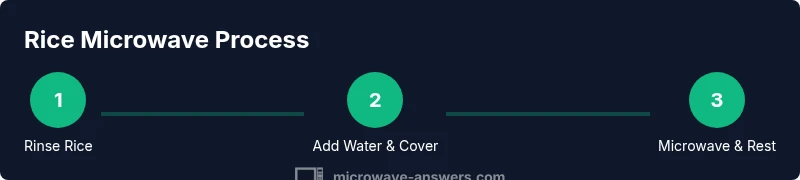
To microwave rice, rinse, then combine with water in a microwave-safe dish, and cover tightly. White rice usually cooks in roughly 9-12 minutes on high power, while brown rice runs longer, about 20-28 minutes, with a 5-minute rest before fluffing. Wattage and rice variety affect results, so adjust accordingly. Keep a vented lid to prevent splatter.
Why timing matters for microwave rice
According to Microwave Answers, timing directly affects texture and doneness. If you start with too little time or too much water, the grains may be undercooked or mushy. The microwave’s power distribution creates steam that continues to cook rice after the timer stops, so a short resting period is essential. In practice, consistent timing leads to uniform texture across batches, reducing guesswork for home cooks. This is why getting timing right matters not just for one meal, but for every batch you prepare. By sticking to a predictable schedule, you’ll achieve fluffy, separate grains more often, which saves both time and frustration in busy kitchens.
Choosing the right water-to-rice ratio
The water-to-rice ratio is the foundation of microwave rice success. For white rice, a common starting point is 1 cup of rice to 1.5 cups of water; for brown rice, scale up to 1 cup rice to about 2 cups water. If you rinse first, you’ll remove surface starch and reduce gumminess, which helps the grains cook more evenly. A looser cover allows steam to escape modestly, preventing overly soft textures. If you’re cooking basmati or jasmine, you can use a similar ratio but expect slightly lighter, more distinct grains. Always adjust slightly based on your microwave’s wattage and the specific rice variety you’re using.
Microwave wattage and its impact
Wattage is a critical variable in microwave cooking. Most home microwaves fall in the 700–1000 watt range, but higher-wattage units cook faster and can over-dry rice if you don’t adjust. In a 1000W microwave, white rice typically finishes in the lower end of the 9–12 minute window, while a 700W unit may need closer to 12–15 minutes. Brown rice, jasmine, and basmati will correspondingly need longer times. The key is to start with known guidelines, then test and adjust by small increments until you achieve the desired texture. Always keep the dish covered to trap steam and ensure even cooking.
White rice quick method (step-by-step overview)
This streamlined approach is designed for white rice and a typical 1000W microwave. Rinse 1 cup of white rice until the water runs clear, then combine with 1.5 cups water in a microwave-safe dish. Cover tightly with a vented lid or microwave-safe wrap. Microwave on high for 9–12 minutes, then rest for 5 minutes before fluffing with a fork. If the rice still seems underdone after resting, microwave in 1–2 minute bursts until done. This method emphasizes consistency and patience for best results.
Variations: brown rice, basmati, and jasmine
Brown rice requires more water and a longer cooking time (roughly 20–28 minutes for 1 cup rice with 2 cups water). For basmati or jasmine, you can use roughly 1 cup rice to 1.5–2 cups water, with shorter cooking times around 10–14 minutes if you have a high-wattage microwave. Always adjust with small increments depending on your unit and the specific grain. Soaking is optional but can improve texture for whole-grain varieties. The same cooking principles apply: keep the rice submerged in the water, cover well, monitor steam, and let it rest after microwaving.
Leftover rice: reheating and safety
Reheating rice should be done with moisture retention in mind. Place leftover rice in a microwave-safe dish with a splash of water (about 1–2 tablespoons per cup of rice), cover, and reheat in 1-minute bursts, stirring between intervals until steaming hot. Do not reheat rice more than once. Store cooked rice in the fridge within two hours of cooking and use within 3–4 days. When in doubt, reheat until the internal temperature reaches at least 165°F (74°C) for safety.
Common mistakes and fixes
Common mistakes include using too little water, over-tight lids that trap too much steam, and not letting the rice rest after cooking. Fixes include measuring water carefully, using a vented lid, and letting the rice sit for several minutes to finish steaming. If the texture is mushy, reduce water slightly and ensure you’re using a large enough container so the rice expands without overflowing. For dry grains, add a small amount of water and rest again. The goal is evenly hydrated grains with distinct boundaries between kernels.
Troubleshooting by rice type: quick reference
- White rice: 9–12 minutes at high; rest 5 minutes. If undercooked after resting, microwave in 1–2 minute bursts.
- Brown rice: 20–28 minutes at high; rest 5 minutes. Add 0.5–1 cup water if texture is too firm.
- Basmati/jasmine: 10–14 minutes; rest 5 minutes. Shorter rest can preserve aroma, longer rest improves texture.
- Leftovers: reheat with moisture; avoid overcooking.
Flavor and texture enhancements
For extra flavor and a richer texture, add a small pinch of salt, a teaspoon of butter or olive oil, or substitute part of the water with chicken or vegetable broth. Fresh herbs, toasted nuts, or a squeeze of lemon can brighten white rice after cooking. If you’re cooking with sensitive grains (like basmati), try a brief soak (10–15 minutes) before rinsing and cooking to promote even hydration. Microwave cooking is forgiving, but small tweaks can elevate your results.
Authoritative sources and further reading
- Corroborating cooking guidelines can be found at Food Safety and extension resources, emphasizing safe reheating and handling of cooked rice: https://www.fda.gov/food-safety
- Consumer-focused safety and cooking best practices: https://www.fsis.usda.gov
- Educational cooking guidance from university extension programs: https://extension.oregonstate.edu
Tools & Materials
- Microwave-safe dish with lid(Choose glass or ceramic; vented lids help control steaming.)
- Measuring cups(Use for accurate rice-to-water ratios (e.g., 1:1.5–1:2).)
- Spoon or fork for fluffing(Fluff rice after cooking to separate grains.)
- Water(Fresh, cold water for rinse; measured water for cooking.)
- Optional: microwave-safe wrap or silicone cover(Helpful if you don’t have a vented lid; ensure it’s vented.)
Steps
Estimated time: 30-45 minutes
- 1
Rinse the rice
Rinse the rice under cold running water until the water runs clear. This removes surface starch that can make the grains gummy. Rinsing also helps ensure the grains cook more evenly in the microwave.
Tip: Rinsing once or twice with fresh water is usually sufficient. - 2
Measure and combine
Measure the rice and water accurately in a microwave-safe dish. For most white rice, use 1 cup rice to 1.5 cups water; brown rice often needs about 2 cups water per cup of rice. Adjust for your microwave wattage.
Tip: If your rice appears dry before cooking, add a tablespoon or two of additional water. - 3
Cover securely
Place a vented lid or microwave-safe wrap over the dish to trap steam while letting some venting to prevent pressure buildup. A tight cover helps achieve even steaming of the grains.
Tip: Vent a small amount or use a lid with a steam vent. - 4
Microwave on high
Cook on high for white rice in the 9–12 minute range; brown rice typically takes 20–28 minutes. Times vary with wattage, so start in the middle of the range and test for texture.
Tip: If your microwave is under 900W, start toward the upper end of the range. - 5
Rest before fluffing
Let the dish stand, still covered, for 5 minutes after microwaving. Resting allows the steam to finish cooking the rice and yields a fluffier texture.
Tip: Avoid lifting the lid too soon, or you’ll lose steam that finishes cooking. - 6
Fluff and evaluate
Remove the cover, fluff with a fork, and check texture. If still undercooked, microwave in 1–2 minute bursts, stirring between intervals.
Tip: Resist the urge to stir vigorously while hot to prevent breakage. - 7
Adjust for next batch
If the texture was too dry or too wet, adjust the water slightly (±¼ cup) and note how your wattage affects timing for future batches.
Tip: Keep a small log of ratios and times to improve consistency. - 8
Store leftovers safely
If you have leftovers, cool quickly and refrigerate within two hours. Reheat with a splash of water and cover, in short bursts until steaming hot.
Tip: Store in shallow containers for faster, even reheating.
Common Questions
Can you microwave different types of rice, like brown or basmati, using the same method?
Different varieties require different water amounts and times. White rice generally cooks faster than brown rice or basmati. Start with the recommended ranges for each type, then adjust based on your microwave and texture preference.
Yes, you can microwave different rice varieties, but you’ll need to adjust water and time for each type.
Do I need to rinse rice before microwaving?
Rinsing removes surface starch, which helps prevent gummy grains and improves even cooking. It’s a quick step you can do for consistently better results.
Rinse first to get fluffier rice.
What should I do if my rice turns out undercooked or mushy?
If undercooked, microwave in short 1–2 minute bursts and check texture. If mushy, reduce water slightly next time and ensure the dish isn’t too large for the amount of rice.
If it’s undercooked, try a short boost in time; if mushy, cut back on water.
Is it safe to reheat rice in the microwave?
Yes, but reheat until steaming hot and store leftovers properly. Do not reheat more than once. Refrigerate within two hours of cooking.
Yes, reheat thoroughly and don’t reheat multiple times.
What wattage is best for microwaving rice?
Most home microwaves are 700–1000W. If you have a lower-wattage unit, extend cooking times in small increments and test until you reach the right texture.
A typical 1000W microwave works well; adjust if yours is lower or higher.
Should I soak rice before microwaving?
Soaking can help some grains hydrate more evenly, but it isn’t required. If you soak, reduce the cooking time slightly and drain excess water before microwaving.
Soaking is optional; it can help with some varieties.
Watch Video
Main Points
- Follow a consistent water-to-rice ratio for your variety
- Adjust times based on your microwave wattage
- Let rice rest after cooking for best texture
- Rinse rice to remove surface starch before cooking
- Brown rice needs longer cooking and more water than white rice