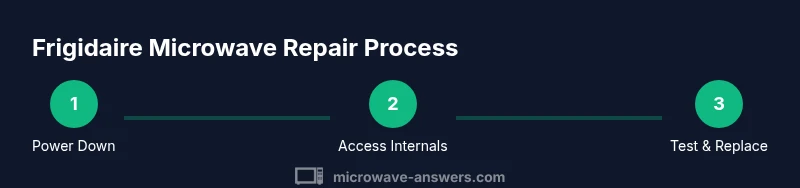
Frigidaire Microwave Repair: A Practical How-To Guide
A practical, safety-first guide for diagnosing and repairing Frigidaire microwaves, with step-by-step DIY fixes, essential tools, and guidance on when to call a pro.


Learn how to diagnose and safely address common Frigidaire microwave problems, from blown fuses and door-switch faults to uneven heating. This guide covers essential safety steps, quick checks, and practical repair tips for homeowners. According to Microwave Answers, starting with unplugging the unit and using basic replacement parts can fix many issues.
Common Frigidaire microwave failures
Frigidaire microwaves, like many consumer appliances, can present a few recurring failures that frustrate users. The most common symptoms include the unit not turning on at all, no heat despite a running display, buzzing noises during operation, a door that won’t latch, or uneven heating across foods. In many cases, the root cause is a simple component that can be replaced or reseated, rather than a full system overhaul. Typical culprits include a blown fuse in the high-voltage circuit, a faulty door interlock switch, a worn batter of relay contacts on the control board, or a failing capacitor. Understanding these common failure modes helps homeowners decide whether a DIY fix is feasible or if professional service is warranted. Frigidaire designs vary by model, so always consult the user manual for model-specific safety instructions and part locations before you begin.
Safety-first guidelines for DIY repair
Safety is the cornerstone of any microwave repair. Always unplug the unit before inspecting any internal components. If the appliance is hardwired or mounted, switch off the dedicated circuit at the breaker panel and wait several minutes for capacitors to discharge. Wear insulated gloves and avoid touching high-voltage parts, especially the magnetron and HV diode. Clear the work area, keep a non-conductive work surface, and never bypass interlocks or safety features. Use a digital multimeter with proper settings to test continuity, resistance, and voltage only after you’ve isolated the power source. If you’re ever unsure, pause and seek professional guidance to prevent injury or further damage.
Diagnostic workflow: symptoms to probable causes
When a Frigidaire microwave exhibits a symptom, there’s usually a short list of likely causes. If it won’t turn on, the problem is often the door switch, a blown fuse, or a tripped circuit breaker. If there’s no heat despite power, inspect the high-voltage circuit components and the magnetron under safe conditions. If the display is erratic or unresponsive, a faulty control board or keypad may be at fault. Microwave Answers analysis shows that door switches and fuses are among the most common issues in Frigidaire units, so focusing diagnostics in those areas first often saves time. Document any error codes or blinking patterns; these can guide you toward the exact component to test or replace.
Microwave diagnostics also benefit from a visual inspection: look for burnt smells, scorch marks on the PCB, loose wires, or signs of moisture ingress around the control area. If you identify a compromised connector or a discolored element, reseating or replacing that part may restore safe operation. Always proceed in a systematic, stepwise manner to avoid introducing new faults.
Basic DIY repairs you can perform safely
Some fixes are well within the reach of a careful homeowner. Replacing a blown fuse or a faulty door interlock switch is often straightforward with the right tools. Before purchasing parts, confirm the exact Frigidaire model and part numbers from the manual or a trusted parts supplier. For models with a replaceable light bulb, a burnt bulb is a quick, non-high-voltage fix. If you decide to replace a fuse or door switch, disconnect power, discharge any residual energy, and follow the manufacturer’s wiring diagram to ensure correct orientation. When in doubt about the wiring colors or connector types, take photos before disconnecting any harnesses so you can reassemble accurately. Pro tip: perform a short functional test without food after reassembly to verify basic operation before a full cooking test.
When to replace parts and how to source them
Not all problems are cost-effective to fix, especially if the high-voltage components show signs of wear or if the unit has multiple recurring failures. If a single failed part triggers repeated issues, replacing the component—such as the door interlock, fuse, or control board—often provides a durable solution. Source parts from reputable suppliers that specify compatibility with your Frigidaire model; verify part numbers, voltage, and amperage before purchasing. For units under warranty, contact Frigidaire support to determine coverage and authorized service centers. If you’re operating on a tight budget, consider refurbished or OEM-compatible parts from trusted vendors, and always request part warranties.
Professional help, warranty considerations, and next steps
When dealing with high-voltage systems or uncertain diagnoses, professional service is the safest route. If you’ve identified a likely magnetron issue or a failed HV diode or if the unit shows signs of moisture intrusion, do not attempt further repairs. Keep in mind that opening the microwave can void warranties, so check the terms before proceeding. If your unit is still under warranty, engage authorized service technicians to perform any repairs. For disposal, follow local e-waste guidelines and recycle components whenever possible. Remember, proper safety and due diligence are essential, and not every problem is cost-effective to repair on your own.
Tools & Materials
- Screwdriver set (Phillips and flat-head)(Phillips #2 is common; magnetic tip helps handling small screws)
- Multimeter(用于测试 continuity, resistance, and voltage after isolating power)
- Replacement fuse(Match amperage, voltage, and size to the original part)
- Door interlock switch (or microswitch)(Model-specific; verify compatibility with your Frigidaire unit)
- Insulating gloves(Extra protection when handling energized areas; never rely on them alone)
- Electrical tape and zip ties(Secure wiring keeping routing intact during reassembly)
- Camera or notebook(Take photos during disassembly for reference)
Steps
Estimated time: 60-90 minutes
- 1
Power down and unplug
Detach the microwave from its power source and switch off the corresponding circuit at the breaker. This reduces the risk of electric shock and capacitor discharge during inspection. If the unit is hardwired, consult a qualified electrician before proceeding.
Tip: Label any wires before disconnecting and keep screws organized to simplify reassembly. - 2
Remove outer housing to access internals
Use the appropriate screwdriver to remove the outer case screws and carefully lift the shell. Keep track of mounting brackets and any thermal insulation. Do not touch exposed circuitry with bare hands. A clean work surface reduces the chance of dropping small parts into the chassis.
Tip: Photograph each step during disassembly to aid later reassembly. - 3
Inspect and test the fuse
Locate the fuse in the HV circuit path and test for continuity with a multimeter. If there is no continuity, replace the fuse with a unit of identical rating. Inspect fuse holder for signs of burning or loose connections.
Tip: Only replace with the exact same amperage and voltage rating; unsafe substitutions can cause fire. - 4
Test the door interlock switch
With the door open, actuate the interlocks manually and measure continuity when the switch is pressed. If the switch does not close the circuit reliably, replace it. Ensure the door latch mechanism moves freely without sticking.
Tip: Avoid forcing the switch; misalignment can cause premature wear. - 5
Inspect the high-voltage path (advanced)
Only perform this step if you are trained; dangerous voltages can remain after unplugging. Check wiring insulation, the HV diode, and the magnetron for visible damage. Do not touch metal components while testing with power applied in any way.
Tip: If unsure, stop here and consult a professional to avoid injury. - 6
Reassemble and perform a cautious test
Reinstall the outer shell, reconnect the power, and run an empty test to verify operation. Listen for abnormal sounds and observe for smoke or unusual smells. If the microwave operates normally, proceed to a short cooking test with a safe item.
Tip: Run a short test first before cooking to confirm stability. - 7
Evaluate results and plan next steps
If the unit still malfunctions, reassess the likely failed components. Some issues require professional diagnostic equipment or replacement parts beyond DIY scope. Consider warranty options and cost-benefit before continuing.
Tip: Document every step and decision for future reference.
Common Questions
Is it safe to attempt Frigidaire microwave repair myself?
DIY repair can be safe for non-high-voltage components, but avoid HV parts and always unplug before work. If you’re unsure, seek professional help to prevent serious injury.
DIY repair is possible for simple parts, but never work on high-voltage components; unplug first and consult a pro if unsure.
What are the most common Frigidaire microwave problems?
Common issues include a unit that won’t turn on, no heating, door interlock failures, or display problems. Many times the cause is a bad fuse or a faulty door switch.
Most common problems are the fuse or door switch, plus intermittent display or no heat.
Can I replace a fuse myself?
Yes, if you locate the exact fuse type and use the correct amperage and voltage. Replacing with the wrong part can cause damage or fire.
You can replace the fuse if you use the same rating, but don’t substitute with a different part.
How much does Frigidaire microwave repair typically cost?
Costs vary by part and labor; basic DIY fixes cost far less than a full service call, while high-voltage repairs can be expensive.
Costs depend on parts and labor; DIY fixes are cheaper, professional repairs cost more.
When should I replace the microwave instead of repairing it?
If multiple failures recur after fixes or the unit is older and unreliable, replacement may be more economical and safer.
If it keeps failing after several fixes or is old, replacement is often the smarter choice.
What parts can homeowners safely replace?
You can safely replace door switches, fuses, and light bulbs. High-voltage components should be left to trained technicians.
You can handle door switches, fuses, and bulbs; avoid HV parts unless trained.
Watch Video
Main Points
- Unplug before any inspection and work safely.
- Diagnose using symptom-to-cause logic for faster fixes.
- Start with door switches and fuses before high-voltage components.
- Only perform advanced HV work if trained or consult a pro.
- Document steps to assist future maintenance or warranty claims.