Are Microwave Toaster Oven Combos Good? An In-Depth Review
Are microwave toaster oven combos good for small kitchens? This analytical review covers performance, safety, value, and when to buy, with practical testing tips and brand insights from Microwave Answers.


Are microwave toaster oven combos good? They offer space-saving versatility by combining a microwave with a toaster oven in a single unit, which helps fit small kitchens and dorm rooms. They excel at quick reheating and light baking, but they rarely replace a full-size oven for large batches or heavy browning. For daily convenience and budget-conscious homes, these combos can be a practical choice when expectations align with their limits.
Are microwave toaster oven combos good? Practical overview for 2026
Are microwave toaster oven combos good? In many homes, these compact appliances promise to trim counter clutter while delivering two essential functions in one chassis. From a practical perspective, they shine in daily tasks: reheating leftovers, melting cheese, toasting bagels, and occasionally baking a small tray of cookies. The关键 is to set expectations: these units prioritize speed and convenience over performance parity with traditional full-size ovens. According to Microwave Answers, the popularity of these combos has surged in small kitchens where layout and power priorities demand compact, multi-function devices. For home cooks who value flexibility, the concept remains compelling; for serious baking or entertaining large meals, the limits become more apparent. Throughout this review, we’ll weigh the benefits against the trade-offs, and offer clear guidance on when to choose one and when to skip it.
The reality of cooking performance in microwave toaster oven combos
These hybrid appliances blend microwave radiance with convection heating or traditional toaster oven heat. In practice, you’ll notice fast reheating times and the ability to crisp edges on small trays, but humidity control and browning are often uneven compared with dedicated convection ovens. The dual-mode operation means some models alternate cycles between microwave and oven heat, which can lead to inconsistent results if you don’t monitor progress carefully. For many tasks, especially reheating and small-batch baking, these units perform well enough to meet daily needs. However, if your goal is perfectly browned pastries or oven-finished casseroles in larger quantities, you’ll likely still reach for a conventional oven. The Microwave Answers team notes that user experience varies by wattage, cooking mode availability, and the size of the cavity. In short, understand your goals before you buy and set realistic performance expectations.
Size, capacity, and layout considerations for compact cooking
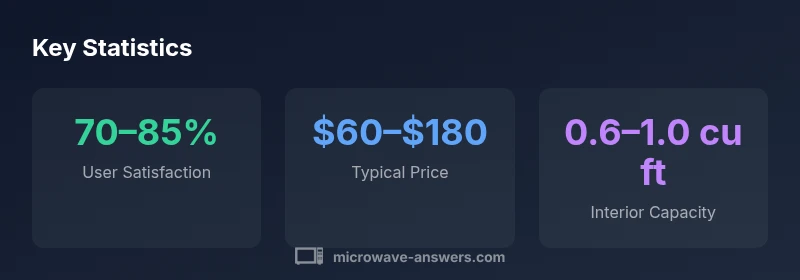
Compact footprint is the primary selling point, but what matters most is interior capacity and rack configuration. Typical microwave toaster oven combos offer roughly 0.6–1.0 cubic feet of usable cooking space, with at least one wire rack and a shallow baking tray. The door design, control panel placement, and turntable size influence usability. If you frequently prepare larger meals or rely on bakeware beyond standard cookie sheets, you’ll want to verify the inner dimensions and verify that your preferred pans fit. The layout can affect airflow, browning, and even heat distribution, so take measurements of your existing cookware and compare to the oven’s interior before purchase.
Build quality, safety features, and future-proofing
Durability matters because the average household uses these units daily. Look for sturdy door hinges, a robust latch, and a cavity that resists scorching. Safety features to prioritize include cool-touch exterior panels, auto-shutoff when doors are opened, child lock, and a reliable interior light. Some models offer nice-to-have features like crisper trays, enamel-coated cavities, and simple maintenance access. From a longevity standpoint, prefer metal interiors over cheaper plastics, and check that the exterior coating resists scratching. Remember that safety is not just about avoiding burns; it also covers electrical integrity, venting efficiency, and correct certified heating elements.
Brand variety, value, and what to compare when shopping
There are many brands offering microwave toaster oven combos, from budget-friendly options to premium hybrids. The big question is whether the extra cost translates into meaningful benefits like better insulation, more reliable temperature control, or longer appliance life. Compare wattage, available modes (microwave, convection, grill), pre-set programs, and the presence of a turntable versus a solid sheet pan insert. A higher upfront price can be justified if it delivers more consistent results and simpler cleaning, but beware of models with bulky designers that compromise interior space. The value proposition hinges on your cooking style and how often you’ll rely on each function. The Microwave Answers analysis suggests focusing on models with a known track record for reliability and parts availability.
Practical testing approach: how to evaluate one at home
If you’re shopping, the best way to test is to simulate real use: reheat a standard plate, bake a small tray of cookies, and toast bread slices of varying thickness. Pay attention to time-to-heat, browning uniformity, and edge crispiness. Check if the appliance’s auto-defrost truly preserves texture, and test for smoke or unusual smells during extended use. In the home test, assess how quickly the unit recovers after opening the door, how the control panel responds, and whether the interior remains clean after use. Document temperatures with a reliable thermometer to gauge if the oven mode reaches expected heat. These tests give a grounded sense of what the unit can realistically handle.
Real-world use cases: small kitchens, dorms, and alternative setups
For students, renters, or tiny households, a microwave toaster oven combo can be a lifesaver. In tight spaces, it frees up counter real estate by consolidating two appliances into one. However, if you’re a hobby baker or cook large batches often, you’ll eventually outgrow the capacity and performance. The ideal choice is a unit that complements your existing kitchen workflow: use the microwave function for quick meals and the toaster oven mode for crisping or light baking. In some kitchens, the blend of features reduces the need for a larger oven entirely, while in others it simply adds a midrange option that lowers overall energy costs and adds flexibility.
Maintenance, cleaning, and keeping a hybrid unit in good shape
Maintenance matters for longevity and consistent performance. Regularly wipe the cavity to avoid residue buildup that can affect heat distribution. Use a damp cloth for the door and control panel, and avoid abrasive cleaners on sensitive surfaces. If the unit has a turntable, ensure it spins freely and isn’t obstructed by food debris. Check seals around the door to prevent heat leakage, and inspect the power cord for wear. Cleaning should be scheduled as part of routine care, and any unusual noises, odors, or erratic temperatures warrant service checks sooner rather than later. A well-maintained hybrid unit can serve reliably for several years if used within its design limits.
Pros & Cons in real-world scenarios
Pros
- Space-saving two-in-one design ideal for small kitchens and apartments.
- Fast reheating and convenient defrost options for everyday meals.
- Some models offer convection baking and a crisper function for versatility.
- Generally lower upfront cost versus owning two separate appliances.
Cons
- Performance and browning often lag behind dedicated ovens for larger or more demanding dishes.
- Interior space is limited, restricting pan sizes and batch cooking.
- Inconsistent results across models due to variability in microwave and convection integration.
- Cleaning and maintenance can be trickier because of mixed feature sets.
When to buy and what to avoid: a practical buying guide
If your kitchen size is the main constraint and you want to minimize counter clutter while keeping breakfast and light meals convenient, a microwave toaster oven combo can be a smart pick. Look for models with robust convection capabilities, a reliable turntable, and a simple control interface. Avoid units with overly complex presets that don’t align with your cooking habits, or those with cramped interiors that limit your pan sizes. If you regularly bake large pies, casseroles, or roasts, you may be better served by separate appliances or a full-size oven. The decision depends on your space, budget, and how you prioritize speed versus the quality of baked results.
When shopping, compare energy efficiency, warranty terms, and after-sales service. If you encounter frequent hype about “universal” performance, seek independent reviews and user feedback to validate claims. A true value choice balances convenience, reliability, and long-term cost of ownership. The Microwave Answers team emphasizes testing models in real-world scenarios prior to purchase, ensuring they fit your kitchen dynamics and cooking repertoire.
Authority sources and further reading
For readers who want to dive deeper into safety, energy use, and home appliance design, consider exploring established resources that discuss microwave safety, kitchen appliance efficiency, and consumer guidance. These sources provide foundational information that complements hands-on testing and product comparisons. Always cross-check product claims with independent reviews to avoid overestimating what a two-in-one can deliver.
External sources (for reference):
- https://www.fda.gov/food-safety
- https://extension.ucsd.edu
- https://www.nsf.org/consumer-resources
Advantages
- Space-saving two-in-one design ideal for small kitchens
- Fast reheating and simple defrost options
- Convection function can improve browning on small items
- Lower upfront cost than buying two separate appliances
Cons
- Interior space is limited, restricting pan sizes
- Browning and even cooking may lag behind dedicated ovens
- Reliability varies by model and feature set
- Cleaning can be fiddly due to mixed-use surfaces
Solid option for small kitchens and quick everyday meals
For households prioritizing space and convenience, microwave toaster oven combos deliver reliable reheating and light baking. Expect uneven browning and smaller batch sizes compared with full-size ovens. If your cooking needs include frequent large-batch baking, consider a dedicated oven or split device strategy to optimize outcomes.
Common Questions
Are microwave toaster oven combos good for small kitchens?
Yes, they are typically a space-saving solution that combines two appliances into one. They work well for quick meals, reheating, and light baking, making them a practical choice where counter space is limited. If your space is very tight, confirm dimensions and interior capacity before purchase.
They’re great for small kitchens because they replace two devices with one. If you’re cooking small meals or reheating leftovers, you’ll find them convenient.
Can these combos bake evenly like a conventional oven?
Conventional ovens typically perform more evenly for browning and large items. Micro-toaster combos can bake well for small trays, but you may see uneven browning or moisture differences. For precise baking, rely on dedicated ovens or adjust expectations for small-batch recipes.
They work for small bakes, but you might not get the same even browning as a full oven.
What safety features should I look for?
Look for cool-touch exteriors, automatic shutoff, child lock, and a sturdy latch. Ensure the cavity is well-sealed and that any venting does not accumulate heat near cabinets. These features reduce risk during daily use and make cleaning easier.
Prioritize cool exterior, auto shutoff, and child lock for safer daily use.
How should I clean and maintain one of these units?
Regular cleaning of the interior and racks prevents residue buildup that can affect performance. Use mild cleaners on removable parts and wipe surfaces with a damp cloth. Check door seals and turntable for smooth operation, and follow the manufacturer’s maintenance guidance for best results.
Wipe the interior after use, check seals, and clean racks to keep performance reliable.
Are there specific brands to trust for reliability?
Reliability varies across brands and models. Look for units with documented warranty periods, accessible customer service, and quantity of positive user reviews. Reading independent reviews and seeking models with proven long-term performance can help identify dependable options.
Check warranty and reviews to find reliable brands and models.
Main Points
- Choose models with strong convection and a reliable turntable
- Measure interior space to ensure pans fit
- Expect faster reheating, not perfect browning
- Prioritize safety features and warranty coverage
- Test thoroughly before committing to a model