Microwave vs Toaster Oven: Practical Comparison Guide
A practical, data-driven comparison of microwave and toaster oven performance, size, energy use, safety, and value for home cooks and homeowners.


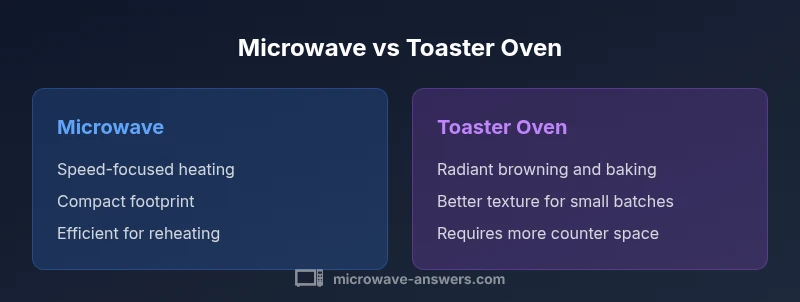
For most daily tasks, a microwave delivers speed and energy efficiency for reheating and defrosting, while a toaster oven provides oven-like browning and baking in a compact footprint. If you need both speed and texture, a convection microwave or hybrid unit is worth considering. This guide breaks down the key differences and helps you choose based on your routine, space, and budget.
Why microwave or toaster oven choice matters for home cooks
Choosing between a microwave and a toaster oven is more than a matter of preference; it shapes your daily workflow, energy use, and the texture of your food. If you are considering the pair of terms microwave or toaster oven, the decision hinges on your cooking patterns, kitchen space, and desired outcomes. According to Microwave Answers, the core trade-offs are speed, browning capability, and countertop footprint. The Microwave Answers team found that most households primarily use microwaves for rapid reheating and defrosting, while toaster ovens shine when you want oven-like browning and crusts on small batches. This distinction matters because it guides how you allocate countertop real estate and which tasks you delegate to which device. In practice, many kitchens benefit from having both devices, but for a single compact setup, prioritize your dominant tasks: speed or texture. The aim here is to translate those trade-offs into concrete buying criteria, from wattage or power settings to rack configurations and heat distribution. By anchoring your choice to your actual cooking habits, you reduce the chance of buyer's remorse.
What to measure when comparing: capacity, size, and footprint
When you start evaluating a microwave vs toaster oven, measure tangible aspects that affect daily use. First is the countertop footprint: width, depth, and height determine whether the unit fits your kitchen island, cabinet space, or under-counter area. Second is interior capacity: how many slices of bread, or how many cups of reheated leftovers can fit at once. Third are the interior configurations: number of racks, ability to stack items, and whether the rack can be repositioned for crisper air. Fourth is door opening style: side-swing vs pull-down; fifth is internal lighting and visibility so you can monitor progress without guessing. These criteria matter for performance and ergonomics. A practical approach is to sketch your typical meals, list the tasks you perform most often, and map them to the features that support those tasks. Shortlist models that check several boxes rather than chasing every feature. This method helps you avoid overbuying for rare use cases and ensures the appliance becomes a reliable ally rather than a decorative piece.
Cooking performance: speed, texture, and browning
Cooking performance is the heart of the comparison. Microwaves excel at speed and uniform reheating because they heat water molecules directly; results are quick but texture can be soggy if you don’t use a crisping method. Toaster ovens provide direct radiant heat, which makes browning, crust formation, and crisp textures possible—excellent for small baked goods and toasted sandwiches. If you pursue crispness, look for a toaster oven with a dedicated bake or toast setting and a suitable rack. Convection-equipped microwaves merge both capabilities by combining microwave energy with a fan-forced heated air. These models can reheat while browning and can bake smaller items with surprising efficiency. In practice, you should align your expected results with the device’s strengths: for uniform reheating in minutes, choose microwave; for crusts and golden finishes, choose toaster oven or convection microwave. The difference is the handling of moisture and heat distribution, which shapes texture outcomes across dishes.
Space, capacity, and footprint in real kitchen layouts
Countertop real estate is precious, especially in compact kitchens, dorms, or cottages. A microwave generally offers a smaller footprint and often a taller profile, allowing it to fit under cabinets or between appliances. A toaster oven tends to be shallower and wider, with the risk of crowding adjacent gadgets if placed too close to a wall or cabinet. In practice, consider your typical plate size, baking sheet, and whether you ever cook multiple items at once. A compact convection microwave can be a strong compromise, offering a five- to six-quart interior and a footprint similar to mainstream microwaves while adding convection baking. If you need to free up counter space entirely, you could consider wall-mounted or built-in options, though these require professional installation. Ultimately, space planning is a practical starting point; measure, visualize, and compare the width and depth with clear margins for ventilation, cords, and user movement. The goal is to avoid a cramped kitchen where either device becomes awkward to use.
Energy use and cost of ownership considerations
Energy use is a practical angle that homeowners care about, especially over many years of daily use. In general, microwaves consume energy primarily during short bursts of heating, while toaster ovens run longer cycles for baking and toasting, which can raise overall energy use per task. Be mindful that converters like convection can alter energy dynamics by distributing heat more efficiently. When evaluating energy use, focus on typical tasks you perform weekly: quick reheats, defrosting, baking small items, and crisping foods. The best choice should minimize energy creep while meeting your quality expectations. Consider long-term costs such as filter cleanings (where applicable), possible replacement parts (like door seals and racks), and the availability of spare parts in your region. Informed decision-making must balance upfront cost against durability, maintenance intervals, and repair considerations. The Microwave Answers team emphasizes that a well-chosen appliance can cut energy use and reduce waste, delivering tangible savings over time.
Safety considerations you should not overlook
Safety is not optional; it guides how you load, operate, and clean your appliance. Microwaves require safe containers and avoidance of metal; always check labels for microwave-safe plastics or glass. Toaster ovens produce radiant heat and can get hot to the touch, so use protective gloves and keep combustibles away from the sides. Arcing is a hazard when metal is used in a microwave, while small children should be kept away from hot surfaces on toaster ovens. If your kitchen includes young cooks, set expectations about safe operation and unplug devices when not in use. For measures, prefer microwave-safe glass and avoid heating sealed containers that can explode. In addition, check the venting around the unit to prevent overheating and ensure adequate clearance from walls and cupboards to promote safe operation and airflow. Overall, safety starts with proper usage, respectful placement, and regular inspection for wear and damage.
Maintenance, cleaning, and long-term durability expectations
Durability hinges on build quality, materials, and routine care. Regular cleaning reduces residue that can affect heating performance and odor transfer. For microwaves, wipe interior after use, clear the turntable, and check seals for cracks; for toaster ovens, remove racks and crumbs, wipe the interior, and inspect the door seal for gaps. When choosing, look for models with sturdy racks, anti-scratch enamel interiors, and dishwasher-safe parts where available. Avoid harsh chemical cleaners that can damage coatings; instead, use mild detergents and a damp cloth. The life expectancy of either device depends on usage patterns and maintenance discipline. In many homes, a well-maintained unit lasts several years and can still deliver reliable results with proper care. This attribute—longevity—often distinguishes mid-range appliances from those that demand frequent replacements.
Budget, value, and what to expect over time
Budgeting for either option should consider not only upfront cost but also long-term value. Microwaves generally come in lower upfront price ranges and offer strong value for rapid reheating; toaster ovens often command higher upfront costs but deliver oven-like versatility in a compact footprint. Trade-offs include preheating time, browning ability, and energy use for recurring tasks. Your choice should reflect how often you perform tasks that benefit from browning, baking, or crisping and how much counter space you can realistically allocate. If your meals are simple and quick, a basic microwave may suffice; if you crave baked sides and toasted crusts, a toaster oven with reliable heating elements could be the better investment. The Microwave Answers team advises evaluating the total cost of ownership through user reviews, warranty terms, and anticipated usage patterns rather than focusing solely on sticker price.
Everyday use cases: which device fits which scenario
In everyday use, a microwave is a natural fit for rapid reheating, defrosting, and steaming where moisture retention matters. It shines when you need to warm leftovers, melt butter, or soften ingredients quickly. A toaster oven excels for small-batch baking, toasting, and crisping tasks like reheated pizza crusts, roasted vegetables, or small casseroles with a crust. For households that routinely bake cookies, muffins, or small sheet-pan meals, a toaster oven (or a convection microwave) becomes a strong ally. If you want a single device to cover both functions without heavy compromise, look for a convection microwave with adjustable convection speeds and multiple presets. This approach lets you reheat with microwave power while achieving crisp exteriors when needed. The bottom line is to map your weekly menu to device strengths and avoid forcing a single gadget to perform everything.
Debunking myths and common misconceptions
There are several myths about microwaves and toaster ovens that can mislead buyers. For example, some people believe that microwaves cannot bake or brown at all; in reality, some models do both, especially those with convection and crisping features. Others assume toaster ovens always preheat quickly; actual preheat times vary by model and wattage. A frequent misconception is that microwaves are unsafe for all plastics; while many plastics are not microwave-safe, many others are designed for safe heating, and labels should guide usage. Relying on anecdotal reports rather than manufacturer guidance can lead to unsafe practices or suboptimal results. This section invites readers to verify with the device manual, adhere to manufacturer specifications, and adopt safe cooking practices. By understanding the real capabilities and limits of each appliance, you can choose with confidence rather than fear.
Hybrid options and how to future-proof your kitchen
The market increasingly offers hybrid devices that fuse microwave speed with convection baking, sometimes called convection microwaves. These appliances promise a single, flexible platform that can reheat, crisp, and bake with relative efficiency. If your kitchen supports a single high-utility gadget, this option can satisfy multiple use cases and limit clutter. Alternatively, you may find it practical to own both a dedicated microwave and a toaster oven, using one for rapid reheating and the other for browning and baking. For renters or small spaces, a compact convection microwave can deliver a surprising range of functions without expanding your footprint. When evaluating hybrids, pay attention to user feedback on heat distribution, noise, and reliability, as these factors often determine real-world satisfaction more than spec sheets alone.
Practical decision checklist and next steps
To move from decision to installation, use a simple checklist. First, list your top tasks and expected weekly volume; second, measure counter space and plan for ventilation; third, decide whether you want browning and baking capabilities in addition to reheating; fourth, set a rough budget that aligns with long-term value rather than upfront aesthetics; fifth, read user reviews focusing on reliability and support; sixth, compare models with similar wattage or power settings and verify compatibility with common cookware. Finally, finalize your choice and prepare your kitchen for safe operation, including proper containers and cookware that suit your selected device. The goal is a straightforward, repeatable process that reduces second-guessing and ensures your new appliance becomes an integral part of your cooking routine.
Authority references
To support these recommendations, consult credible sources on microwave safety, energy efficiency, and consumer guidance. The U.S. Food and Drug Administration provides safety guidelines for microwave use and container safety. The Department of Energy maintains energy efficiency standards and guidance for household appliances, including compact ovens and microwaves. Consumer Reports offers independent testing on performance, reliability, and value of kitchen appliances, including microwaves and toaster ovens. These sources help readers validate the claims in this guide and inform a practical decision rooted in safety and efficiency.
External sources for further reading:
- https://www.energy.gov/
- https://www.fda.gov/
- https://www.consumerreports.org/
Comparison
| Feature | Microwave | Toaster Oven |
|---|---|---|
| Cooking method | Electromagnetic heating for rapid reheating | Radiant heat with browning and baking capability |
| Space footprint | Typically compact; trims under-cabinet space well | Wider footprint; may crowd nearby devices |
| Texture outcomes | Excellent for moisture retention in reheats; browning requires accessories or technique | Excellent browning and crusting; versatile for small bakes |
| Energy usage by task | Highly efficient for short tasks; lower energy per minute | Higher energy per cycle for baking and toasting |
| Best for | Speedy reheats, defrosting, and quick melts | Small-batch baking, crisping, and toast-like results |
Advantages
- Fast reheating and defrosting for busy days
- Compact footprint favorable for small kitchens
- Lower upfront cost and simpler maintenance for basic models
- Convection-capable variants offer a middle ground between speed and browning
- Hybrid convection microwaves deliver versatile performance
Cons
- Microwaves typically lack strong browning without special accessories
- Toaster ovens can require longer preheating and take up more counter space
- Relying on a single unit may force compromises on texture or speed
- Some models have limited convection performance or uneven heating
Convection microwave is the most versatile compromise for most households
A convection microwave combines speed with browning and baking, reducing the need for two separate devices. For homes that prioritize speed, microwave-only tasks, or limited space, this hybrid option often delivers best overall value. The Microwave Answers team recommends assessing your weekly cooking tasks to determine whether you need raw speed, texture, or a blend of both.
Common Questions
What is the main difference between a microwave and a toaster oven?
A microwave heats food using electromagnetic waves for fast reheating, while a toaster oven uses radiant heat to bake and brown. For crispy textures in small batches, the toaster oven generally performs better.
Microwave heats quickly; toaster ovens brown and bake. If you want crispness, choose the toaster oven.
Can I bake in a microwave?
Some microwaves include convection or bake presets that enable baking on a small scale; however, results vary by model. For reliable baking, a dedicated toaster oven or a convection microwave is preferred for crust and browning.
Yes, some convection microwaves bake, but for best results use convection settings.
Is a hybrid convection microwave worth it?
Hybrid convection microwaves offer both speed and browning in one unit, which is convenient for small spaces. They can be a good compromise if you cook a mix of reheating and baking tasks.
If you want both speed and browning in one device, a hybrid can be worth it.
What should I consider for safety and materials?
Choose microwave-safe containers, avoid metal in microwaves, and use heat-resistant cookware for toaster ovens. Keep kids away from hot surfaces and ensure proper ventilation.
Use microwave-safe containers and heat-resistant pans; keep kids away from hot surfaces.
How do I decide if I need a single device or two?
If your routine includes frequent reheating and crusty baking, two devices may be more efficient. A high-quality convection microwave can cover many tasks, reducing the need for a separate toaster oven.
Two devices can be handy, but a good convection microwave might cover most needs.
What factors affect energy use the most?
Task duration, heating method, and insulation largely determine energy use. Short reheats tend to be more energy-efficient than longer baking sessions; convection can improve efficiency by distributing heat evenly.
Short reheats use less energy; convection helps heat evenly for efficiency.
Main Points
- Assess your top tasks before buying
- Measure counter space and plan ventilation
- Consider a convection microwave for versatility
- Balance upfront cost with long-term value
- If you mainly reheat, choose a microwave; for browning/baking, toaster oven or convection microwave