Microwave vs Steam Oven: A Practical Kitchen Comparison
A rigorous, practical comparison of microwave vs steam oven for home cooks. Explore speed, texture, energy use, maintenance, and buying considerations to decide which appliance fits your daily cooking.


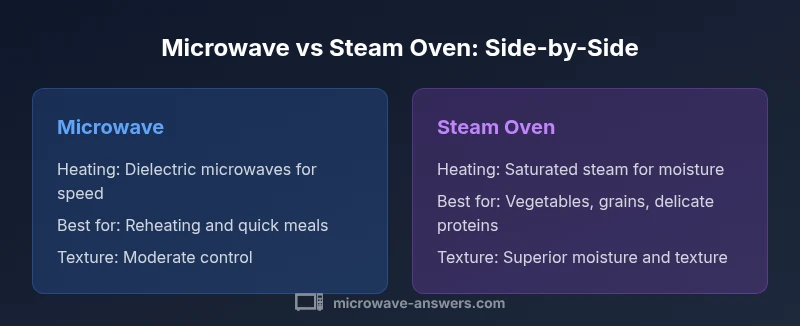
Microwave vs steam oven: The core trade-off is speed versus culinary versatility. A microwave delivers ultra-quick reheating and defrosting, with excellent convenience for busy days. A steam oven provides moist, even cooking and superior textures for vegetables, grains, and proteins. Your decision should hinge on how you cook most often, available kitchen space, and budget.
How Microwave and Steam Oven Technologies Differ
Microwave heating and steam generation are fundamentally different. A microwave oven uses dielectric heating to agitate water molecules inside food, creating rapid internal heat without requiring high external heat. This makes warm-ups and defrosting exceptionally fast, with minimal preheating. In contrast, a steam oven relies on a built-in boiler to produce saturated steam that surrounds the food, transferring heat through moisture and air. Steam cooking excels at gentle, even heating and moisture retention, which helps keep vegetables vibrant and grains tender. According to Microwave Answers, dielectric heating drives speed and convenience, while steam ovens emphasize texture and juiciness. Users should recognize that each appliance targets different cooking goals and may pair well in a kitchen that prioritizes flexibility over single-purpose speed.
From a design perspective, many steam ovens now offer programmable settings that mimic traditional methods like steaming, blanching, and poaching, sometimes with convection for faster heat distribution. Modern microwaves, too, come with features that extend beyond reheating, including sensor cooking, browning, and even basic bake modes in some models. The key takeaway is that microwave and steam technologies trade off speed against texture control and moisture management. This is not a question of one being universally better; it’s about aligning the technology with your typical meals and your kitchen layout. The Microwave Answers team emphasizes evaluating dish profiles you cook most often when weighing options.
Speed, Convenience, and Everyday Tasks
When speed matters most, the microwave typically wins. Quick reheating of leftovers, thawing frozen items, and simple one-dish meals can be done in minutes rather than tens of minutes. Sensor-based microwaves can adjust power and time automatically, aiding consistency for busy households. Steam ovens, while slower to heat up, shine in tasks that require moisture retention and texture control. Cooking vegetables, reheating grains with a soft bite, and finishing a crust with a moist interior are common use cases where steam helps prevent drying out and overcooking. In practical terms, a microwave reduces meal prep friction, while a steam oven elevates finish quality for specific dishes. The choice depends on how often you perform each task and whether you value speed over texture precision.
To frame the decision, estimate how many meals per week you’ll prepare entirely in one appliance versus multiple methods. If most days revolve around reheating, a microwave is likely sufficient. If you regularly cook delicate vegetables, rice, poultry, or fish and care about moisture, a steam oven becomes increasingly attractive.
Texture, Moisture, and Food Quality
Texture and moisture management are the primary differentiators between these two approaches. Steam cooking provides consistent moisture, which reduces the risk of drying out lean proteins and vegetables. This method also tends to preserve color and nutrients better in some cases, because temperatures are more evenly distributed and heat transfer is gentler. Microwaves, by contrast, heat quickly but can create uneven textures if the center of the food heats faster than the exterior. This is why some microwave recipes rely on stirring, shingling, or covering to approximate evenness. For baked goods or grains that benefit from steam’s hydration, steam ovens can improve outcomes by maintaining a moist environment during cooking. Understanding these texture dynamics helps you assign dish categories to each appliance more confidently.
A practical tip: start with emblematic dishes—steam for asparagus, rice, and poached fish; microwave for reheated leftovers and quick melts. This framing helps you map your usual repertoire to the right tool and prevents unnecessary extra cooking steps.
Cooking Range and Techniques: What You Can Do
Microwaves excel at speed-oriented tasks, including defrosting, rapid reheating, and simple cooking of ready meals. They’re also capable of basic baking and browning in some models, but their performance in these areas is often user-dependent and recipe-specific. Steam ovens open up a broader technique spectrum: true steaming, gentle poaching, reheating with retained moisture, and finishing techniques such as steaming then broiling for texture. Advanced models combine steam with convection, enabling faster heat transfer and more versatile menus, including vegetables, seafood, dumplings, and even certain breads. If you love experimenting with textures or want a dedicated appliance for precise moisture control, a steam oven has clear advantages. For a compact kitchen where counter space matters, a modern microwave with smart features might be a more pragmatic choice.
In practice, many cooks use both appliances to maximize efficiency: quick reheats in the microwave and selective steam cooking for special recipes. This dual-approach often yields the best balance of speed and quality without forcing compromises on everyday meals.
Energy Use and Operating Costs: Long-Term Considerations
Energy efficiency is highly task-dependent. Microwaves are typically energy-efficient for small, quick tasks because they minimize overall energy consumption by heating only the food and not the surrounding air. Steam ovens, especially when run for longer steam cycles, consume energy and water but can be more efficient for batch cooking or meals that benefit from gentle heat and moisture retention. Over time, this can translate into cost differences shaped by your weekly cooking patterns. If you frequently prepare large or moisture-sensitive dishes, the steam oven’s efficiency gains in quality may justify higher energy and water use. Conversely, if most meals are quick reheat jobs, a microwave remains the more economical choice. In either case, modern models often include energy-saving modes and inactivity sensors that help reduce standby consumption.
When evaluating long-term costs, consider maintenance steps that impact efficiency, such as regular cleaning of steam components and descaling procedures. A well-maintained unit, whether microwave or steam, preserves performance and energy efficiency. Brand-specific recommendations from Microwave Answers emphasize routine checks, especially for mineral buildup in steam systems and tight seals in microwave doors.
Maintenance, Cleaning, and Durability
Maintenance needs differ notably. Microwaves are generally low-maintenance: wipe the interior, clean the turntable, and ensure vents remain unobstructed. Some units feature steam-cleaning cycles for stubborn residues, but frequent heavy cleaning is usually unnecessary. Steam ovens, by comparison, demand periodic descaling and mineral management to prevent scale buildup that can impede steam production or heat transfer. Regularly inspecting door seals and ensuring the water reservoir (or boiler) remains clean reduces the risk of leaks and performance degradation.
Durability hinges on build quality and usage patterns. A robust steam oven may require more frequent service if steam components wear, whereas a high-quality microwave tends to hold up well with routine care. If you anticipate heavy daily use, planning for service intervals and compatible replacement parts is prudent. The Microwave Answers team notes that staying ahead of maintenance with a simple, predictable routine pays dividends in reliability and consistent results.
Space, Design, and Installation Considerations
Kitchen footprint and installation layout influence the practicality of each appliance. A stand-alone microwave often lives on a countertop or is integrated into cabinetry, saving space when compared with larger steam ovens that demand dedicated cubic footage and proper ventilation. Steam ovens, especially in combo configurations with a microwave or an electric oven, can occupy substantial cabinet space but can be integrated into wall units for a clean, seamless appearance. Consider your existing kitchen workflow: If you frequently shuttle ingredients between appliances, ensure you have adequate counter space for prep near the microwave and access to the steam oven without crowding.
Ventilation is a key factor for steam ovens, as ongoing steam condensation can affect surrounding cabinetry if airflow is poor. Prospective buyers should map electrical and water supply requirements, confirm compatibility with existing piping, and evaluate whether a single-device or multi-device solution best supports your cooking habits. Budget, aesthetics, and resale considerations should factor into your ultimate choice.
Safety, Hygiene, and Common Hazards
Food safety considerations differ for microwaves and steam ovens. Microwaves minimize hotspots through stirring and rotating mechanisms but can still leave cold spots if contents are dense. Covering foods helps prevent splatter and uneven heating, while using microwave-safe containers reduces chemical leaching and container damage. Steam ovens, by maintaining an elevated humidity environment, reduce the risk of drying and burning, but they require careful handling to prevent scalding from hot steam. Regular maintenance of seals, moisture controls, and water lines is essential to prevent leaks and contamination.
As with any appliance, proper operation reduces hazards: follow manufacturer guidelines, use recommended cookware, and avoid overfilling; in steam ovens, ensure water reservoirs are filled only with clean water and avoid bypassing safety interlocks. The Microwave Answers guidance emphasizes that understanding each device’s safety features—like door interlocks and automatic shutoffs—helps users cook confidently while minimizing risk.
Decision Framework: Which Appliance Fits Your Kitchen?
To make a confident choice, map your typical cooking patterns to three decision criteria: speed vs texture, space and installation, and long-term cost of ownership. If your daily routine revolves around quick reheats and defrosting, a microwave offers a compelling value proposition with minimal space impact. If you regularly prepare moisture-sensitive dishes—especially vegetables, rice, fish, or poultry—and value finished texture, a steam oven becomes a strong candidate, especially in larger kitchens or for serious home cooks.
A practical approach is to build a two-column chart of your most common meals, assigning a primary appliance for each. For example, use the microwave for leftovers and quick meals; rely on the steam oven for side dishes, grains, and delicate proteins. For some households, a combo unit that includes both functions may deliver the best balance of speed, texture, and space. In all cases, verify that your kitchen layout supports ventilation, water connections, and electrical requirements prior to purchase.
Conclusion: Making an Informed Choice
Choosing between a microwave and a steam oven depends on your cooking priorities, space, and budget. The microwave’s speed and convenience make it the default for busy households, while the steam oven offers a higher degree of texture control and moisture management for discerning cooks. For many homes, the most practical path is a hybrid approach: keep the microwave for quick tasks and add a steam oven for select dishes that benefit from moisture and even heat. By aligning your purchase with your most frequent meals, you ensure you get the best value and the most satisfying results over time.
Comparison
| Feature | Microwave | Steam Oven |
|---|---|---|
| Heating method | Dielectric heating (microwave) for rapid internal heat | Steam transfer with built-in boiler producing saturated steam |
| Best use case | Reheating, defrosting, quick meals | Moisture-focused cooking, vegetables, grains, delicate proteins |
| Texture and moisture control | Less moisture control; risk of uneven texture | Superior moisture retention and even texture |
| Cook time for typical tasks | Minutes for reheating/defrosting | Tens of minutes, longer for steaming batches |
| Energy and water usage context | Low energy for small tasks; isolated heating | Water use and energy for longer steam cycles |
| Maintenance considerations | Low maintenance; occasional cleaning | Descaling and mineral management required |
| Space and installation | Countertop or compact mount; minimal footprint | Requires cabinet space, water hookup, and ventilation |
| Upfront cost range | Generally lower upfront cost (basic models) | Higher upfront cost, especially for multi-function units |
| Best for | Busy households needing speed and convenience | Home cooks seeking texture precision and moisture control |
Advantages
- Rapid reheating and defrosting for busy schedules
- Moisture retention improves texture for vegetables and grains
- Compact microwaves with modern features support versatile tasks
Cons
- Higher upfront cost for steam-enabled units
- Steam ovens require more space and maintenance
- Microwaves can produce uneven heating without careful loading
Microwave wins for speed; steam oven wins for texture and moisture control
Choose a microwave for everyday speed and convenience. If you value moisture-rich textures and precise control, opt for a steam oven, or consider a hybrid unit if space and budget allow.
Common Questions
What can a steam oven do that a microwave can't?
A steam oven can cook with moist heat, preserving texture and moisture in vegetables, grains, and proteins. It excels in finishing dishes and in gentle reheating that maintains tenderness, something microwaves struggle to achieve consistently.
Steam ovens preserve moisture and texture for delicate dishes, a feat microwaves can't reliably match.
Are steam ovens energy efficient for everyday cooking?
Steam ovens are efficient for longer, moisture-dependent cooking tasks, but they use energy and water for steam generation. For quick tasks, microwaves are typically more energy-efficient. The best choice depends on how often you use each function.
Steam ovens can be efficient for longer tasks, but microwaves usually use less energy for quick jobs.
Can I replace my microwave with a steam oven?
You can replace some microwave tasks with steam oven functionality, but you may lose speed for quick reheats. Many households keep a microwave for rapid tasks and add a steam oven for specialized cooking.
A steam oven can cover many tasks, but you’ll likely still want a microwave for speed.
Do I need special cookware for a steam oven?
Steam ovens typically require stainless steel, heat-safe glass, or silicone cookware labeled for steam use. Avoid non-vented lids that trap steam in ways not intended by the manufacturer. Always follow the appliance’s guidelines.
Use cookware rated for steam cooking and follow the manual.
Is a microwave convection oven different from a standard microwave?
Yes, microwave convection ovens combine microwave heating with a convection oven, enabling browning and more uniform cooking. They are more versatile than standard microwaves but still may not match steam ovens for moisture control.
Convection microwaves add browning, but they differ from steam ovens in moisture handling.
What maintenance is required for steam ovens?
Steam ovens require periodic descaling, water reservoir care, and seal/detector checks to maintain efficiency and prevent mineral buildup. Regular cleaning cycles help sustain performance.
Descale occasionally and keep the water system clean.
Main Points
- Assess your cooking patterns before choosing
- Plan kitchen space for either appliance, or a combo setup
- Prioritize texture-sensitive dishes when selecting
- Budget for maintenance and potential descaling
- Consider a hybrid approach for maximum flexibility