Difference Between Microwave and Air Fryer Oven: An Analytical Guide
Explore the difference between microwave and air fryer ovens with a data-driven, side-by-side comparison. Learn heating methods, texture outcomes, and practical tips for choosing the right appliance for speed, crispiness, and kitchen space.


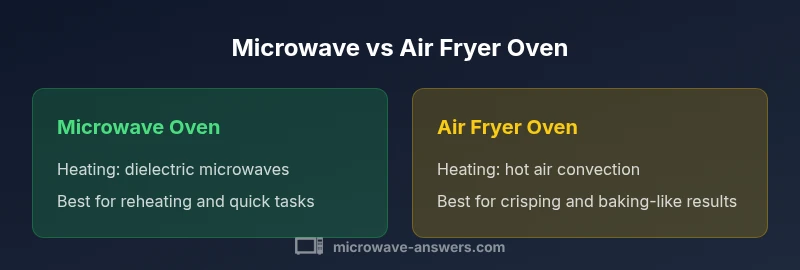
Microwave ovens excel at speed and convenience for reheating or simple meals, while air fryer ovens deliver crisp, browning results with hot-air convection. The difference between microwave and air fryer oven comes down to heating method, texture, and ideal use cases. Choose based on desired outcome, portion size, and available kitchen space.
What sets these appliances apart: core principles and practical implications
Understanding the difference between microwave and air fryer oven is essential for practical kitchen planning. According to Microwave Answers, these two devices occupy different categories of cooking technology, with distinct strengths and limits. In this section we lay out the fundamental principles, definitions, and typical use cases, so you can map your needs to the right appliance. A microwave uses electromagnetic waves to heat water and fat molecules rapidly, which makes it superb for reheating, defrosting, melting, and cooking simple dishes. An air fryer oven relies on a heating element and a high-velocity air stream to circulate hot air, producing browning and crisp textures similar to frying, with little or no added oil. The difference between microwave and air fryer oven extends beyond speed; it influences texture, flavor development, energy usage, and how you manage space in a busy kitchen.
How Microwave Ovens Work: The Basics
Microwave ovens generate microwaves at a frequency that excites water molecules in food. This rapid molecular agitation converts to heat that travels from the interior outward. Because heating is volumetric rather than surface-based, foods often heat evenly from the center outward if evenly shaped. Turntable or flat-surface interiors influence heat distribution. Microwaves excel at reheating leftovers, warming beverages, melting chocolate, and cooking small portions quickly. They are generally compact, power-efficient for short tasks, and familiar in most kitchens. However, because microwaves heat primarily by moisture content, foods with low water activity or crispy exteriors can turn out soggy or uneven unless assisted by atmospheric moisture or time. The key to mastering the microwave is learning to balance time, power level, and container type for consistent results.
How Air Fryer Ovens Work: The Basics
Air fryer ovens use a heating coil and a high-velocity fan to circulate hot air around food. The goal is to create rapid surface browning and crisp texture without submerging food in oil. Most models include multiple racks or trays to accommodate different portions; many have presets for fries, chicken, vegetables, and baked goods. Because heat is transferred primarily by convection at the surface, interior moisture can remain, while exteriors develop Maillard browning. Cooking times tend to be longer than microwaving for similar tasks but yield a distinct texture that many home cooks equate with frying, minus heavy oil. The important nuance is that air-fryer convection is most effective when foods are spaced to allow air flow and when ingredients are dry enough to promote browning.
Speed and Efficiency: Time, Energy, and Output
When evaluating speed and efficiency, the fundamental difference between microwave and air fryer oven becomes clear. A microwave delivers rapid, volumetric heating, which cuts down overall cooking time for reheating and small meals. An air fryer oven depends on convection and a heating element, so the initial heat-up may take longer, but the result tends to be more uniform browning and crisper textures. Energy use is highly task-dependent: microwaves are typically more energy-efficient for quick reheat, while air fryer ovens may consume more energy during longer bake or fry-like cycles yet deliver better texture with less added oil. For many households, a hybrid approach—using each appliance for its strengths—offers the best balance of speed and quality.
Texture, Flavor, and Cooking Outcomes
Texture is often the defining difference between the two appliances. Microwave cooking can yield soft, moist interiors but may leave edges soggy if moisture is trapped. Air fryer ovens excel at browning and crispiness, producing fry-like textures with minimal oil. Flavor development also diverges: convection heat in air fryers promotes Maillard browning, which enhances savory flavors; microwaves rely more on moisture and internal heating, which preserves delicate flavors but may dull browns. Understanding these outcomes helps in choosing the right appliance for tasks like reheating leftovers, cooking frozen items, or baking small desserts.
Size, Footprint, and Kitchen Integration
The physical footprint matters for kitchen design. Microwave ovens are generally compact and can fit under cabinets or on counters, saving vertical space. Air fryer ovens vary in size, with some models resembling compact convection ovens and others occupying the space of a traditional toaster oven. If you have limited counter space or a small kitchen, a microwave may be the more practical choice; if you regularly prepare crispy items or bake small trays, an air fryer oven can justify its larger footprint. Both devices benefit from thoughtful placement near outlets and good ventilation to avoid heat buildup in tight spaces.
Cleaning, Maintenance, and Longevity
Maintenance considerations are not glamorous but matter for long-term satisfaction. Microwaves are typically simple to clean: wipe interior surfaces, avoid standing water, and replace the turntable if needed. Air fryer ovens involve more components—drip trays, racks, baskets, and sometimes multiple rack levels—requiring periodic cleaning and occasional dishwasher-safe parts. The best long-term strategy is to follow manufacturer guidelines, avoid abrasive cleaners, and minimize food splatter with proper framing and containers. Longevity depends on build quality, usage patterns, and whether you perform routine maintenance.
Practical Scenarios: Everyday Reheat vs Fry-like Results
Think about typical tasks: reheating leftovers, defrosting frozen meals, crisping french fries, roasting vegetables, and baking small goods. For rapid reheating and defrosting, a microwave excels and often saves time. For achieving fry-like crispiness without deep-frying, an air fryer oven shines, especially for chicken tenders, tots, and roasted vegetables. For best of both worlds, many cooks use the microwave for quick prep and switch to the air fryer oven to finish browning and texture.
Price, Value, and Durability Considerations
Price and value vary with model features, capacity, and brand. Entry-level microwaves are often budget-friendly and compact, while higher-end models add inverter technology and sensors for more consistent results. Air fryer ovens tend to cost more upfront due to convection capabilities and built-in heating elements, but they offer broader cooking versatility. When evaluating durability, consider build quality, ease of cleaning, available warranties, and the availability of replacement parts. Budget should align with your intended use: frequent crispy dishes may justify investing in an air fryer oven; light, occasional reheating may be fine with a basic microwave.
Common Myths Debunked
A common myth is that microwaves somehow “die” food. The truth is that microwaves heat materials differently, and texture isn’t always optimized for browning. Another myth is that air fryer ovens automatically make every food crispy; success still depends on moisture content, oil use, and proper spacing. Finally, many assume these appliances are mutually exclusive; in practice, many kitchens benefit from both, using each device for its strengths. Understanding the difference between microwave and air fryer oven helps in dispelling myths and making informed choices.
Buying Tips: What to Look For
When shopping, look for wattage and inverter technology in microwaves to improve evenness; for air fryer ovens, pay attention to fan speed, temperature range, rack versatility, and ease of cleaning. Consider countertop size, power outlet compatibility, and noise levels. Read reviews focused on real-world performance, especially around reheating and crisping. Finally, plan for ongoing maintenance: check available spare parts and confirm warranty terms to protect your investment.
Using Both: When and How to Combine Appliances
The most practical approach for many households is to use both appliances in tandem. Reheat in the microwave to save time, then finish in the air fryer oven to develop texture. Alternatively, defrost in the microwave before air-frying to reduce total cook time and improve browning. By aligning tasks with the appliance that handles them best, you can maximize both speed and quality while maintaining energy efficiency and kitchen organization.
Comparison
| Feature | Microwave Oven | Air Fryer Oven |
|---|---|---|
| Heating method | Dielectric heating via microwaves heats water molecules inside food | Convection heating with a fan and hot air for surface browning |
| Texture outcomes | Moist interiors; potential for soggy edges on some foods | Crispy, browned exteriors with fry-like texture |
| Cooking speed | Very fast for reheating and small dishes | Slower for many tasks but efficient for crisping larger items |
| Energy use | Typically lower energy for quick tasks | Moderate to higher energy during longer bake/fry cycles |
| Space and footprint | Often compact, fits under cabinets | Larger footprint similar to a small oven |
| Ease of cleaning | Simpler interiors; dishwasher-safe turntables in many models | More components to clean (baskets, racks, trays) |
| Typical price range | Lower-cost entry models; budget options exist | Higher upfront cost for convection and larger capacity |
Advantages
- Very fast reheating and defrosting
- Crisp results with minimal oil
- Compact options available for small kitchens
- Versatile for diverse cooking tasks
Cons
- Microwave texture can be soggy or uneven for some foods
- Air fryer ovens require more counter space
- Higher upfront cost for air fryer ovens
- Mismatched usage can waste space and energy
Neither appliance is universally superior; use-case and kitchen context decide.
For speed and reheating, microwaves lead. For crispiness and bake-like results, air fryer ovens excel. A combined approach often yields the best balance.
Common Questions
Can I replace an air fryer oven with a microwave for crispy foods?
A microwave alone cannot reliably replicate the crisp, fried textures of an air fryer oven. For best results, use the air fryer function or a separate air fryer when crispiness is a priority. If speed is your main concern, a microwave is still ideal for reheating, defrosting, and simple meals.
A microwave can't replace the crisp results of an air fryer; use air frying when you want browning, or rely on microwave for quick reheating.
Is an air fryer oven more energy-efficient than a microwave?
Energy efficiency depends on the task. Microwaves are typically more energy-efficient for short reheating tasks, while air fryer ovens may consume more energy during longer bake cycles but often require less oil. For occasional crispy needs, the trade-off is usually acceptable.
Microwaves are usually quicker and may use less energy for small tasks; air fryers use energy mainly during longer baking cycles.
Are both appliances safe for reheating leftovers?
Yes. Both devices can reheat leftovers safely if used correctly. Follow guidelines for reheating to steaming hot temperatures and avoid overheating, which can lead to dryness or uneven heating. Use appropriate containers and avoid metal in microwaves.
Both are safe for leftovers when used properly—watch temperatures and use microwave-safe containers.
Which is better for cooking frozen foods?
Microwaves are excellent for quick defrosting and reheating of frozen items, while air fryer ovens can crisp items after initial heating. For best texture, defrost in the microwave, then finish in the air fryer for crispness.
Defrost quickly in the microwave, then finish in the air fryer for crisp texture.
Can you bake in a microwave?
Baking in a microwave is possible for certain items, but results differ from traditional oven baking. An air fryer oven often yields better browning for baked goods due to convection, while microwaves excel at speed for soft textures.
You can bake certain things in a microwave, but convection is usually better for browning.
How do I clean both appliances effectively?
Regular cleaning with mild soap and water is sufficient for most surfaces. Remove racks, trays, and baskets for thorough cleaning. Dry all parts before reassembling to prevent odor and mold.
Clean with mild soap, remove detachable parts, and dry them well after washing.
Main Points
- Choose microwave for speed and simplicity
- Choose air fryer for texture and browning
- Plan to use both if space allows
- Match model features to typical tasks
- Mind energy use and cleaning when choosing