Difference Between a Microwave and a Convection Oven
Explore the key differences between microwaves and convection ovens, including heating methods, cooking results, and practical guidance to choose the right appliance for speed, baking, and meal prep.


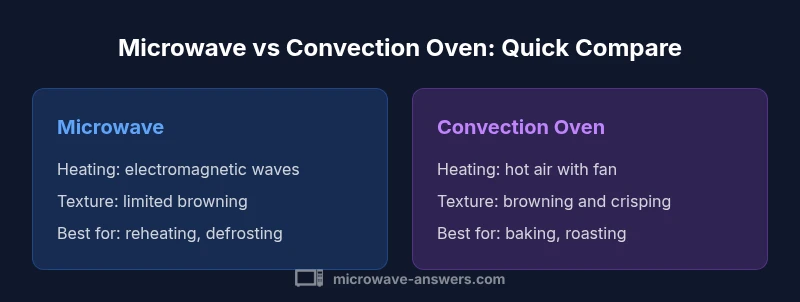
Microwave vs convection oven: the two appliances heat differently and serve different cooking goals. A microwave uses electromagnetic waves for rapid heating, making it excellent for reheating and defrosting but limited for browning. A convection oven circulates hot air with a fan to bake, brown, and crisp evenly. In short, speed versus texture and versatility.
Understanding the Difference Between a Microwave and a Convection Oven
Understanding the core distinction between a microwave and a convection oven begins with heat transfer physics. A microwave uses electromagnetic waves to agitate water molecules in food, producing rapid bulk heating with little preheating. Browning and crust formation are limited because the surface is not exposed to intense dry heat. A convection oven, by contrast, relies on heating elements that warm air and a fan that circulates that air around the food. This creates a steady, dry heat environment suitable for browning, crisping, and even cooking. According to Microwave Answers, grasping this fundamental separation helps home cooks set expectations about texture, time, and results. The takeaway is simple: microwaves excel at speed; convection ovens excel at texture and baking depth. This section covers the physics, practical implications, and typical use cases so you can match the tool to the task.
Heating Mechanisms: Microwave vs Convection
Heating mechanism is the core differentiator. In a microwave, energy is delivered directly to water molecules, which heats the food rapidly from the inside out. This means hot spots can occur and browning is limited without additional features. A convection oven uses a heating element to generate hot air and a fan to move that air around the food. The moving air transfers heat more efficiently to the surface, promoting browning, moisture evaporation, and even cooking across irregular shapes. For delicate reheating, a microwave’s quick action is often best; for baked goods, roasted vegetables, or crispy coatings, convection provides superior texture and uniformity. Home cooks should consider not just speed but the final texture they want when choosing between the two.
Brand note: The Microwave Answers team emphasizes that the practical impact of these mechanisms is most felt in texture outcomes, not just how fast food gets hot.
Cooking Performance and Use Cases
The performance envelope of microwaves versus convection ovens is shaped by typical tasks. Microwaves shine for reheating leftovers, defrosting frozen foods, and cooking small portions where speed matters more than texture. They’re also excellent for steaming vegetables quickly when paired with a microwave-safe cover. Convection ovens, on the other hand, excel at baking cookies and pastries, roasting meats with a browning crust, and reheating foods that benefit from a dry heat finish. If your goal is a crisp exterior and evenly browned surfaces, the convection oven is the clear winner. For quick meals and convenience, a microwave wins on speed. Many kitchens use both to cover a broad set of needs, leveraging each appliance’s strengths.
Practical tips: preheating is usually not a concern with microwaves, while convection ovens benefit from a brief preheat phase for optimal air circulation and even browning. Account for cookware compatibility: metal is generally safe in convection ovens but should be used cautiously or avoided in standard microwaves unless the model explicitly supports it. This interplay of use cases helps determine whether you should buy one or both appliances.
Design, Size, and Practical Considerations
Countertop footprint and power requirements differ meaningfully between the two. Microwaves are compact and versatile for small spaces, often offering adjustable power levels and defrost settings in a compact form factor. Convection ovens tend to be larger, sometimes combining with a toaster oven setup or built into a mid-size range oven. Energy use aligns with the task: microwaves consume energy quickly for short bursts, while convection ovens deliver consistent heat for longer cooking periods. For homeowners, the practical decision hinges on how often you bake or roast versus how often you need speed. If counter space is at a premium, a compact microwave may be the most economical choice, with a separate convection appliance serving more ambitious baking needs when space allows.
Safety and cookware considerations also matter. Range and built-in options add integration complexity, while countertop units demand stable placement and ventilation. Understanding these design realities helps avoid overbuying features you won’t use and underinvesting in a tool that could become a kitchen workhorse.
Brand guidance: Microwave Answers recommends sizing your setup to your most frequent tasks, and recognizing that a two-appliance configuration often yields the best overall kitchen flexibility.
Tips for Getting the Most from Each Appliance
To maximize performance, follow best-practice usage for each appliance. For microwaves, use microwave-safe coverings to trap steam and prevent drying, and arrange items for even exposure. For convection ovens, invest in a good baking sheet and a rack to promote air flow around surface areas that need browning. When reheating in a convection oven, consider lowering moisture loss by starting with a higher initial temperature and then adjusting to finish at a lower temperature to prevent sogginess. Another practical approach is to split tasks: reheat fast in the microwave, then finish with five to ten minutes in the convection oven to achieve browning. These steps help you leverage the speed of microwaves while still delivering the texture you want.
How to Decide: A Practical Framework for Your Kitchen
A clear decision framework helps you choose efficiently. First, identify your primary cooking goals: quick reheating and defrosting versus baking, roasting, and browning. If space is limited and you mainly reheat meals, a microwave is the sensible first step. If you bake regularly or crave crisp textures, a convection oven will be the main workhorse. Budget and space constraints matter: you may opt for a combination approach if your kitchen supports two appliances or if a single unit offers both features. Finally, consider cookware compatibility and maintenance: convection ovens may require more space and easier-to-clean racks, while microwaves handle most plastic and glass containers with ease. By weighing these criteria against your daily cooking habits, you’ll select the option that aligns best with your lifestyle.
Common Misconceptions and Realities
A common myth is that microwaves can perfectly replace all oven work. In truth, microwaves are efficient for speed but fall short for browning and texture that many baked and roasted dishes require. Another misconception is that convection ovens automatically outperform microwaves in every task; in reality, the best outcome depends on the dish and the desired texture. Modern models often include combination features that blend the two approaches, but understanding the core differences helps you predict the likely results and avoid disappointment. The key is to match the tool to the task rather than assuming one appliance can handle all cooking needs.
Final Quick Reference: When to Choose Which
- Choose a microwave when speed is the primary driver and meals are simple reheats or defrosting.
- Choose a convection oven when you need browning, crisp textures, and evenly baked goods.
- For most households, a micro + convection setup offers the broadest capability without sacrificing convenience.
- Always factor in space, energy, and cookware; these practical constraints often determine the best overall solution.
Comparison
| Feature | Microwave | Convection Oven |
|---|---|---|
| Heating method | Electromagnetic waves heat food quickly | Hot air circulation browns and crisps |
| Typical best use | Reheating, defrosting, quick snacks | Baking, roasting, cookies and pastries |
| Texture results | Limited browning; moist interiors | Even browning; crisp exteriors |
| Preheating | Usually not required | Often beneficial for even results |
| Cookware compatibility | Microwave-safe items; metal cautions | Metal, glass, ceramic; metal allowed in some convection settings |
| Size and footprint | Compact countertop options | Larger footprint; may be built-in or standalone |
| Price range (general) | Lower-cost basic models | Higher-cost for full-feature convection |
| Best for | Speed-focused tasks and small kitchens | Texture-focused baking and roasting |
Advantages
- Clear split in capabilities helps buyers target their needs
- Convection ovens deliver browning and versatile baking
- Microwaves excel at speed for reheating and defrosting
- Both options come in compact countertop formats
- Likely to have models with integrated features for flexibility
Cons
- Microwave limitations on browning and texture
- Convection ovens require more space and can be pricier
- Some combined-function units may compromise on performance in one mode
Convection ovens are best for texture and baking; microwaves win on speed and convenience.
If you primarily bake, roast, or want browning, choose a convection oven. If speed for reheating and defrosting is your main need, a microwave is the practical choice. For many kitchens, pairing both devices offers the most complete range of cooking capabilities.
Common Questions
What is the fundamental difference between a microwave and a convection oven?
The microwave heats food with electromagnetic waves, delivering rapid heating but limited browning. A convection oven uses hot air circulated by a fan to bake and brown food evenly. This creates distinct outcomes and best-use scenarios for each appliance.
Microwaves heat quickly but don’t brown well; convection ovens brown and bake evenly with circulating air.
Can you bake or roast in a microwave?
Most microwaves cannot replace a traditional oven for baking or roasting because browning and texture development are limited. Some microwaves include a convection function that enables baking-like results, but outcomes vary by model and recipe.
Some microwaves have convection mode, but for best baking results, a dedicated convection oven is usually better.
Is a convection oven faster than a microwave?
Microwaves are generally faster for simple reheating and defrosting tasks. Convection ovens take longer due to preheating and the nature of dry-heat baking, but they produce superior textures and browning.
Microwaves are quick; convection ovens take longer but give you better texture.
Do I need special cookware for convection baking?
Use oven-safe metal, ceramic, or heat-resistant glass in convection baking. Plastics should be avoided unless explicitly rated for oven use. In microwaves, follow the manufacturer’s guidance on what materials are safe.
Use oven-safe dishes for convection; for microwave use, check if plastics are microwave-safe.
What’s the best way to decide between them for a small kitchen?
If space and budget are tight, start with a compact microwave for speed and keep your options open for a separate convection unit later. If you bake and prefer browning, prioritize a convection option. A two-appliance setup often offers the most versatility.
In small kitchens, start with a microwave for speed and add convection later if you bake a lot.
Main Points
- Identify your main cooking tasks to guide the purchase
- Microwaves suit fast reheating; convection ovens excel at browning and baking
- Space and budget often determine whether one or both are feasible
- Check cookware compatibility for your chosen appliance
- Consider models with blended features for flexibility