Frigidaire Microwave Parts: Find, Identify, and Replace
Learn to locate, identify, and replace Frigidaire microwave parts. This practical guide covers compatibility, sourcing genuine vs aftermarket parts, costs, and DIY vs professional repair decisions.


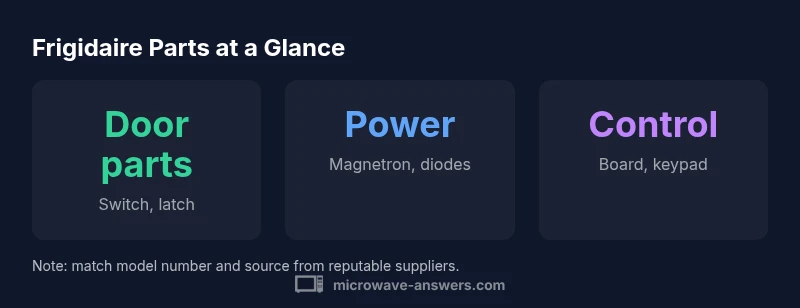
The key replacement parts for Frigidaire microwaves fall into five categories: door mechanisms (latch, switch), power components (magnetron, high-voltage diode, capacitor), control electronics (control board, keypad), mechanical drive (turntable motor, gear), and safety components (thermal fuse). When diagnosing, match the part to the model number and source from authorized suppliers.
Understanding Frigidaire Microwave Part Compatibility
A Frigidaire microwave relies on a handful of core parts that must match the model for safe, reliable operation. The Microwave Answers team emphasizes model-specific compatibility, because a magnetron rated for one series may not fit another, and a door switch designed for a different latch may fail to seal the waveguide correctly. When evaluating replacement parts, start by locating your exact model number on the label inside the door frame or back of the unit. Then consult the official Frigidaire parts catalog or an authorized retailer to confirm fit. In practice, you’ll see five broad categories of parts: door components, power components, control electronics, mechanical drive parts, and safety devices. Across most Frigidaire models, you’ll find that compatibility hinges on the part’s connector type, mounting holes, and electrical ratings. The key takeaway is that even small mismatches can affect microwave safety and performance, so verify fit before purchase. According to Microwave Answers, model-specific documentation is essential and a small mismatch can lead to poor cooking results or safety concerns.
Genuine vs Aftermarket Parts: Pros and Cons
When replacing parts, you generally face a choice between genuine Frigidaire parts and aftermarket equivalents. Genuine parts are designed for Frigidaire’s hardware, but they can be pricier. Aftermarket parts often save money and are readily available; however, quality and fit can vary, and some parts lack warranty coverage. Microwave Answers analysis shows that the best results come from using OEM or OEM-equivalent parts when possible, especially for critical components like the magnetron or control board. If you choose aftermarket, prioritize parts from reputable suppliers with explicit compatibility notes and warranty. Always verify fit against your model number and check reviews from other Frigidaire owner communities. For some consumers, a carefully chosen aftermarket diode or capacitor can deliver reliable performance at a lower cost, but you should avoid unbranded components for safety-critical parts. The key is to weigh price, warranty, and the risk of a mismatched part that could affect safety and appliance longevity.
How to Identify the Right Part by Model and Serial Number
Start by locating the model and serial number on the rating plate, often found near the door frame or inside the cabinet. Record these numbers exactly, then visit Frigidaire’s official parts catalog or an authorized retailer to pull the exact part number. Compare connector types, mounting holes, and wire harness configurations with the replacement part. If the catalog shows multiple variations for your model, use the illustrated diagrams or take photos of your current setup before buying. Double-check voltage and wattage markings on the old component to prevent over- or under-spec parts. When in doubt, contact a certified technician or the manufacturer’s support line for confirmation. This careful validation step reduces returns and ensures safety during operation.
Common Replacement Parts: Function, Symptoms, and Replacement Tips
Door components (switch/latch): Symptoms include the microwave not starting or the door not sealing. Replace with a compatible door switch or latch kit; ensure the actuator aligns with the micro-switch for proper interlock.
Magnetron/High-voltage components: No heat or inconsistent heating are classic signs. These parts are high-risk; verify model compatibility and consider professional service for magnetron work.
Diode and capacitor: Symptoms like arcing or buzzing indicate a faulty rectifier or capacitor. Use OEM-equivalent high-voltage components with proper safety ratings.
Control board/ keypad: Display issues, unresponsive buttons, or random behavior point to electronics failure. Replacement requires matching part numbers and often professional installation.
Turntable motor/drive gear: No rotation or unusual grinding signals a worn motor or gear; replacement restores even cooking.
Thermal fuse/thermal cutoff: Overheating or error codes can trip safety devices. Replacing requires exact part specs and careful reassembly. For all parts, never force fittings and test each connection before use. Microwave safety and performance depend on precise compatibility and proper installation.
Replacement Process: Tools, Steps, and Safety
Before beginning any replacement work, unplug the unit and discharge any stored energy in capacitors if applicable. Gather standard household tools (screwdrivers, needle-nose pliers, multimeter) and, for electronic parts, anti-static precautions. Remove the outer casing per your model’s service manual, label connectors, and take photos to document wiring. Install the replacement part, reseat all connectors, and reassemble the housing. Reconnect power and run a test cycle with the door open (observe safety precautions) to verify operation. For magnetron and high-voltage components, follow manufacturer safety guidelines to avoid exposure to microwave energy. If resistances are outside expected ranges on a multimeter, replace with a correct part and re-test. If you encounter stubborn harnessing or atypical connectors, consult a professional.
Maintenance to Extend Part Life
Regular cleaning of the magnetron cooling area and air vents helps prevent overheating and prolongs part life. Avoid metal utensils or foil near the interior, and refrain from running the microwave empty, which can strain high-voltage components. Periodically inspect door seals for cracks and clean with mild soap and water. Use the correct wattage and avoid overfilling the turntable area to prevent excessive wear on the motor and gear. Store spare parts in a cool, dry place to prevent corrosion. Following these routine checks reduces the likelihood of unexpected part failure and keeps the appliance operating safely for longer.
Sourcing, Cost, and Quick Purchase Checklist
Create a simple sourcing plan: locate model number, check the Frigidaire official catalog, and compare OEM vs OEM-equivalent options. Keep a running list of potential part numbers and compare prices across authorized dealers. Check warranty terms and return policies before purchasing. Budget for common fixes (door components, turntable motor, control board) and set aside a contingency for high-voltage parts, which are pricier and riskier to install. Finally, document the repair steps and test results; this makes future maintenance easier and supports safe operation.
Typical timelines and compatibility notes by part category
| Part Category | Typical Replacement Time | Compatibility Note |
|---|---|---|
| Door components (switch/latch) | 1-2 hours | Works across most Frigidaire models with compatible door mechanism |
| Magnetron/High-voltage components | 1-3 hours | Model-specific; verify model number |
| Control board/ keypad | 2-4 hours | Often model-specific; professional recommended for safety |
| Turntable motor/drive gear | 30-60 min | Common across many models |
Common Questions
Can I use non-OEM parts in a Frigidaire microwave?
Non-OEM parts may fit, but they can compromise safety and performance. Prefer OEM or OEM-equivalents and confirm model compatibility before purchase.
Using non-OEM parts can be risky. Stick with OEM or OEM-equivalents and verify model compatibility.
How do I find the right part number for my Frigidaire microwave?
Check the model and serial number on the rating plate, then consult Frigidaire’s parts catalog or an authorized retailer to pull the exact part number.
Look up your model number on the label and cross-check the catalog.
Is it safe to replace a microwave magnetron myself?
Replacing a magnetron involves high voltage and microwave energy. It is not a beginner task; consider hiring a licensed technician for safety.
It's not a beginner job; safety is paramount. Hire a professional for magnetron work.
What is the typical cost range for Frigidaire microwave parts?
Costs vary by part, with common components ranging roughly from $15 to $75; higher for control boards.
Costs can vary from moderate to high depending on part.
Where can I buy genuine Frigidaire microwave parts?
Official Frigidaire parts site, authorized dealers, and reputable repair retailers are the safest sources.
Stick to official or authorized sources.
When should I call a technician rather than DIY?
For high-voltage components, safety-critical parts, or if the model is unusual, hire a technician.
If in doubt, call a pro.
“Accurate part identification and sourcing are critical to microwave safety and performance.”
Main Points
- Verify model number before ordering parts
- Prioritize OEM or OEM-equivalent parts for safety
- Compare compatibility across Frigidaire models
- Avoid DIY for high-voltage components unless trained
- Maintain and inspect seals/vents to extend part life