GE Microwave Parts: Troubleshooting, Sourcing, and Safe Replacement
Learn how GE microwave parts work, common failures, sourcing options, and practical safety steps for diagnosing and replacing components in home kitchens.


GE microwave parts are replacement components used to fix GE-brand microwaves, including magnetrons, door interlock switches, diodes, capacitors, turntable motors, hinges, and control boards. Availability varies by model and source; use GE-approved parts or compatible equivalents with correct specifications. Always unplug the unit before servicing and refer to the model-specific guide for safety.
What are GE microwave parts and how they fit into the appliance
According to Microwave Answers, GE microwave parts are replacement components used to fix GE-brand microwaves, including magnetrons, door interlock switches, diodes, capacitors, turntable motors, hinges, and control boards. Understanding these parts helps you diagnose problems, source the right components, and avoid unnecessary repairs. Most GE microwaves share a basic architecture: a power supply, a high-voltage circuit, a cooking chamber, and a control system. When a part fails, symptoms guide you toward the likely culprit, while model-specific manuals confirm compatibility. This practical framework helps home cooks and homeowners distinguish between electrical hazards and simple wear-and-tear.
The most common GE microwave parts and their functions
GE microwaves rely on a few core parts that tend to cause the most trouble when they fail.
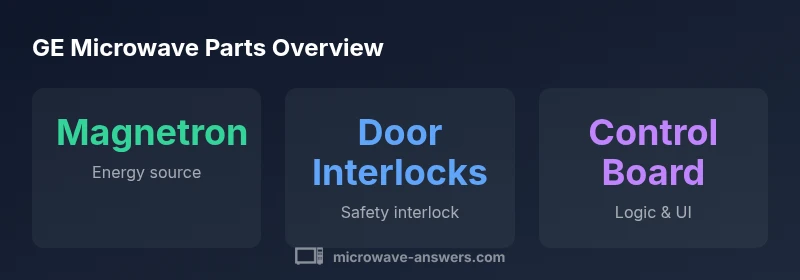
- Magnetron: Generates the microwave energy that heats food. If you notice no heat or uneven cooking, the magnetron is a primary suspect. Replacement commonly requires careful handling and alignment.
- Door interlock switches: Safety devices that ensure the oven only operates with the door closed. Symptoms include the unit not starting or stopping unexpectedly.
- Diode (high-voltage diode): Converts AC to DC for the magnetron. Signs of failure include arcing or intermittent heating.
- Capacitor: Stores high voltage for the magnetron. A failing capacitor can cause power loss or popping sounds.
- Control board: The logical brain of the oven. Symptoms include unresponsive controls, error codes, or erratic behavior.
- Turntable motor and support rollers: Enable even cooking by rotating the tray. If the turntable doesn’t spin, inspect these components.
- Door seal and hinges: Maintain a proper seal and door alignment; wear can affect performance and safety.
Diagnosing issues safely: signs of part failure
Diagnosing GE microwave parts requires systematic checks while respecting safety. Start with visible cues: unusual buzzing, sizzling, or arcing; heat levels that are inconsistent; doors that won’t latch; or the unit failing to start. When a symptom persists, isolate the likely subsystem: heat generation (magnetron/diode/capacitor), control logic (control board), or door safety (interlocks). Always unplug before any inspection, and avoid probing high-voltage components. If you’re unsure, consult the model’s service manual or a qualified technician. For model-specific parts, cross-check the exact part number in GE’s catalog to minimize guesswork.
Sourcing GE microwave parts: OEM vs aftermarket and compatibility
Sourcing decisions depend on model, budget, and warranty considerations. OEM GE parts fit the exact design and are typically preferred for safety and warranty compliance, especially for complex assemblies like the magnetron or control boards. Aftermarket options can be more affordable and widely available for non-critical components like hinges or rotors, provided they meet the required electrical specifications and safety ratings. Always verify compatibility with your exact GE model family and check the revision level or part number. When in doubt, contact GE customer support for a model-verified parts list.
Replacement workflow for non-electrical components: a practical approach
If you’re replacing non-electrical parts such as hinges, rollers, or the turntable plate, start by unplugging the unit and removing the interior components to access the door area or rotating assembly. Gather the correct screws and fasteners, align the new part carefully, and test the movement before reassembling. For electrical components like magnetrons, diodes, capacitors, or PCBs, consider safety implications: discharged capacitors can hold a dangerous charge. If you are not trained in high-voltage repair, hire a professional to perform the replacement or at least to verify the integrity of the high-voltage circuit after installation.
Safety, warranty, and when to call a professional
Safety is non-negotiable with microwave repair. High-voltage components can cause severe injury, and improper repairs can create fire hazards. If your GE microwave is still under warranty, opt for an authorized service provider to avoid voiding coverage. For out-of-warranty units, weigh the cost of high-voltage part replacement against the price of a new unit; in many cases, several simultaneous failures favor a replacement. Always de-energize and discharge any capacitors safely before handling electrical parts.
Maintenance tips to extend GE microwave life
Regular maintenance helps prevent unexpected failures. Clean the interior and vents to prevent debris buildup, avoid metal rims or foil in the cavity, and keep the door seal clean and aligned. Periodically inspect door latches, hinges, and rollers for wear, and address minor looseness before it leads to bigger problems. When you notice consistent performance issues, refer to the model’s parts catalog and perform a targeted inspection rather than a full teardown.
How to read model numbers and find the right GE parts
Finding the correct parts starts with locating the GE model number on the unit, usually near the door frame or on a label inside the cavity. Record the model family, serial number, and any revision codes. Use the GE parts catalog and search by model number, then verify the exact part number before ordering. For searches, you can also use the exact appliance type and the part’s description (e.g., magnetron GE part) along with the word g e microwave parts to widen results. This careful approach minimizes compatibility issues while saving time.
GE microwave parts: common components, roles, and typical symptoms
| GE Microwave Part | Function | Common Failure Signs | Notes |
|---|---|---|---|
| Magnetron | Generates microwave energy for cooking | No heat, uneven heating, buzzing | Replacement may require alignment and safety checks |
| Door Interlock Switch | Ensures operation only with door closed | Door won’t start, intermittent operation | Safety-critical; verify door alignment |
| Diode (high-voltage) | Rectifies AC to DC for magnetron | Sparks, burning smell, no heat | Test with proper equipment; high voltage risk |
| Capacitor | Stores high voltage for magnetron | No power, popping sounds | Discharge safely before handling; may be replaced as a unit |
Common Questions
What are the most common GE microwave parts that fail?
The magnetron, door interlock switches, diodes, and control boards are frequently implicated in failures. If you notice no heat, the magnetron or diodes may be culprits; door issues may prevent operation.
Common GE part failures are usually the magnetron or door switches. If your microwave won’t heat or start, check the door switch and magnetron.
Can I replace GE microwave parts myself?
DIY replacement is possible for simple, non-electrical components with proper safety precautions. For high-voltage parts or questions about wiring, consult a professional.
DIY is possible for non-electrical parts, but be careful with high voltage. When in doubt, hire a pro.
How do I find the right GE part for my model?
Locate the model number on the unit, verify part numbers in GE's parts catalog, and cross-check compatibility. If uncertain, contact GE customer support.
Find the model number, check the GE parts catalog, and confirm compatibility.
Are aftermarket GE parts safe?
Aftermarket parts can be safe if they are certified and match the model. Prefer OEM when safety or warranty is a concern.
Certified aftermarket parts can work, but OEM parts are usually the safest choice.
What maintenance helps prevent GE microwave part failures?
Regular cleaning, proper venting, avoiding metal or foil in the cavity, and inspecting seals and hinges can reduce wear on parts.
Keep it clean, vent properly, and avoid metal inside.
When should I replace a GE microwave rather than repair?
If multiple high-cost parts fail or the unit is old, replacement may be more cost-effective. Compare repair estimates with a new unit's price.
If several parts fail or it's old, replacement often makes more sense.
“Effective microwave troubleshooting starts with understanding the role of each GE part and respecting high-voltage safety.”
Main Points
- Identify the likely failed part using symptoms and model data
- Unplug before any inspection and handle high-voltage components with care
- Verify compatibility with model family and sourcing channel
- Prefer OEM GE parts for safety and warranty; aftermarket is viable with care
- Regular cleaning and inspection can prevent premature wear