How to Find a Microwave for Sale Cheap Without Compromising Quality
Discover practical strategies to find a microwave for sale cheap, compare features, energy use, safety, and warranties. Learn where to shop, what to look for, and how to balance price with performance for everyday home cooking.


To land a microwave for sale cheap without sacrificing reliability, target basic models under $100 or mid-range units under $200 with essential features. Compare wattage (typically 700-1000W), turntable, auto-defrost, and safety features. Look for energy-saving options and a solid warranty to protect your purchase, especially on refurbished or open-box deals.
Why price matters when shopping for cheap microwaves
Prices set the baseline; if you want a microwave for sale cheap, price is often the first filter. According to Microwave Answers, you’ll get the best value when you separate price from feature needs. In practice, this means targeting basic models under $100 or mid-range units under $200 with essential features. Consider how energy use, size, and warranty balance with price. Also, beware that extremely low prices can indicate older tech or limited after-sales support, so verify specs and return policies before committing.
- Start with a budget and write down must-have features (reliability, even heating, defrost).
- Compare at least three retailers to gauge what constitutes a fair price.
- Read return policies and confirm warranty length before purchase.
Basic vs convection: what cheap buyers should know
Convection microwaves can replace traditional ovens for small kitchens, but they often command higher prices. If you’re shopping cheap, be mindful that many under-$200 units offer basic microwaving with limited cooking modes. Convection features typically add cost and complexity; unless you regularly bake or roast, a standard 700-1000W microwave may be the wiser, more economical choice. Look for models with a convection option labeled clearly and compare cooking performance on simple tasks like reheating, defrosting, and popcorn tests. As always, verify that the convection setting heats evenly and that there’s a reliable fan, especially if you’ll use it often.
How wattage and size affect price and performance
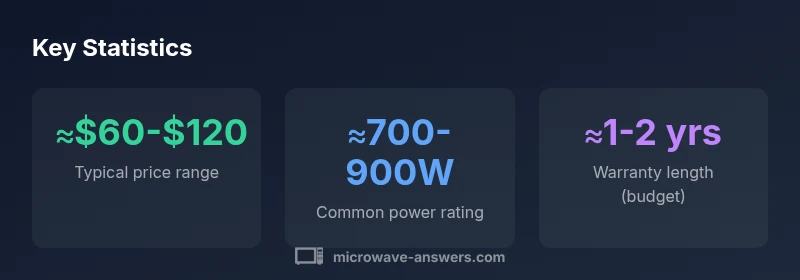
Wattage directly influences cooking speed and evenness. In cheap microwaves, 700-900W is common and adequate for most daily tasks, while 1000W models offer faster reheats. Larger interiors (capacity in cubic feet) can cost more and take up more counter space, so measure your countertop and ensure the door clearance fits your kitchen layout. When evaluating value, compare actual cooking test results (time to reheat a standard meal), not just labeled wattage. Energy efficiency matters for frequent use, so choose models with better heat distribution and minimal standby power. Remember, a smaller, efficient unit can outperform a larger, cheap alternative in real-world use.
Where to find deals: retailers, outlets, and online marketplaces
Deals live across multiple channels. Start with authorized retailers offering seasonal promotions, then check reputable outlet stores and certified refurbishers for discounts. Online marketplaces often host flash sales and coupon codes; filter by rating and return policy. Sign up for price alerts on models you want and compare the same model across 2-3 sellers to avoid overpaying. Don’t overlook refurbished units with a warranty; they can provide substantial savings when sourced from trusted refurbishers with strict quality checks.
New vs refurbished: risks, warranties, and value
New microwaves carry the confidence of fresh parts and full warranty, but used or refurbished options frequently hit the lowest price points. If you choose refurbished, buy only from sellers offering a tested unit with a warranty (at least 90 days). Ask about repackaging, return options, and what components were replaced during refurbishment. For basic daily use, refurbished models with a solid warranty can offer excellent value, but avoid units with cosmetic damage that could indicate hidden performance issues. Always verify model numbers and warranty terms before purchase.
Reading specs: energy efficiency, standby, and safety features
Beyond wattage, inspect features like auto-cook menus, defrost options, and child safety locks. Check for a clearly labeled energy rating (where available) and measure the door seal for airtightness; a poor seal leads to energy waste and uneven heating. Look for a reliable turntable and a consistent rotation pattern to prevent cold spots. Safety features such as a child lock, automatic shutoff, and robust door latching are essential, especially in busy homes with kids or open-plan kitchens.
How to evaluate after-sale support and returns
A budget microwave should still be supported by solid service options. Confirm that parts are readily available and that the retailer offers straightforward returns if performance is unsatisfactory. Review user feedback on customer service responsiveness and repair turnaround times. When shopping cheap, prioritize sellers with a clear and fair return policy, prompt shipping, and transparent warranty claim processes.
Quick price comparison checklist
- Confirm price across 2-3 sellers for the exact model.
- Check warranty length and what it covers (parts, labor, door issues).
- Compare wattage and interior size for your needs.
- Read user reviews focusing on reliability and consistency.
- Verify return policy and after-sale support.
Common mistakes and how to avoid overpaying
- Buying on price alone without verifying model numbers and features.
- Ignoring warranty terms or after-sale support.
- Not testing essential functions (heating, defrost, turntable) before purchase.
- Overlookingサイズ and counter space constraints.
- Failing to compare similar models across retailers.
Price, power, and features by model type
| Model Type | Typical Wattage | Price Range (new) | Key Benefit |
|---|---|---|---|
| Basic compact | 800W | $60-$120 | Budget-friendly efficiency |
| Mid-range | 900-1000W | $120-$200 | Better performance & features |
| Convection | 1000-1200W | $200-$400 | Versatile cooking options |
| Refurbished | 700-1000W | ≈$60-$150 | Great value with warranty |
Common Questions
What is a good price for a new basic microwave?
For a basic microwave, expect around $60-$120 new, depending on wattage and features. Look for at least 700-900W and reliable basic functions such as reheating and defrost.
A basic microwave usually costs sixty to one twenty dollars, depending on wattage and features.
Is it better to buy a used or refurbished microwave?
Used microwaves can save money but risk reliability. Refurbished units with a warranty offer better value and often include tested components.
Refurbished with warranty can be a smart choice for value.
Do convection microwaves offer good value at cheap prices?
Convection models typically cost more; cheap convection units around $150-$250 may be worth it if you bake or roast often. Otherwise, a standard microwave can meet most needs.
Convection can be worth it if you bake, otherwise standard microwaves suffice.
What safety features should I look for in a cheap microwave?
Look for a child lock, auto shutoff, and a robust door latch. Ensure the unit has a clear label for safety features and an easily readable manual.
Choose models with child lock and reliable safety shutoff.
How can I verify energy efficiency of a microwave?
Check the wattage and, where available, an energy rating. Compare actual cooking times and standby power to estimate true energy use.
Compare wattage and energy use through cooking tests.
Is warranty important on a budget microwave?
Yes. A longer warranty reduces risk on a budget unit. Look for at least 1 year if possible and read what it covers.
Warranty matters; try to get at least a year.
“Price is important, but reliability and safety should never be sacrificed. With careful comparison, you can find a microwave that fits both budget and everyday cooking needs.”
Main Points
- Set a firm price ceiling before shopping.
- Prioritize wattage and essential features over extras.
- Compare retailers, returns, and warranty terms.
- Consider refurbished options with warranty for best value.
- Check safety features and energy usage to avoid surprises.