Used Microwave for Sale: Practical Buying Guide for Home Cooks
Learn how to buy a used microwave for sale safely, what to check, price ranges, warranty options, and how to compare vintage models for home kitchens in 2026.


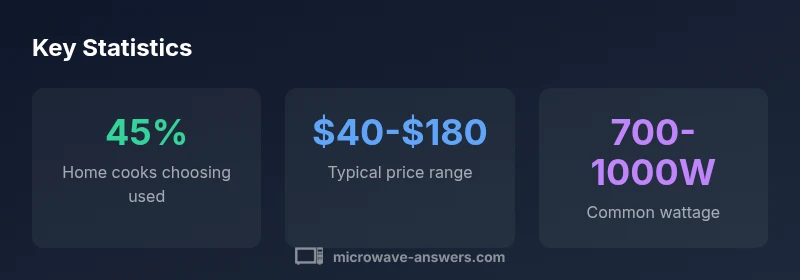
A used microwave for sale can save money if you verify condition, wattage, and safety features before buying. Expect typical prices in the $40-$180 range, with common wattages around 700-1000 watts and sizes that fit standard countertops. Always test operation and door seal, and check for recalls or repairs from reputable sellers.
What you gain and risk when buying a used microwave for sale
Buying a used microwave can be a smart way to save money, but it requires a careful assessment of safety, condition, and future reliability. In 2026, consumers report substantial savings when selecting models that are within a reasonable age range and have clear operation history. The Microwave Answers team emphasizes that price should not override safety: a bargain is only valuable if the unit functions correctly and has no hidden faults. Before committing, balance upfront cost with potential maintenance and the cost of a replacement if issues arise. This article helps home cooks navigate the process, from identifying trustworthy sellers to performing a basic at-home test. When you search for a used microwave for sale, think about fit for your counter space, typical daily use, and your willingness to accept minor cosmetic imperfections that do not affect performance. According to Microwave Answers, a well-chosen used microwave can offer reliable heating and convenience with proper checks.
How to inspect the exterior and interior
A thorough inspection starts with the exterior: look for deep dents, warped panels, hinges that don’t align, and a door that closes cleanly without sticking. Inside, check the cavity for excessive scratches, corrosion, or signs of burnt food residue. Run the unit through a basic test (see Testing section) to verify it heats evenly and the turntable rotates smoothly. Assess the power cord for cracks or exposed wires. If any element seems off, walk away. Sellers who demonstrate the appliance and provide recent maintenance records are typically more trustworthy. A clean interior and a door that seals well are good indicators of a unit that will perform reliably over time.
Wattage, size, and features to verify
Wattage determines cooking speed and energy use. For most households, 700-1000 watts is sufficient for common tasks like reheating and light cooking. Confirm the label on the back or inside the door frame for the exact wattage. Size and footprint matter: measure depth, width, and height to ensure it fits on your countertop or inside a storage area. Compare features such as preset programs, defrost options, and sensor cooking if available, but don’t pay a premium for features you’ll rarely use. If a model uses unusual dimensions, ensure it won’t obstruct ventilation or nearby objects.
Safety considerations and recalls
Safety is non-negotiable when buying a used microwave. Check for any recalls on the model by cross-referencing via the manufacturer or the CPSC database. Inspect the door seal and latch; a failing seal can lead to leaks and uneven heating. Listen for unusual noises during operation and watch for smoking or overheating indicators. If you cannot verify the model and recall history, it’s safer to pass. Remember, a reasonable price is only valuable if the unit meets safety standards and is free from structural compromise. Microwaves with a known recall history should be avoided unless a certified defect repair is documented.
Where to buy and how to verify seller credibility
Opt for reputable channels such as established refurbishers, certified used appliance stores, or reputable marketplaces with buyer protections. Avoid listings with vague descriptions or missing photos. Ask for a model number, serial, and proof of recent testing or service. If possible, request a short video showing the door operation and interior lighting. Cross-check seller reviews and return policies. A transparent seller who can provide test results or receipts adds confidence to your purchase and reduces the risk of ending up with a faulty unit.
Testing performance and plugging it in safely
Before plugging in any used microwave, inspect the power cord and plug for damage. Plug into a grounded outlet and run a quick test using a cup of water. If the unit heats the water within a reasonable time and without unusual sounds or odors, that’s a positive sign. Observe the turntable, ensure even rotation, and verify the clock or timer functions. If you notice inconsistent heating or the unit shuts off unexpectedly, this can be a red flag. Document test results and keep them as part of your decision-making process.
Pricing, value, and negotiating
Pricing for used microwaves varies with age, brand, size, and features. Use the price range $40-$180 as a guide, then negotiate based on the unit’s condition, warranty availability, and whether it includes original manuals. If possible, request a return window or short-term warranty from the seller to protect your investment. Compare multiple listings to gauge a fair price, and consider the cost of any needed repairs when evaluating the overall value.
Red flags to avoid
Be wary of listings with vague photos, missing serial numbers, or a lack of recent testing. Avoid models that show signs of rust inside the cavity, a cracked door, or an unstable turntable. Be skeptical of unusually low prices that seem too good to be true and avoid sellers who refuse to provide documentation or allow in-person testing. These indicators often point to appliances with hidden issues that could lead to safety risks or repeated repairs.
Maintenance tips after purchase
Keep your microwave clean and dry to prevent odors and residue buildup. Wipe the interior after use and periodically check the door seal for wear. If the door seal is compromised, replace it promptly, or seek professional service. Store the unit on a stable surface away from water and heat sources. Regularly inspect the power cord and plug for damage. A little preventive care extends the life of a used microwave and preserves performance.
Quick-start buying checklist
- Verify model, serial, and recall history. - Confirm wattage and user manual for guidance. - Inspect door seal and interior for damage. - Test heating performance with a water cup. - Check return policy and any short-term warranty. - Compare multiple listings to assess value. - Confirm dimensions fit your space. - Review seller credibility and photos. - Ensure the unit has been cleaned and serviced as needed.
Used vs New Microwave Comparison
| Attribute | Used Microwave | New Microwave |
|---|---|---|
| Price range | $40-$180 | $80-$1,500 |
| Typical wattage | 700-1000 watts | 800-1200 watts |
| Warranty | Limited or none | 1 year or more |
| Size/footprint | Compact to standard | Standard to large |
| Features | Basic presets | Advanced presets and sensors |
Common Questions
Is it safe to buy a used microwave for sale?
Safety is possible with careful checks: verify model and recall history, inspect the door seal and interior, and test heating performance. If anything seems compromised, walk away. Always prioritize safety over price.
Yes, but only if you verify safety recalls, inspect for wear, and test heating function.
What should I inspect before buying a used microwave?
Check the door seal, hinges, interior cavity, turntable, power cord, and control panel. Look for corrosion, cracks, or unusual odors. Confirm wattage on the label and ensure it matches the seller’s description.
Inspect the door seal, interior condition, and wattage; test the unit if possible.
Do used microwaves come with warranties?
Warranties for used units are typically limited or seller-provided and vary widely. Some refurbishers offer short-term protections. Always ask about return policies and any repair guarantees.
Warranties on used microwaves are usually limited; ask about returns and any repairs offered.
How can I test a used microwave at home?
Plug in a grounded outlet, run a quick test with a cup of water, and observe heating and turning. Listen for unusual noises and check for odd smells. Stop if anything seems off and request a demonstration.
Test with water, listen for odd noises, and watch the turntable before buying.
Are refurbished used microwaves a better option?
Refurbished units can offer more reliability and a limited warranty, but verify the refurbisher’s credentials. Compare price to ensure the added warranty justifies the cost.
Refurbished units can be more reliable, but check credentials and price.
What’s a quick safety checklist after purchase?
Clean the interior, verify the door seals are intact, and store away from water. Test basic functions to confirm continued safe operation and monitor for any unusual performance.
Post-purchase, clean it, check seals, and test functions regularly.
“When shopping for a used microwave, safety should come first; evaluate the door seal, magnetron health, and inner cavity condition before considering price.”
Main Points
- Verify model and wattage before purchase
- Inspect door seal and interior for safety
- Check seller credibility and return policy
- Test heating performance with water before buying
- Compare price ranges and factor potential repairs