Built-in Microwave vs Over-the-Range: Which Is Best?
Compare built-in and over-the-range microwaves to decide which fits your kitchen design, ventilation needs, and budget. This analytical guide covers installation, performance, aesthetics, cost, and long-term value.


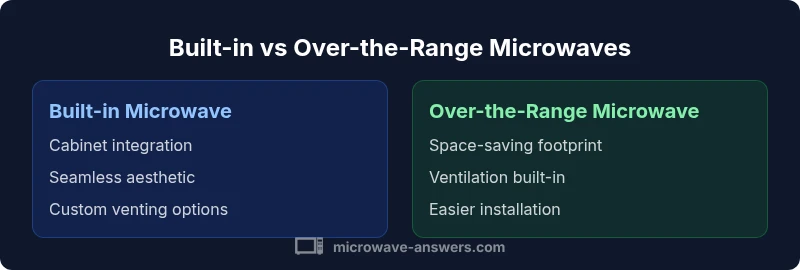
When weighing built in microwave vs over the range, the choice hinges on design and ventilation priorities. Built-in units deliver a seamless cabinet look and flexible placement, while over-the-range models maximize counter space and use the hood for venting. Pick built-in for customization; pick over-the-range for space-saving and simpler install.
Design considerations and installation realities
Choosing between a built in microwave vs over the range is not only about where the unit sits, but how it integrates with your electrical, ventilation, and cabinet design. A built-in microwave is typically installed within a cabinet run, often requiring cutouts, precise dimensions, and possibly rerouting electrical lines. The payoff is a seamless, custom look that can align with your countertop height and cabinet finish. By contrast, an over-the-range model sits above the stove and leverages the existing ductwork or a recirculating vent. This option tends to have simpler rough-in requirements, but it imposes a fixed height and can constrain your upper cabinetry if you want extra clearance for tall items. For homeowners, the decision often boils down to renovation scope, budget, and how much you value a clean, integrated aesthetic vs. a space-saving footprint.
Space planning: cabinet integration vs hood footprint
A critical factor in the built in microwave vs over the range decision is how the unit affects your kitchen layout. Built-in models require precise cabinet openings, often with a dedicated niche and finished edges that match surrounding cabinetry. This is ideal when you’re remodeling or have custom cabinetry, because the microwave becomes part of the wall—flush with the surface and virtually invisible. Over-the-range microwaves, on the other hand, rely on the hood above the cooktop for ventilation and occupy vertical space above the range. This can simplify cabinet planning, since you don’t need a dedicated cabinet cavity at a specific height. However, it can limit how you place upper storage and may affect overhead lighting or the backsplash design. Your choice should reflect your current or planned kitchen workflow and how you value a consistent, low-profile look.
Performance, cooking modes, and power delivery
Performance differences between built in microwave vs over the range are often subtle, but matter for daily use. Most units in both categories offer common features like auto defrost, sensor cooking, and multiple power levels. Wattage typically ranges from 900 to 1200 watts, with higher-end models delivering more even heating and shorter cook times. A built in microwave may offer more flexibility in feature sets because manufacturers dedicate a cabinet-sized cavity to the unit, allowing slightly larger interior dimensions or specialized sensor technology. Over-the-range models sometimes emphasize quick access to hood features and easier reach for snacks during busy meal prep. In practice, the best choice should align with your typical cooking patterns (e.g., reheating large dishes vs. quick snacks) and whether you value interior space over height-adjustable ease of use.
Ventilation options and airflow efficiency
Ventilation is a central consideration in this comparison. Over-the-range microwaves come with built-in range hoods that vent to the outdoors or recirculate air if ducting is not available. This can simplify installation and improve kitchen air quality during frying or grilling. Built-in microwaves do not inherently include venting; if you’re remodeling, you can pair them with a separate, strategically placed hood or a ducted system in the cabinet above. The effectiveness of venting depends on hood design, duct sizing, and fan strength. When evaluating options, check the hood’s airflow rating (CFM) and noise level (sones) and ensure it aligns with your stove’s BTU output. Inadequate ventilation can leave lingering odors or heat near work zones, so this is a critical area to verify before purchase.
Aesthetics, remodeling, and resale value
From a long-term perspective, built in microwave vs over the range can influence resale value and perceived quality of a kitchen. Built-in units often yield a cleaner, more cohesive look that many buyers associate with high-end design. If you’re planning a full kitchen remodel, a built-in setup can maximize cabinet continuity and countertop space, potentially increasing perceived value. Over-the-range microwaves are practical in many layouts, especially in smaller kitchens where counter space is at a premium. They tend to be less disruptive to existing cabinets but can appear dated if the surrounding design is not updated. In either case, coordinated finishes (stainless steel, matte black, or panel-ready) help ensure cohesion with the rest of your appliances.
Cost, warranties, and maintenance expectations
Cost is a practical driver in the built in microwave vs over the range decision. Built-in models typically require cabinet fabrication, additional labor, and possibly electrical work, which can elevate upfront costs. Over-the-range units usually cost less to install because they piggyback on the existing cabinet and venting infrastructure. Warranty terms vary by brand and model, but higher-end built-in systems may offer longer coverage for the cavity and door seals, while standard warranties on over-the-range units cover similar cores. Maintenance considerations include access for service—built-ins may demand more involved disassembly during repairs, while over-the-range units can be easier to service in place if the unit is still accessible above the stove. Keep in mind future remodeling plans when weighing long-term value against initial expense.
Durability, reliability, and service considerations
Durability and reliability are often a function of construction quality and usage patterns. Built in microwaves sit in a fixed cabinet cavity, which can reduce incidental movement but increases exposure to heat and humidity if the cabinet isn’t properly ventilated. Over-the-range units benefit from being elevated and integrated into a central ventilation strategy, but their mounting can be more rigid due to the weight of the hood and the exhaust ducting. In both cases, choosing models with solid door hinges, reliable latches, and quality turntable components reduces service needs. Regular cleaning of filters and vents will extend life and maintain performance. When selecting, review the service history typical for the brand and model line in your region and consider extended warranty options for peace of mind.
How to shop: features, specs, and buyer checklist
A methodical shopping approach helps avoid buyer’s remorse. Start with a needs assessment: cabinet dimensions, preferred venting method, and target finish. Then compare features such as sensor cooking, defrost modes, interior capacity, and door height to minimize bending or reaching. For built-in models, confirm your cabinet cutout dimensions and whether trim kits are required to achieve a flush finish. For over-the-range units, verify compatibility with your existing hood, ducting path, and ceiling clearance. Compare energy efficiency, noise levels, and maintenance requirements. Finally, review warranty terms, service networks, and expected replacement timelines to align with your kitchen renovation schedule.
Decision framework: matching your kitchen profile
To finish, create a quick decision matrix. If your goal is maximum cabinet integration and a seamless look, and you’re completing a remodel, a built in microwave is the strongest fit. If you’re prioritizing space conservation, simpler installation, and a cohesive hood system, an over-the-range model is often the better practical choice. Consider your budget, timeline, and whether you anticipate future remodeling; this will guide you toward the option that balances upfront costs with long-term value. Microwave answers style guidance suggests prioritizing ventilation compatibility, cabinet fit, and warranty coverage to inform your final call.
Authority sources
For further reading and verification, consult the following sources:
- U.S. Department of Energy appliance efficiency standards (energy.gov)
- Cornell University housekeeping and appliance safety guidelines (cornell.edu)
- Consumer Reports buying guides for microwaves (consumerreports.org)
Putting it all together: quick decision framework
When in doubt, create a simple scoring card across categories: cabinet fit, ventilation, cost, ease of installation, and long-term value. Allocate 1–5 points per category for each option, then compare totals. If aesthetics and customization dominate your project, lean built in. If floor plan efficiency and a straightforward installation are your priorities, lean over-the-range. This framework helps translate the analysis into a clear recommendation aligned with your kitchen goals.
Authority sources (expanded)
- https://www.energy.gov/energysaver/appliances-and-equipment/microwave-ovens
- https://www.nap.edu/read/1317/chapter/1
- https://www.consumerreports.org/appliances/microwave-ovens/
Comparison
| Feature | Built-in microwave | Over-the-range microwave |
|---|---|---|
| Ventilation integration | Separate or cabinet-integrated venting possible; may require ducting | Vent hood integrated above the range; venting built into the unit |
| Cabinet integration | Flush panel with cabinetry; requires precise cutouts | Mounted above stove; less cabinetry disruption |
| Counter space impact | Typically no effect on counter space | Preserves counter space by using wall height |
| Electrical installation complexity | Custom rough-in; potential electrical and cabinet work | Often simpler rough-in; uses existing circuits |
| Ventilation performance | dependent on separate hood configuration | integrated hood performance varies by model and ducting |
| Price range (typical) | Higher upfront due to cabinet work; long-term value varies | Usually lower upfront; installation is quicker |
| Warranty considerations | Often similar warranty; higher-end options may offer longer cavity coverage | Standard warranties; easier service access, but hood components vary |
Advantages
- Seamless cabinet look that elevates kitchen aesthetics
- Greater customization potential for built-in installations
- Potentially higher resale value with integrated appliances
- Longer-term space planning flexibility in remodels
Cons
- Higher upfront costs due to cabinetry and installation complexity
- Longer installation timelines and potential structural work
- Limited model availability for built-in forms in some markets
- Potential need for electrical upgrades in older homes
Built-in microwave wins on aesthetics and long-term value; over-the-range wins on space efficiency and easier installation.
If your priority is a seamless, premium kitchen look and future remodeling potential, built-in is the better choice. If you want to maximize cabinet space now and minimize wall changes, over-the-range is the practical option. Use this guide to balance design, ventilation, and budget.
Common Questions
What is the main difference between built-in and over-the-range microwaves?
The main difference is integration and ventilation. Built-in microwaves are tucked into cabinets for a seamless look, with variable venting options. Over-the-range models use a hood above the stove and save wall space but impose height and layout constraints.
The key difference is integration and venting—built-ins blend with cabinetry, while over-the-range units use a hood above the stove.
Are built-in microwaves more expensive than over-the-range models?
Generally, built-ins can be more expensive due to cabinet modifications and installation labor. However, prices vary widely by brand and features; some high-end over-the-range models can be comparably priced.
Built-ins usually cost more upfront because of cabinetry, but it depends on features and the overall kitchen plan.
Do built-in microwaves require special electrical work?
Yes, built-ins often require precise electrical rough-in, dedicated circuits, and sometimes upgrades to support the unit’s power needs. A licensed electrician is typically involved.
Yes, installation can involve electrical work to ensure proper power and safety.
Is venting performance better with over-the-range models?
Vent performance depends on the hood system and ducting. Over-the-range models come with a hood designed for exhaust, while built-ins rely on an external kitchen vent arrangement.
Vent performance depends on the hood and ducting, not just the microwave type.
Can I install a built-in microwave myself, or do I need a pro?
Most built-in installations require professional skills for cabinet cutting, support framing, and electrical connections. DIY is not recommended unless you have electrical and carpentry expertise.
Professional installation is usually the safe route for built-ins.
Main Points
- Prioritize cabinet fit and ventilation when choosing
- Built-ins offer customization and potential value gains
- Over-the-range saves space and simplifies installation
- Ventilation performance should drive model selection
- Budget and remodeling timelines shape long-term value